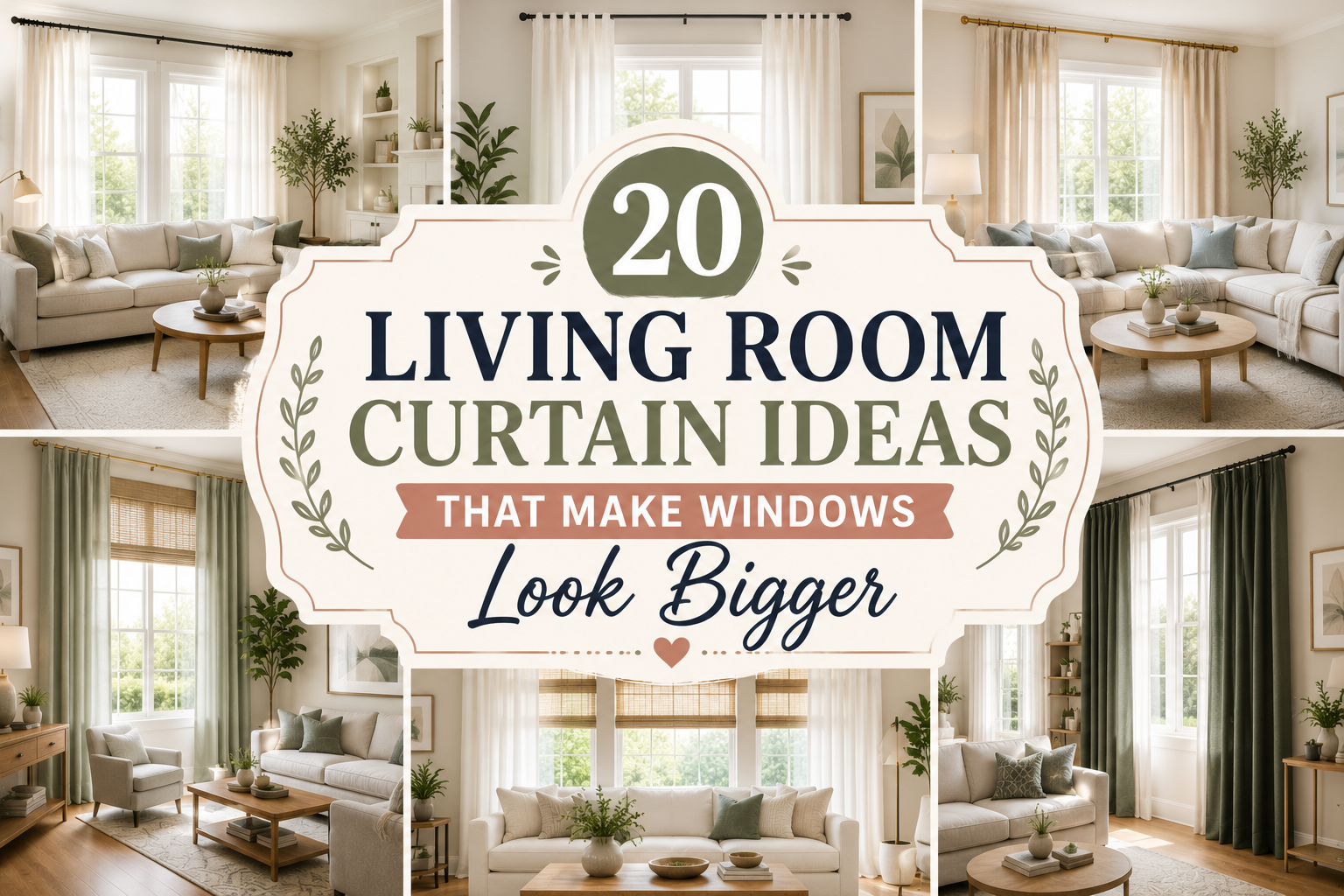
20 Living Room Curtain Ideas That Make Windows Look Bigger
Small or awkward living room windows can make the whole space feel darker and more closed in. The good news is that you do not need to replace the windows to improve how they look. The right curtains can create the illusion of more height, width, and natural light with a few thoughtful changes.
These living room curtain ideas focus on details that make a real visual difference, including higher rods, wider curtain tracks, floor-length panels, light fabrics, soft pleats, hidden hardware, and treatments that connect multiple windows. You will also find practical options for bay windows, corner windows, street-facing rooms, and spaces where privacy still matters.
The main goal is to draw the eye beyond the true window frame. Some ideas make the ceiling feel higher, while others expose more glass or create one long, continuous line across the wall. Choose the approach that suits your window shape, room style, and daily needs, then keep the fabric and hardware simple enough to let the illusion work.
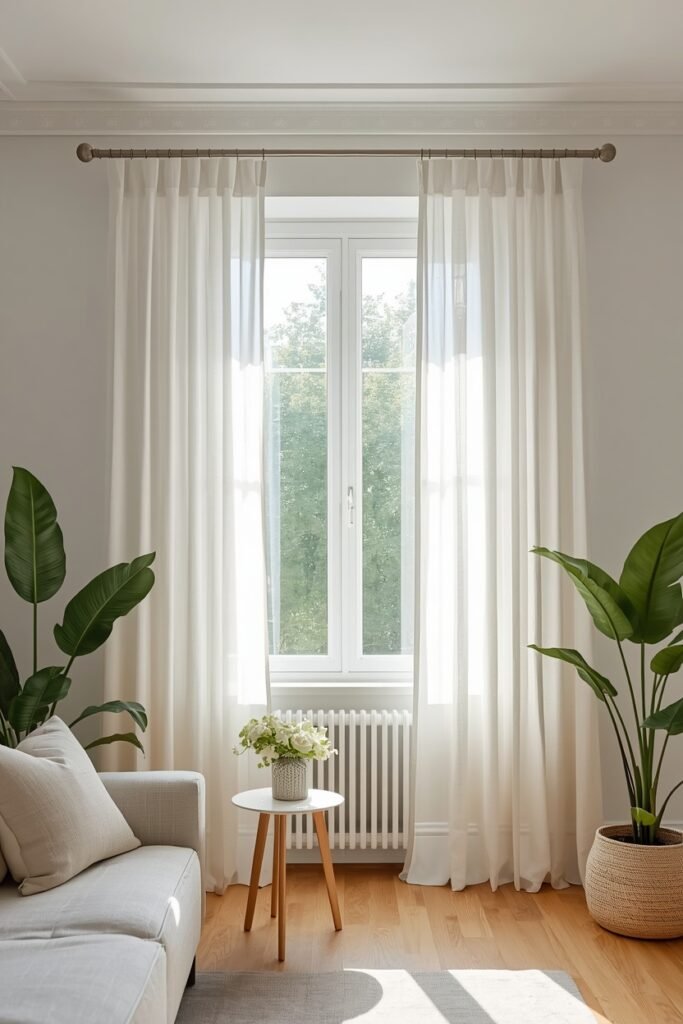
1. Ceiling-Close Ivory Curtains That Pull the Eye Up
Start with height. Hanging your curtain rod just below the ceiling, instead of right above the frame, makes the whole wall feel taller and gives the window more presence.
Here is what helps this idea work well:
- Choose soft ivory or warm white panels
- Let the fabric reach the floor cleanly
- Keep the folds relaxed, not stiff
This works especially well in living rooms with standard builder-grade windows that feel a little short. The extra drop creates a taller visual line, and the light colour keeps the room open instead of boxed in.
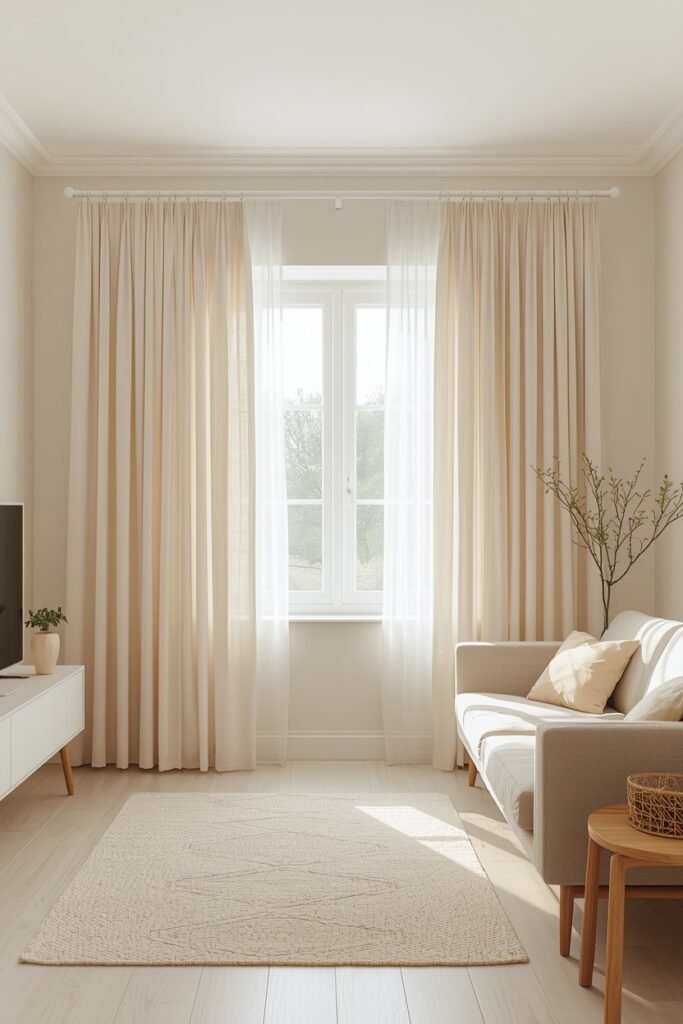
Mounting curtains close to the ceiling stretches the wall visually, so the window feels taller before anyone even notices the trick.
2. Wall-to-Wall Sheer Panels for a Wider Look
Instead of treating the window as a small centre point, dress the whole wall. Running sheer curtain panels across a much wider rod makes the glass area seem broader than it really is.
A setup like this feels light, not heavy, because the fabric still lets daylight through. It is also a smart choice if you want privacy without losing brightness.
Good places to use it:
- Narrow living room windows
- Apartment lounges with limited wall detail
- Spaces that already have soft natural light
The wider spread is the secret here. Your eye reads the full curtain span first, and the window benefits from that illusion.
Recreate this look
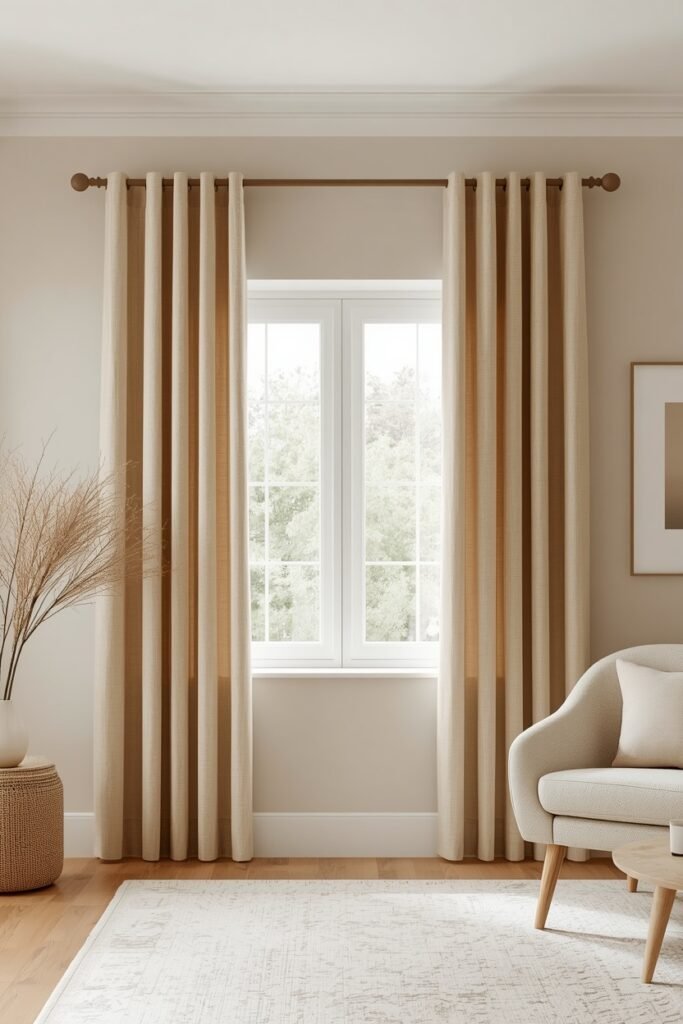
3. Tone-on-Tone Curtains That Blend Into the Wall
If you want the window to feel bigger without making the curtains the star, use fabric close to the wall colour. That soft blend reduces harsh outlines and makes the whole area feel smoother.
Try it this way:
- Match the curtain colour to the paint as closely as you can
- Choose a fabric with a little texture, like linen blend
- Keep the hardware simple and not too dark
This approach suits calm living rooms where you want the architecture to breathe. It is subtle, but it often makes a small window feel less boxed in and more built into the room.
| High Contrast Curtains | Tone-on-Tone Curtains |
|---|---|
| Frame the window strongly and draw clear edges. | Soften the edges so the wall and window feel more continuous. |
| Can make a small opening stand out more. | Helps a modest window feel less visually chopped up. |
4. Extra-Wide Rods That Let More Glass Show
A common mistake is hanging curtains so they cover part of the window even when open. An extra-wide rod fixes that by giving the panels room to sit off to the sides.
That means:
- more visible glass
- more daylight
- a wider-looking opening
It is a small hardware change, but it has a big visual effect. This trick works well with almost any curtain style, from tailored pleats to relaxed linen. If your living room feels dim or the windows seem pinched, this is one of the easiest fixes to try first.
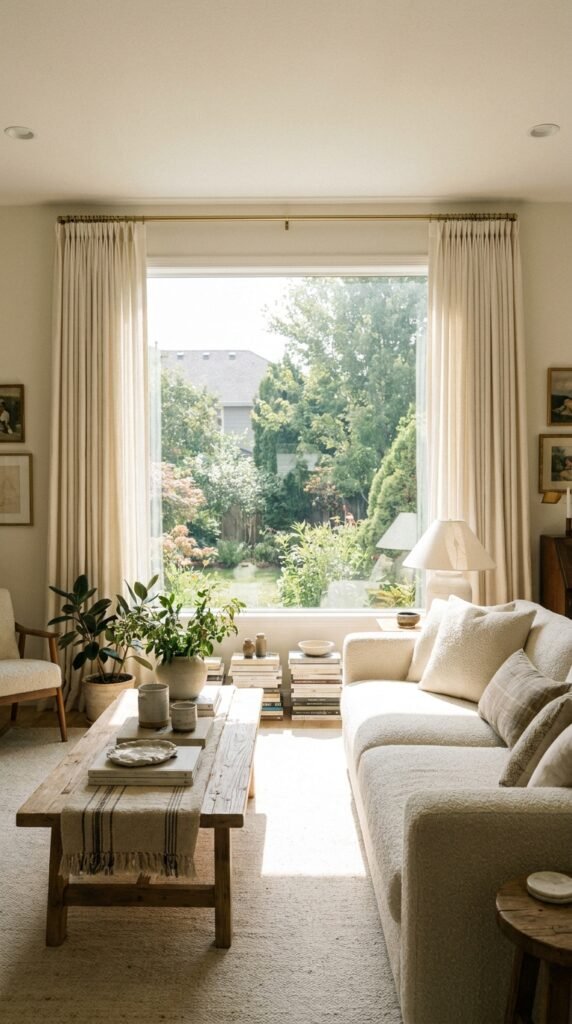
5. Full-Length Linen Curtains With a Soft Floor Kiss
Some curtains stop too high and break the line of the wall. Full-length panels that just touch the floor give the window a neater, taller finish.
A linen or linen-look fabric is especially useful here because it hangs with a little body but still feels relaxed. Skip anything too short or too stiff.
Quick tip: let the hem barely skim the floor rather than puddling too much. A small floor kiss looks tidy in a busy family living room and still gives you that long, stretched shape. This is one of those details people notice without realising why the room feels better.
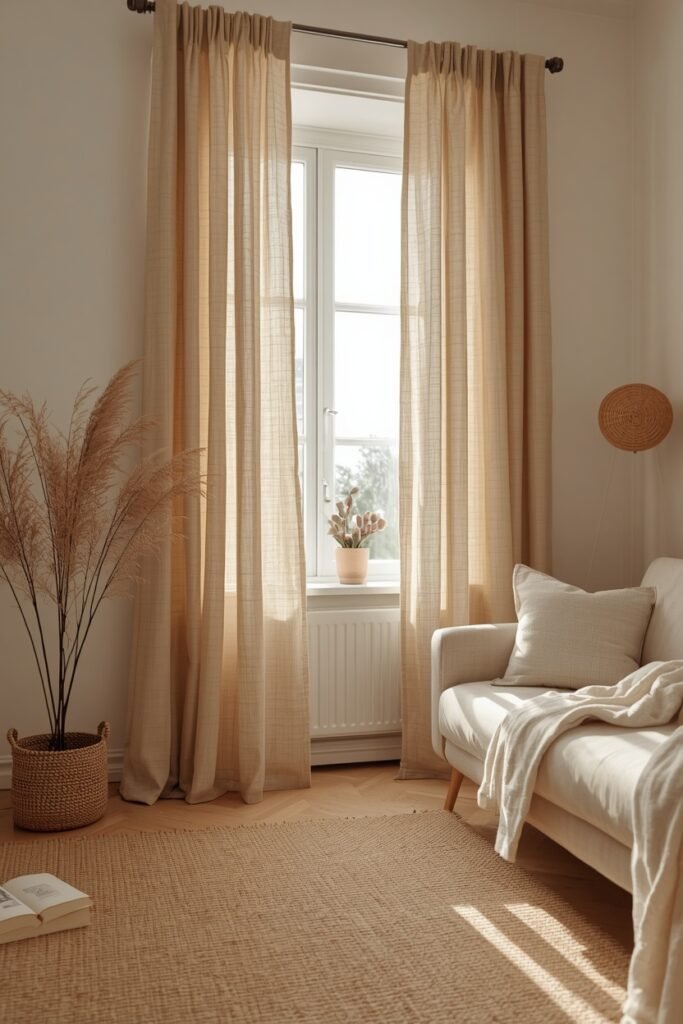
💡 Quick Tip
Measure from the rod to the floor before buying panels. Curtains that land just right look far more expensive and help the window feel taller.
6. Vertical Stripe Curtains That Nudge the Eye Upward
Pattern can help, as long as it stays soft. Curtains with subtle vertical stripes draw the eye up the same way pinstripes lengthen clothing.
This idea works best when the stripe contrast is gentle rather than loud. Think cream with taupe, pale grey with white, or sandy beige with a slightly deeper thread.
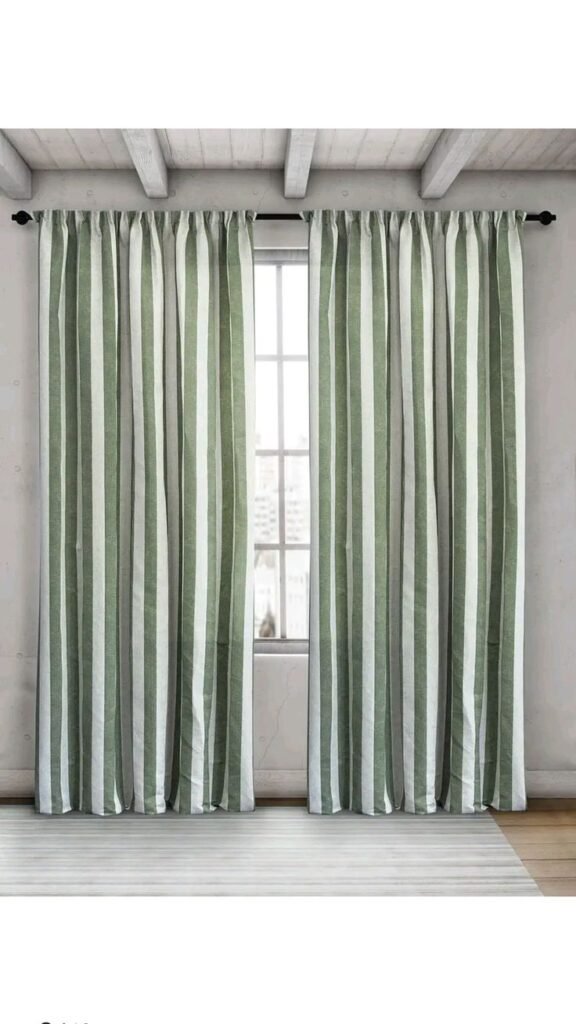
The stripes should support the room, not dominate it. If your living room already has busy cushions or a patterned rug, keep the curtain pattern fine and quiet.
7. One Continuous Rod Across Paired Windows
Two small windows can feel choppy when each one gets its own short curtain setup. A single rod running across both windows brings them together and makes the whole wall feel broader.
To pull it off:
- Install one continuous rod across the full span
- Use matching panels at the outer ends and between the windows only if needed
- Keep the fabric colours light so the wall still feels open
This idea is useful in living rooms with twin windows around a sofa or fireplace. The room feels calmer, and the eye reads one larger arrangement instead of separate little boxes.
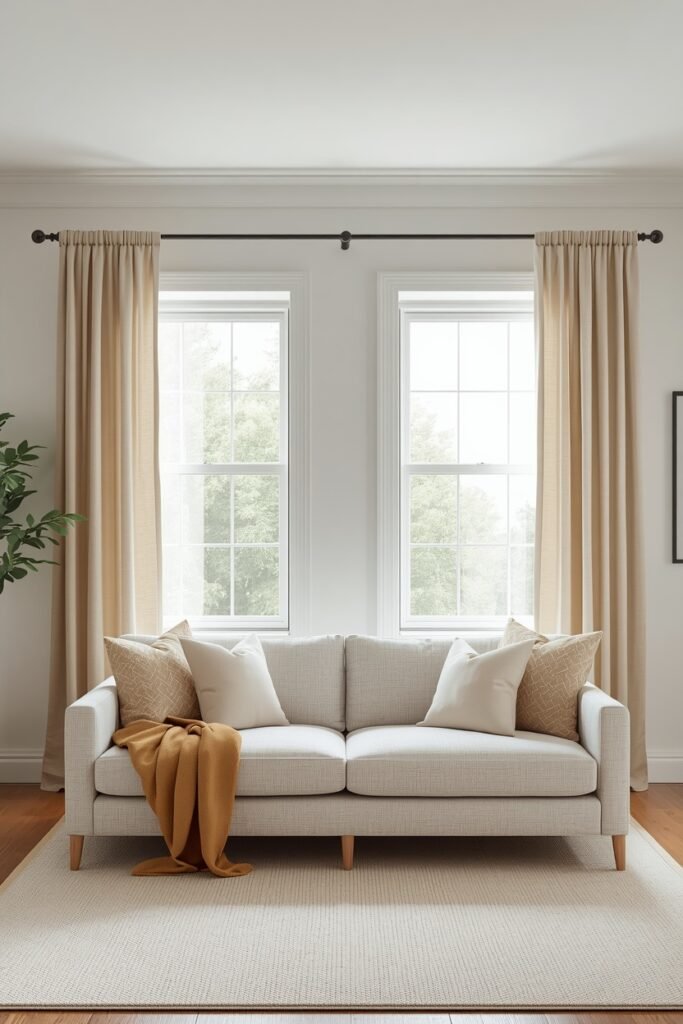
Treat both windows as one feature wall instead of two separate openings.
Keep curtain height consistent across the full run to create one long visual line.
Let the outer panels frame the group so the wall feels wider.
8. Held-Back Side Panels That Open the View
Sometimes the best curtain move is giving the glass more breathing room. Slim side panels pulled back with simple tiebacks keep the softness of fabric while leaving most of the window open.
Use this approach if:
- your living room gets nice daylight
- the window is not very wide
- you want a dressed look without heaviness
The key is restraint. The panels should frame the opening, not spill into it. This look is especially good in smaller lounges where every bit of visible glass helps the room feel less closed in.
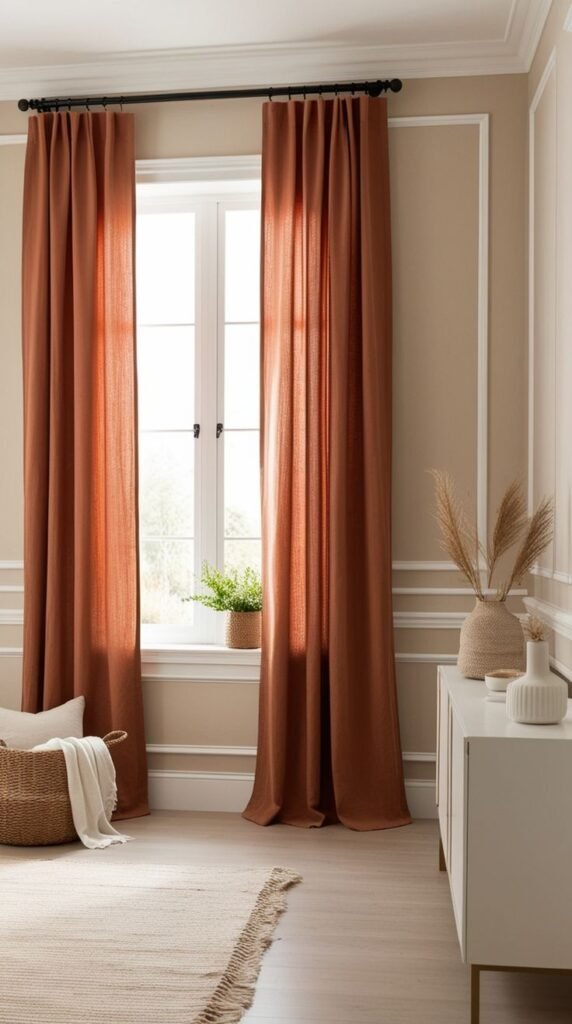
Use narrow panels and pull them back neatly so the glass stays visible.
Choose tiebacks in a simple fabric or slim metal finish.
Do not use thick bulky panels that crowd the frame even when tied back.
Avoid dark heavy colours if your room already feels dim.
9. Sheer-and-Drape Layers in the Same Colour Family
Layering can still make windows look bigger if the colours stay calm. A sheer inner layer plus a slightly heavier outer drape adds depth without breaking up the wall.
Before and after, the difference is mostly about finish:
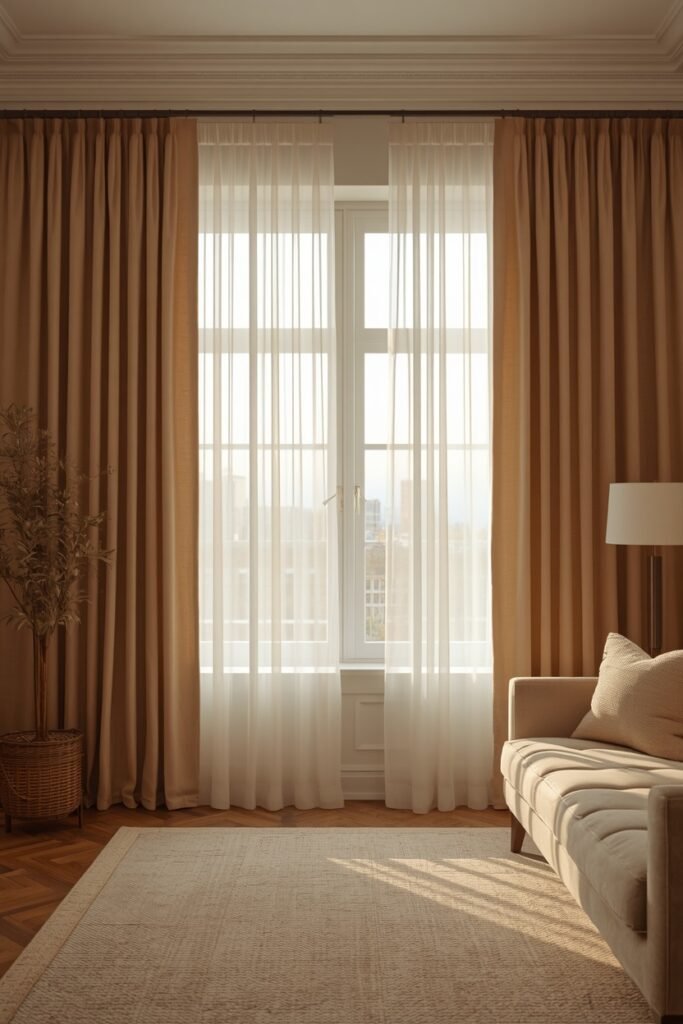
A single flat curtain layer can leave the window looking plain or a bit thin, especially on a big wall.
Layered sheers and drapes give the opening more depth while keeping the overall look soft and continuous.
For the cleanest result, keep both layers in the same family, like white and oatmeal or cream and sand. You get texture and softness, plus better light control, without making the window line feel busy.
10. Hidden Track Curtains for a Clean, Built-In Finish
If you like a more polished look, a hidden curtain track is a smart move. The fabric appears to drop straight from the ceiling or a recessed detail, which makes the window treatment feel built in rather than added later.
Here is what to look for:
- ceiling-mounted track instead of a visible rod
- simple ripple-fold or wave-style panels
- light fabric that hangs in even lines
This idea suits modern living rooms and newer renovations, but it can also sharpen up an older room. The finish feels clean, and the uninterrupted top line helps the window area read taller and more intentional.
- ▸Best for: modern, minimal, or newly updated living rooms.
- ▸Look for: smooth wave folds and fabric that falls in clean vertical lines.
- ▸Main benefit: the window treatment feels taller, cleaner, and less visually cluttered.
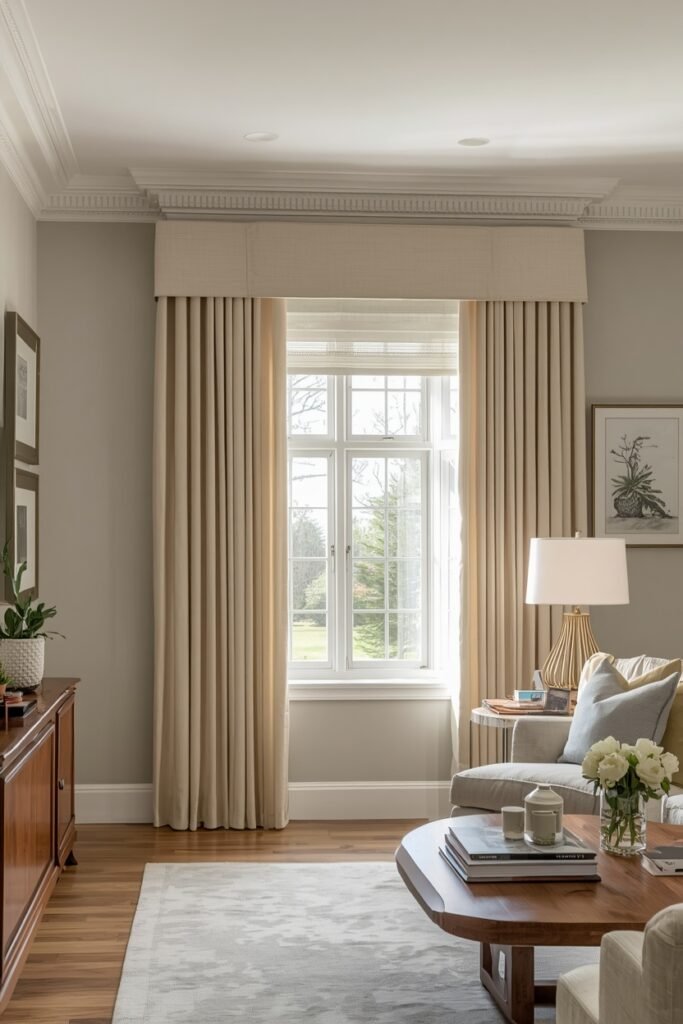
11. A High, Wide Pelmet That Hides the True Window Frame
A slim pelmet can change the apparent size of a window before the curtains even open. Mount it close to the ceiling and extend it beyond both sides of the frame.
The pelmet hides the curtain track and the real top edge of the window, so the eye assumes the opening continues behind it.
Keep the design simple:
- Match it closely to the wall colour
- Choose a shallow, clean shape
- Let the curtains drop straight from underneath
- Avoid bulky carved details that feel heavy
This works especially well when the original window sits low on a tall wall.
12. Deep Pinch Pleats That Create a Stronger Frame
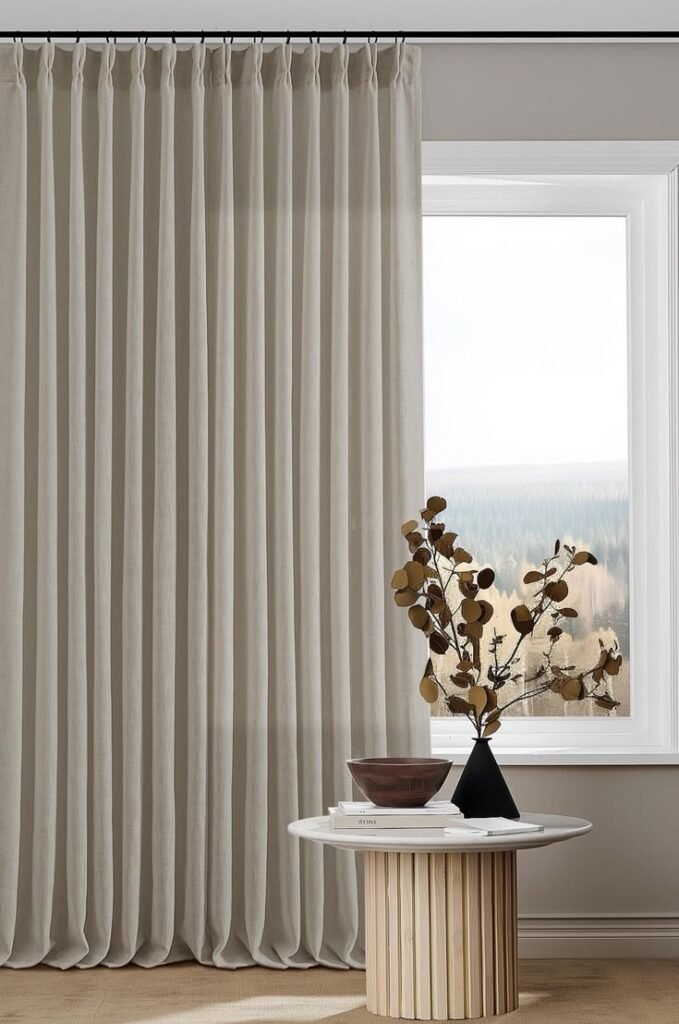
Clean, even pleats make curtain panels look fuller and more substantial. That extra fullness gives a small window a stronger architectural frame without adding a busy pattern.
Pinch pleats work best when the panels have enough fabric to form deep folds, rather than hanging thin and flat. Keep the curtains stacked beyond the glass when open so the pleats build volume at the outer edges.
A light neutral fabric keeps the look bright, while the structured heading adds polish. The result feels intentional, which helps the window read as a larger feature instead of a small opening with fabric beside it.
💡 Fullness Tip
Choose panels with generous fullness. Thin curtains lose their shape and can make the window treatment look narrow.
13. A Continuous Curtain Track Around a Window Corner
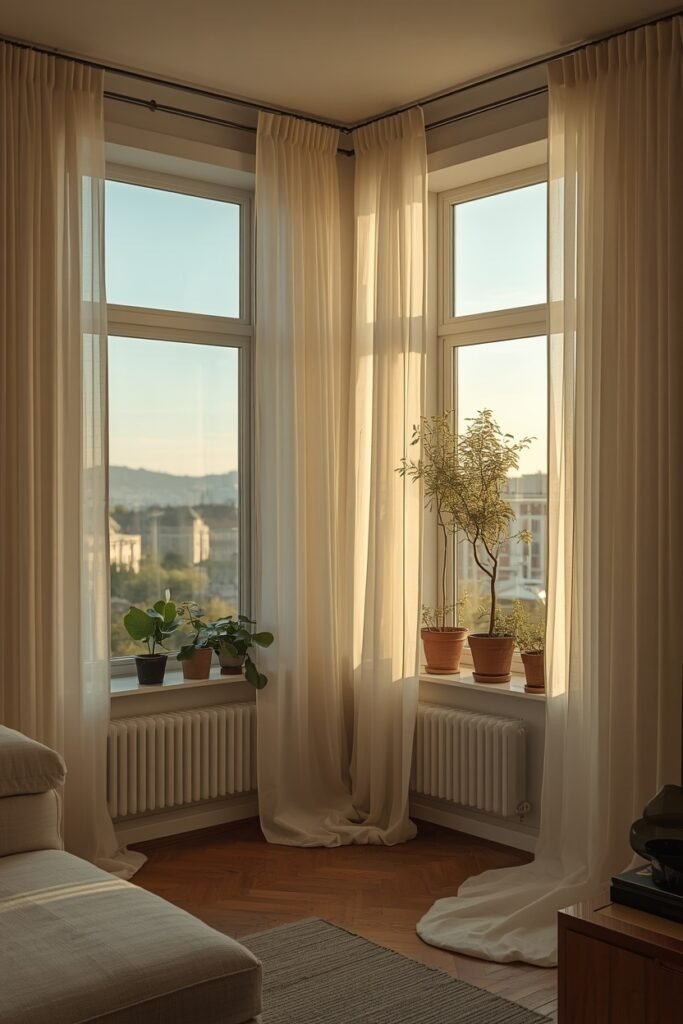
Corner windows often look smaller when each opening is treated as a separate box. A continuous track that turns the corner joins them into one larger glass feature.
This arrangement works well when two windows meet on adjoining walls. Use the same curtain fabric across both sides, keep the hanging height identical, and let the folds move smoothly around the bend.
The connection matters more than decoration. One flowing treatment helps the eye follow the room rather than stopping at each frame.
14. An Outside-Mounted Roman Shade With Side Drapes
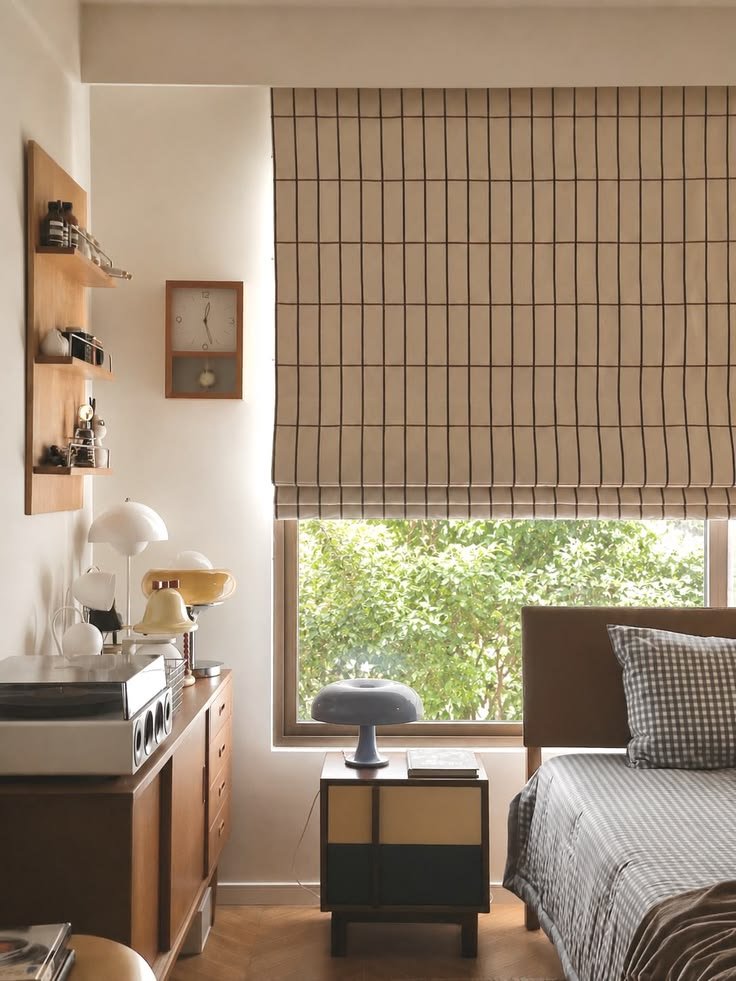
Mounting a Roman shade above and beyond the frame can make a small window appear both taller and wider. Add simple side curtains to extend the illusion even further.
An outside mount hides the real window edges when the shade is lowered. When raised, most of the fabric stacks above the glass instead of blocking daylight.
Keep the shade and curtains in related tones so they feel like one treatment. A soft woven shade with plain linen side panels gives depth without making the area feel crowded.
| Inside Mount | Outside Mount |
|---|---|
| Shows the true size of the frame. | Covers the edges and suggests a larger opening. |
| Fabric stacks within the glass area. | Fabric can stack above the glass for more light. |
15. One Full Curtain Sweep Across a Bay Window
Bay windows can feel broken into several small sections when each pane gets a separate curtain. Treating the entire bay as one unit creates a broader and calmer outline.
Use this order:
- Fit one track across the full shape of the bay
- Hang matching curtains at consistent height
- Stack the panels toward the outer walls
- Keep the centre glass as open as possible
The continuous top line ties the angled panes together. It also gives the bay a stronger presence in the room, especially when the area includes a window seat or reading corner.
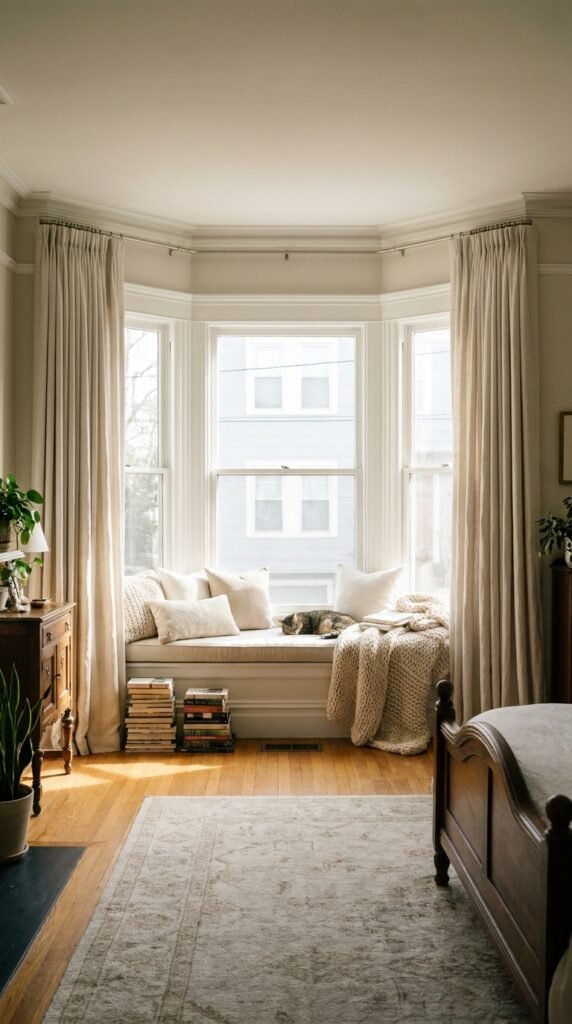
Follow the full bay shape with one connected track.
Keep every curtain panel at the same height and length.
Push the fabric outward so the centre panes stay bright.
16. Broad Panels Instead of Several Narrow Curtains
Fewer curtain panels can make the window area feel cleaner and wider. Several narrow panels create extra seams, gaps, and vertical breaks that may chop up a small wall.
Choose one generous panel for each side and let the fabric fall in broad, relaxed folds. The larger shapes frame the glass without making the treatment feel fussy.
This idea is especially useful for a single living room window behind a sofa. It keeps the background calm and gives the furniture, curtains, and window one balanced composition.
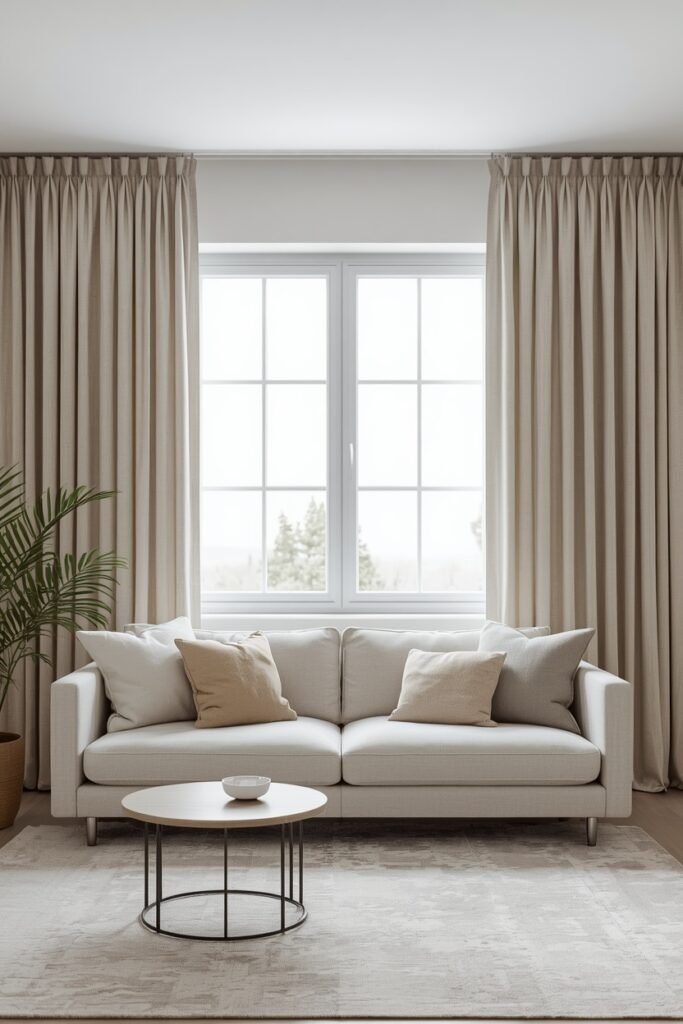
Two broad panels create a calmer frame than several skinny pieces, helping the window feel wider and less divided.
17. Curtain Returns That Wrap Neatly Back to the Wall
A return rod curves toward the wall at each end, allowing the curtain fabric to wrap around the sides. This hides the narrow gaps where the wall and window frame normally show.
The finished outline looks deeper and more complete, which can make the window treatment feel built into the room. It also reduces strips of light around blackout curtains.
Use long panels with enough width to follow the curve without pulling tight. The front view should stay simple, while the side return quietly finishes the shape.
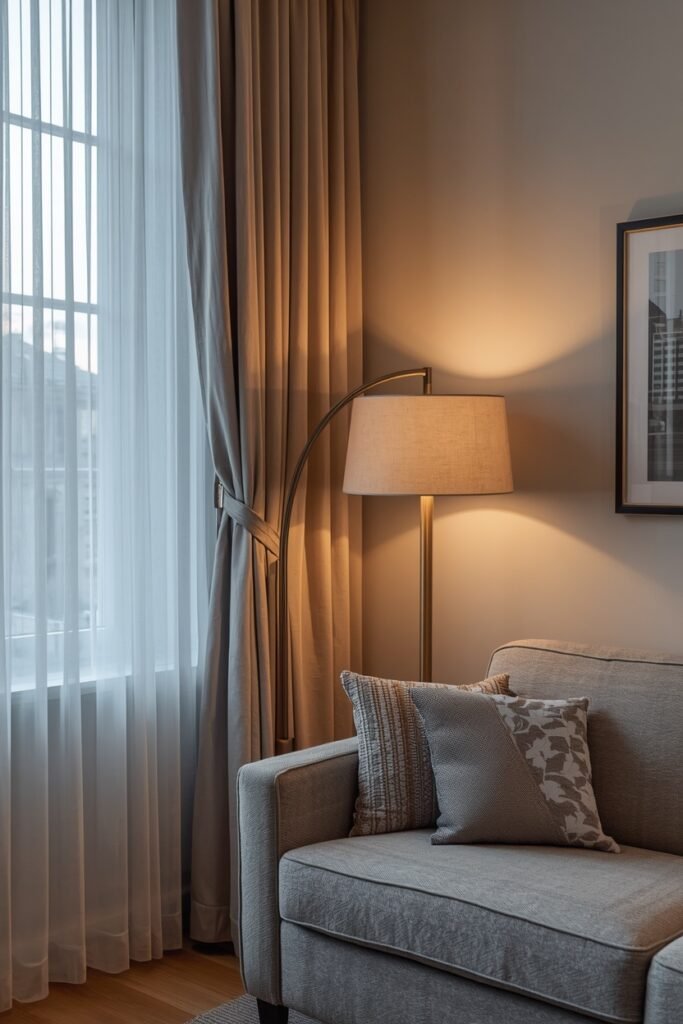
Use enough fabric to follow the curved rod without stretching.
Keep the outer edge close to the wall for a finished look.
Do not leave the side fabric tight or twisted.
Avoid a short rod that ends directly at the window frame.
18. Light-Coloured Curtains With a Hidden Blackout Lining
Pale curtains sometimes look thin when strong daylight shines through them. Adding a blackout or dim-out lining gives the panels more weight, helping them hang in straighter, fuller folds.
You still get the open look of cream, ivory, or soft beige from the front. The hidden lining simply improves the shape and gives better privacy after dark.
It also helps the panels frame the window more strongly when they are open. Choose lining that does not make the fabric stiff, and check that both layers finish at the same length.
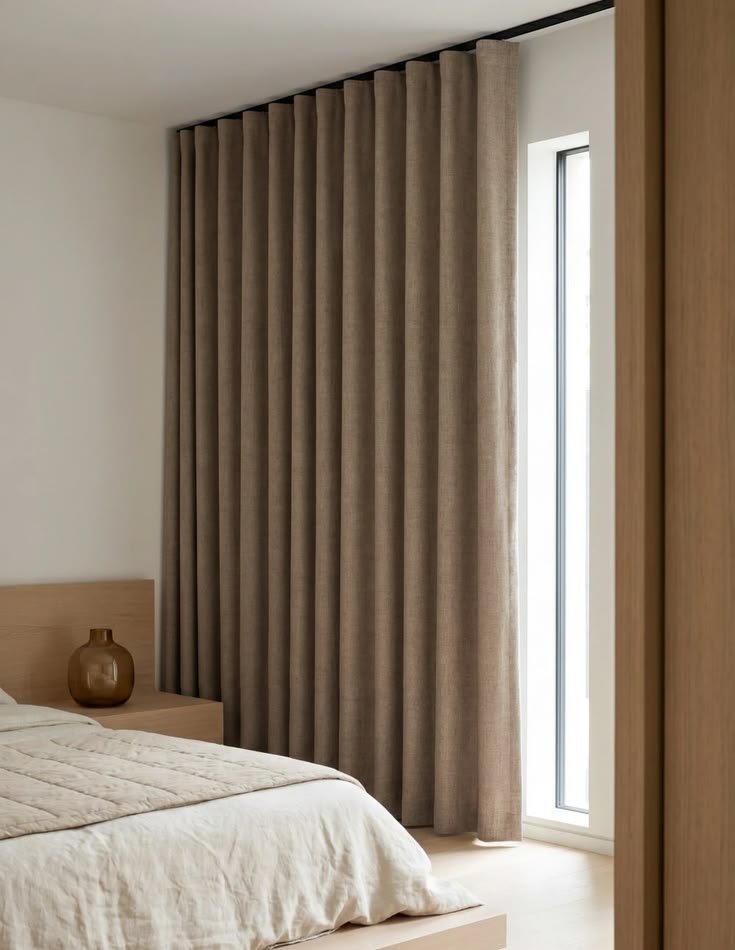
Light passes through easily, but the curtain may look flat or lose its shape.
The fabric hangs with more body, giving the window a fuller and more polished frame.
19. A Slim Contrast Border Along the Outer Curtain Edges
A narrow darker border can help push the apparent width of the curtain treatment outward. Place the border along the far outer edge of each panel, not beside the glass.
The centre remains light and open, while the subtle border gives the full arrangement a clear finish. Soft combinations work best, such as cream with taupe, white with warm grey, or pale beige with muted brown.
Keep the trim narrow. A thick dark band may overpower a small window, while a slim edge quietly defines the wider curtain span.
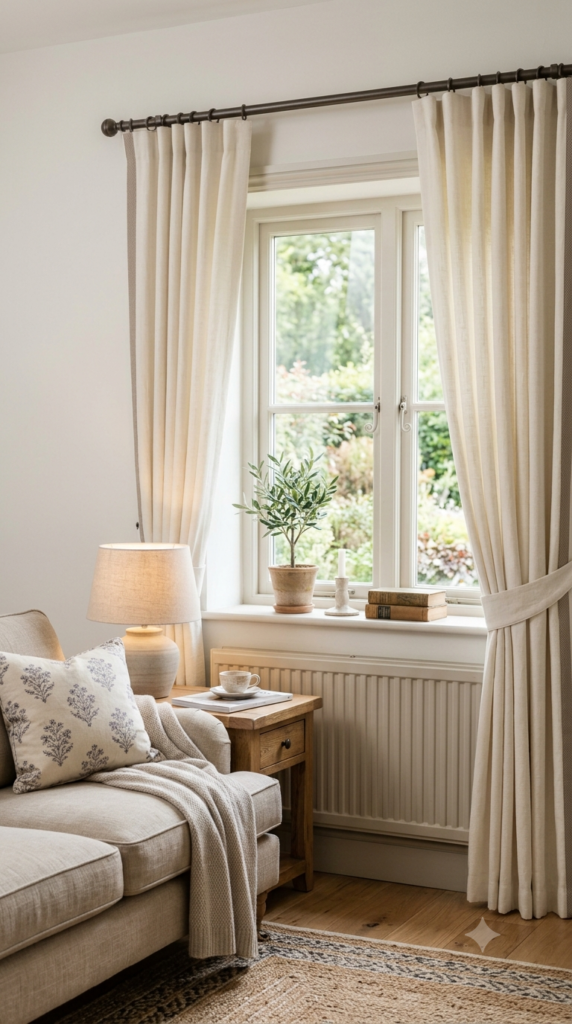
Border placement checklist
20. Full-Length Side Curtains With a Lower Café Sheer
Keep the upper part of the window open by covering only the lower glass with a light café sheer. Add full-length side panels to frame the complete height.
This combination protects privacy where it is usually needed while leaving the top section bright and visible. The uncovered upper glass draws the eye upward, and the long side curtains keep the full treatment grounded.
Choose a café sheer that blends with the side panels rather than creating a sharp horizontal block. Soft white, ivory, and pale oatmeal work well together. This setup suits street-facing living rooms where daylight and privacy both matter.
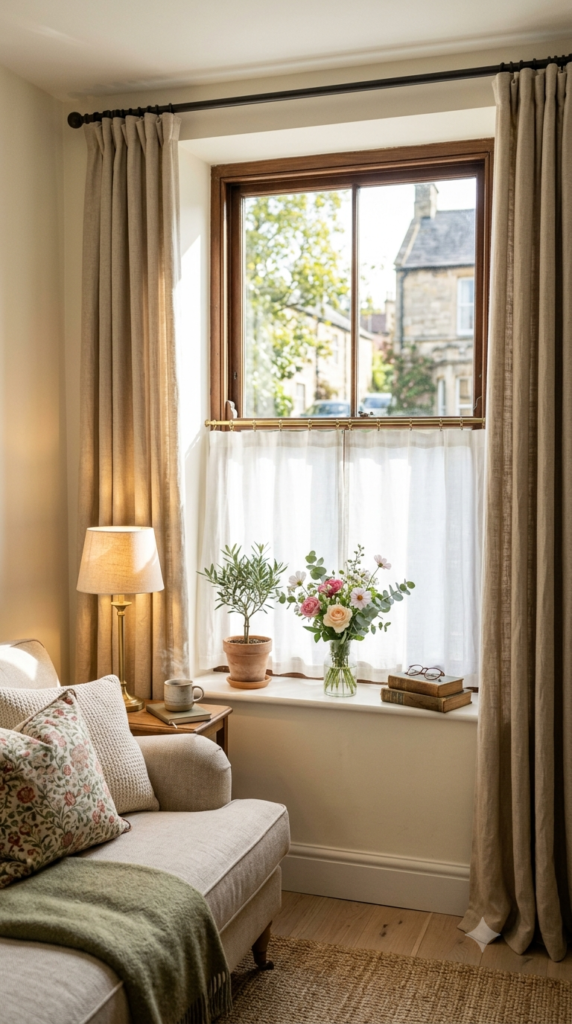
The café sheer protects the lower view while the open upper glass and long side panels help the window feel brighter and taller.
Conclusion
Curtains can change how large a living room window feels without any major building work. Hanging panels higher, extending them beyond the frame, choosing full lengths, and keeping more glass visible can all make a noticeable difference.
Start with the adjustment that solves your biggest issue. Use ceiling-height curtains for a short window, wide rods for a narrow one, or light layered fabric when you need privacy without losing daylight. Even a small change in placement can make the whole wall feel better balanced. Save your favourite living room curtain ideas to Pinterest so you can compare them when it is time to update your windows.