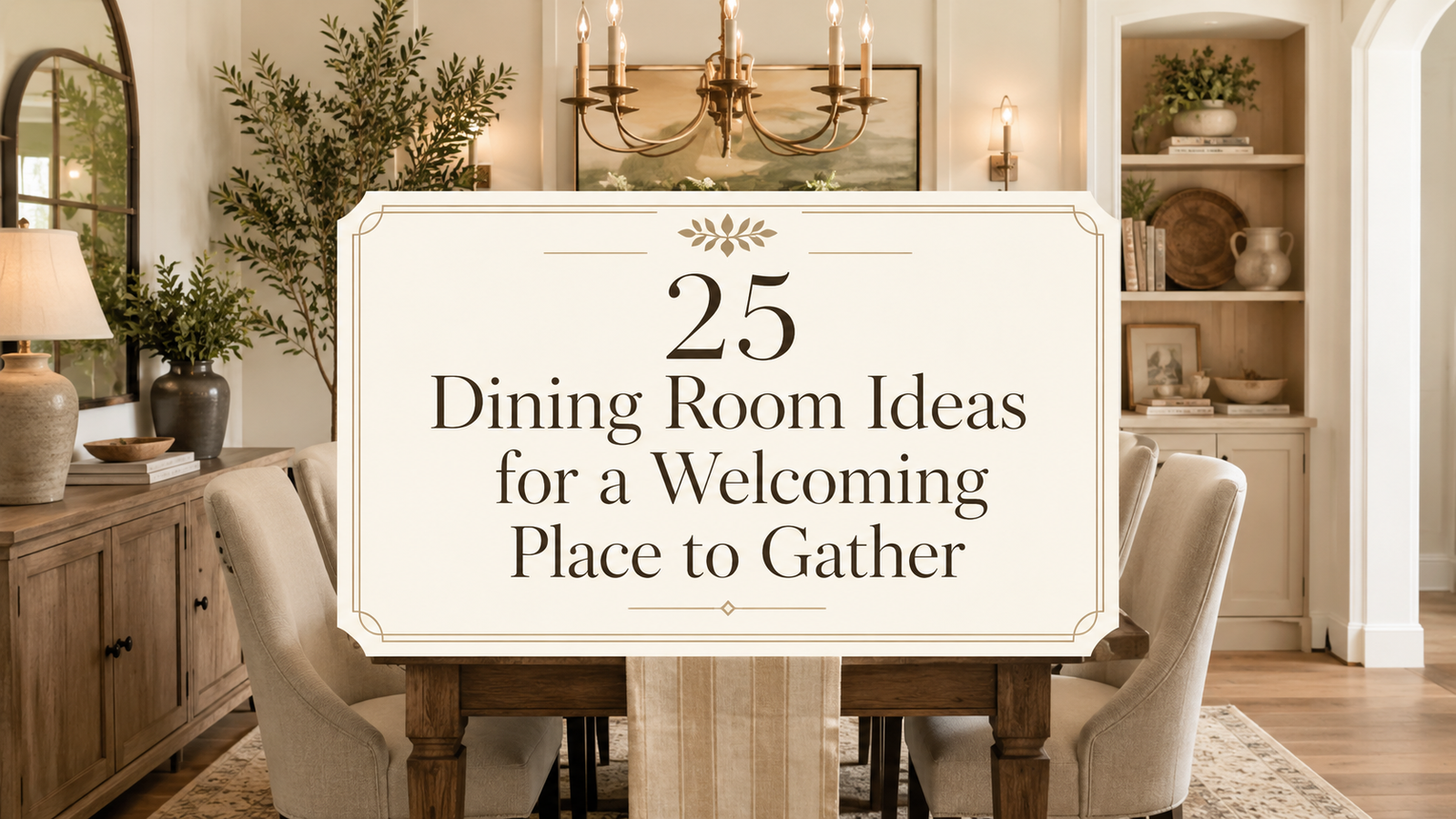
25 Dining Room Ideas for a Welcoming Place to Gather
A dining room can have a beautiful table and still feel oddly unfinished. The problem is usually not that the room needs more decor. It is that the pieces are not working together to make sitting down, serving food, and staying awhile feel easy.
The best dining room ideas for a welcoming place to gather usually start with practical choices. A table that fits the room. Chairs that are comfortable enough for long dinners. Lighting that feels warm instead of harsh. Storage that keeps serving pieces nearby without covering every surface.
Small details matter too. A rug that lets chairs slide back properly, curtains that soften a bare wall, or one strong focal point can change how the whole room feels without requiring a full makeover.
The ideas below mix layout, furniture, lighting, storage, color, and styling so you can build a dining space that looks considered but still works for ordinary breakfasts, weeknight dinners, and people dropping by.
1. Center the Room Around a Table That Fits the Way You Gather
The table should solve the room before it decorates it.
A long rectangular table works well when the room has clear length and you often seat several people. A round table can make conversation easier in a compact space because nobody gets pushed toward a distant end. Square tables feel balanced in rooms that are close to equal in width and length.
Before buying, check three things:
- How many people sit there on a normal week
- How many you need to seat occasionally
- Where chairs will land once they are pulled out
A table that looks impressive but blocks the walkway quickly becomes annoying. Choose for movement first, then style.
2. Hang the Dining Light Low Enough to Feel Connected to the Table
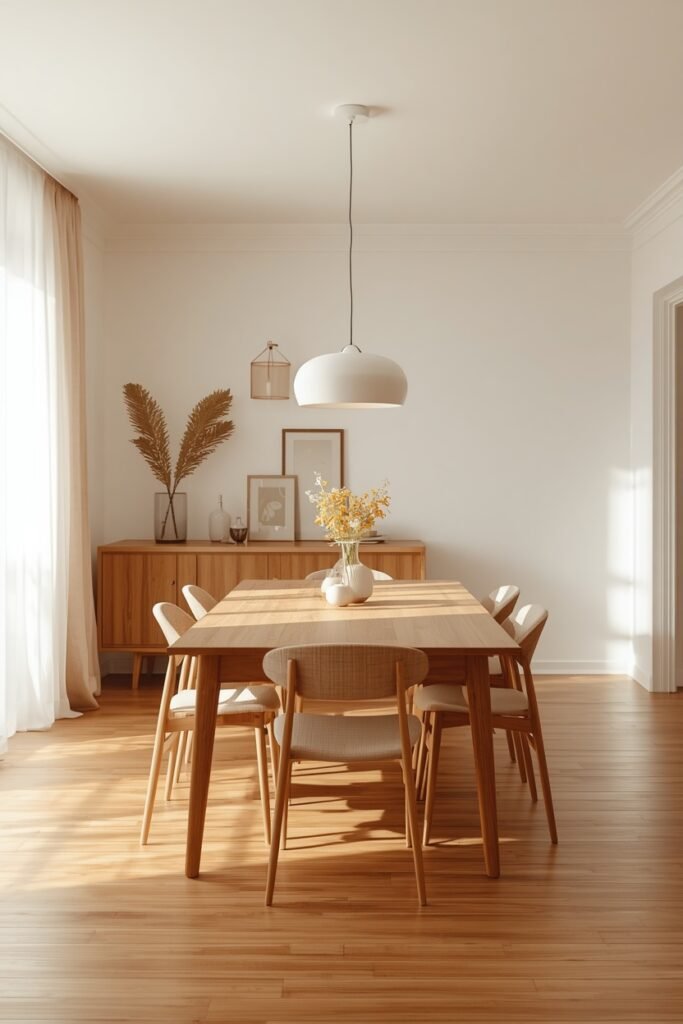
A pendant that sits too close to the ceiling can make the table and light fixture feel like two unrelated objects.
Bring the fixture down so it visually belongs to the dining area, while keeping enough space for people to see across the table comfortably. The exact height depends on the fixture, ceiling, and table, so judge it from both sitting and standing positions.
A simple check:
- Sit at the table.
- Look across at the opposite chair.
- Make sure the fixture does not cut through anyone’s face or sightline.
For long tables, two smaller pendants can sometimes feel better balanced than one tiny fixture floating in the middle.
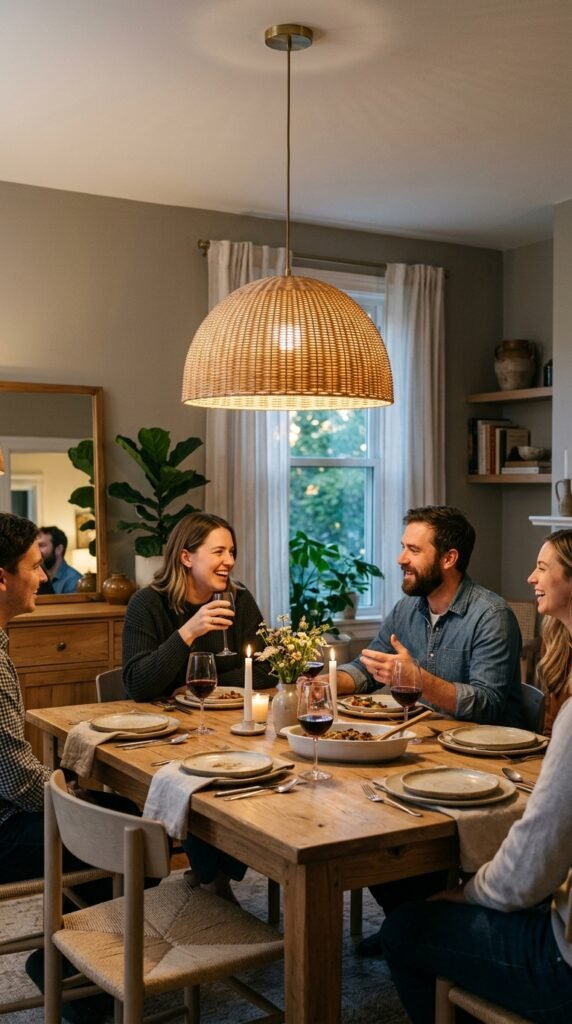
💡 Quick Tip
Judge pendant height while seated, not only while standing in the room. The fixture should frame the table without blocking faces or conversation.
3. Mix Dining Chairs Instead of Buying a Perfectly Matched Set
A dining set does not need every chair to be identical to look intentional.
The easiest mix is to keep one or two details consistent. That could be the wood tone, seat height, upholstery color, or overall silhouette. Then let another detail change. For example, pair simple side chairs with upholstered end chairs, or mix two chair styles in the same wood finish.
What usually looks messy is not variety itself. It is too many unrelated differences at once.
Keep the seat heights close so everyone sits comfortably at the same table. Also check chair width before mixing styles. A wide armchair at each end can quietly add more space than expected.
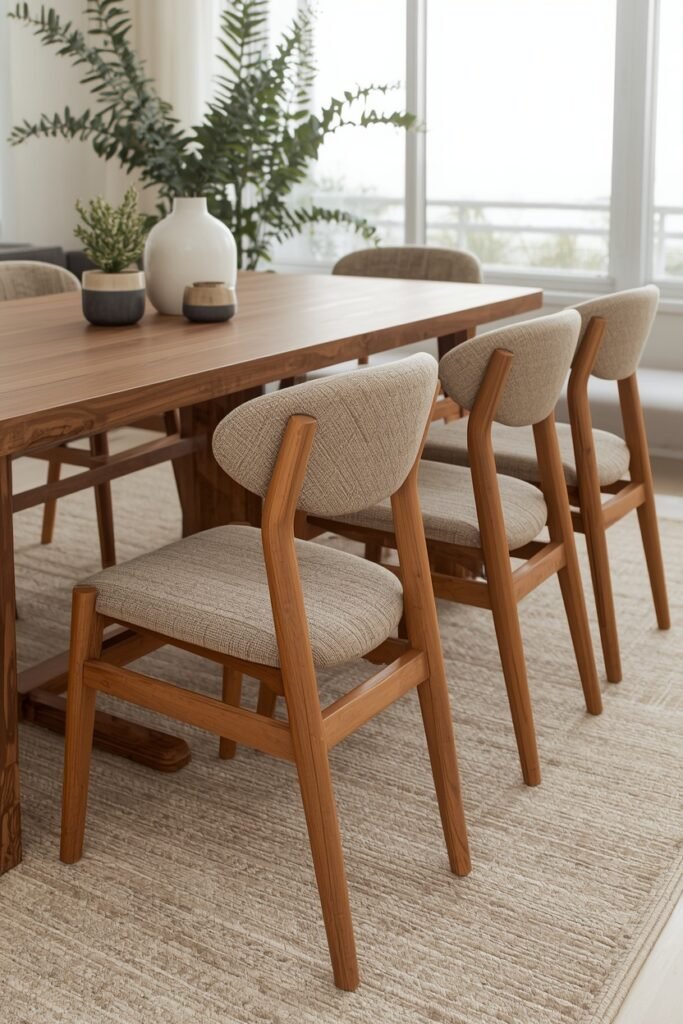
Repeat one clear element such as wood tone, fabric color, or chair height.
Use a different chair shape at the table ends for controlled contrast.
Mixing several wood tones, seat heights, fabrics, and silhouettes with no shared detail.
Choosing wide armchairs without checking how they fit under the table.
4. Use a Rug Large Enough for Chairs to Stay on It When Pulled Out
A dining rug should make the room feel grounded, not create a daily wrestling match with chair legs.
The common trouble starts when the rug looks large enough under the table but becomes too small once someone pulls a chair back. The rear legs slip off the edge, then catch when the chair moves forward again.
Check the rug with the chairs in use, not tucked neatly under the table.
Before buying, look for:
- Enough rug beyond every chair
- Clear space from nearby cabinets or walls
- A low or manageable pile that chairs can move across
- A material you are comfortable cleaning after spills
A slightly larger rug usually feels calmer than one that barely fits.
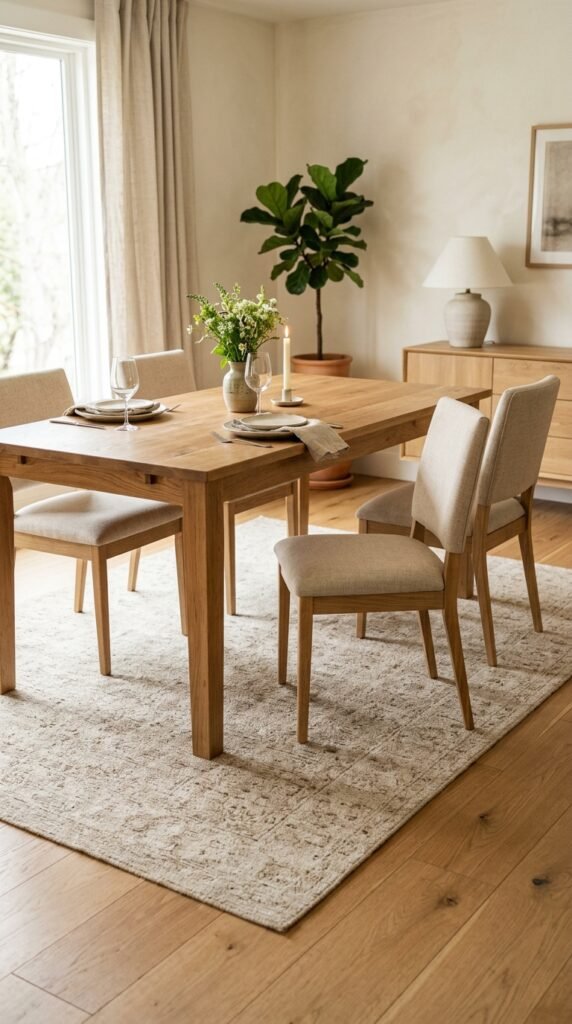
Dining rug check
5. Give One Wall a Clear Focal Point Instead of Decorating Every Surface
A dining room often feels more polished when your eye has one obvious place to land.
That might be a large framed artwork, an oversized mirror, a pair of prints, or a compact gallery arrangement. The key is to let the focal wall do the heavier visual work instead of filling every empty patch with small decor.
Start by choosing the wall you notice first when entering the room.
Then keep nearby surfaces quieter:
- A simple bowl on the sideboard
- One lamp rather than several small objects
- Fewer pieces on surrounding walls
This gives the room enough detail to feel finished without making dinner happen inside a collection of competing decorations.
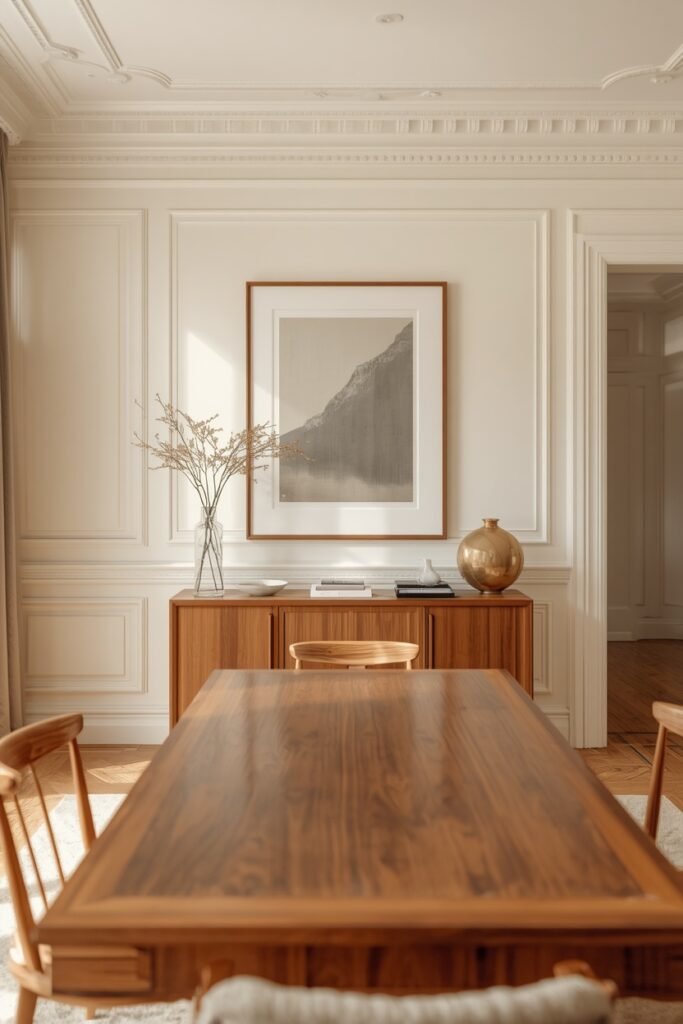
Several small wall pieces, crowded shelves, and tabletop decor all compete for attention.
One stronger focal wall leads the room, while nearby surfaces stay simpler and easier on the eye.
6. Add a Sideboard Where Serving Pieces and Table Clutter Can Disappear
A sideboard earns its space when it solves the things that usually end up sitting on the dining table.
Use the inside for serving bowls, table linens, candles, spare glasses, and pieces you reach for during meals. Keep the top much simpler so it does not become another drop zone for mail, chargers, and random household items.
A good setup is easy to maintain:
- Store meal related pieces together.
- Keep frequently used items near the front.
- Leave enough empty space on top for serving food when guests come over.
If the dining room is narrow, look for a shallower piece rather than squeezing in a deep cabinet that tightens the walkway.
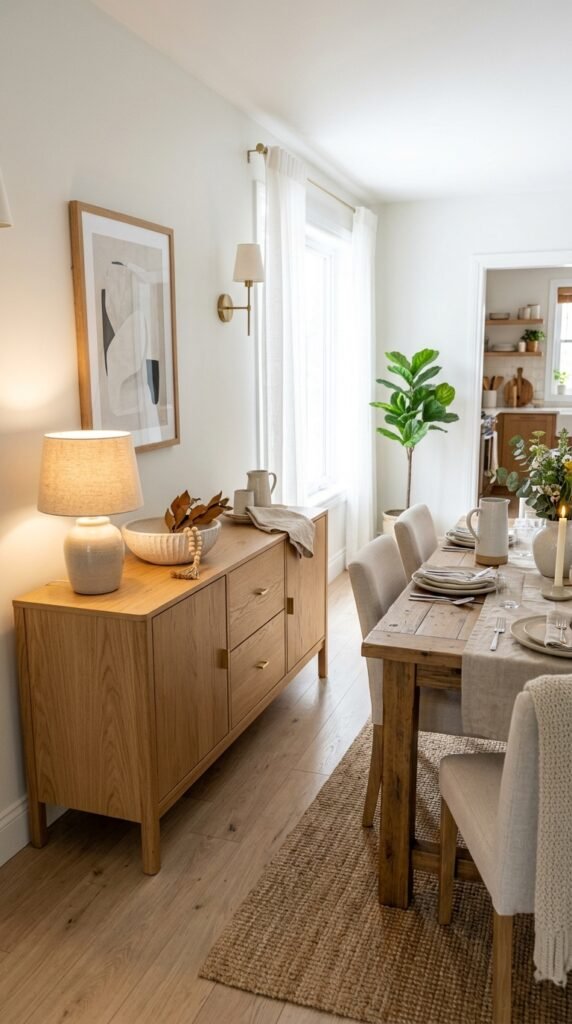
Group serving bowls, platters, glasses, and table linens by use so you are not hunting through different cabinets.
Keep everyday pieces within easy reach and move seasonal or rarely used items toward the back.
Leave part of the top clear so the sideboard can become a practical serving surface when needed.
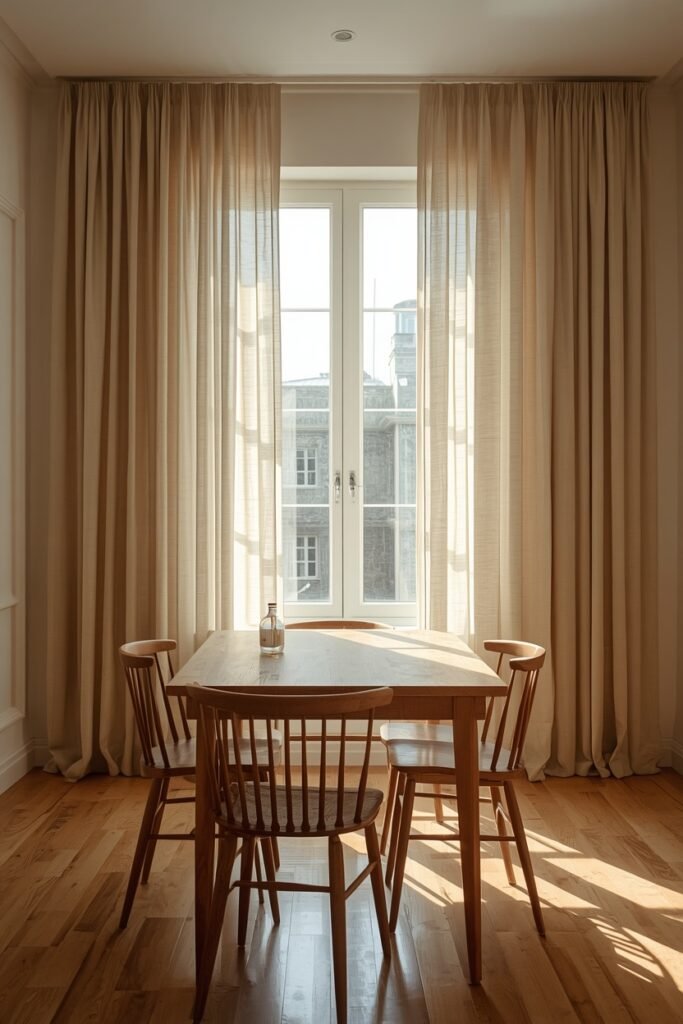
7. Warm Up a Plain Dining Room With Curtains That Reach the Floor
Bare windows can make a dining room feel sharper and more exposed than the furniture suggests.
Long curtains soften that hard edge and add vertical movement, especially in rooms with a lot of wood, glass, or straight furniture lines. Hang them high enough to visually stretch the wall, and let the panels reach close to the floor rather than stopping awkwardly halfway down.
For everyday use, think beyond appearance:
- Lightweight fabric keeps the room bright.
- Heavier fabric gives more privacy and visual weight.
- A simple woven texture works well when the room already has plenty of pattern.
The goal is not dramatic window dressing. It is a softer frame around the dining area.
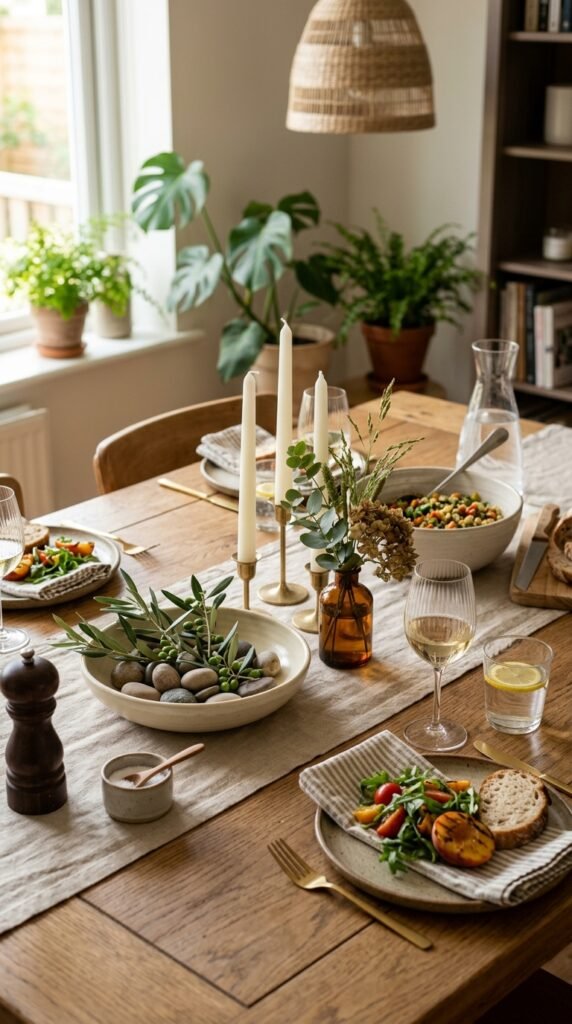
8. Build a Table Centerpiece That Leaves Room for Dinner
A centerpiece should still make sense once plates, glasses, and serving dishes arrive.
Tall arrangements can look lovely when the table is empty, but they often get moved the second people sit down. For everyday styling, lower pieces are easier to live with. A shallow bowl, a small vase, or a grouped set of candleholders can give the table a finished look without blocking conversation.
Keep scale in mind too. A tiny object can disappear on a long table, while a wide arrangement can eat up useful space.
A helpful rule is to choose something that looks intentional when the table is bare but does not need to be removed for a normal meal.
| Easy Everyday Choice | Usually Better for Occasions |
|---|---|
| Low bowl with fruit or seasonal branches | Large floral arrangement that blocks sightlines |
| Small grouped candleholders | Wide decor arrangement that leaves little serving room |
| Compact vase with short stems | Tall vase that needs to be moved during meals |
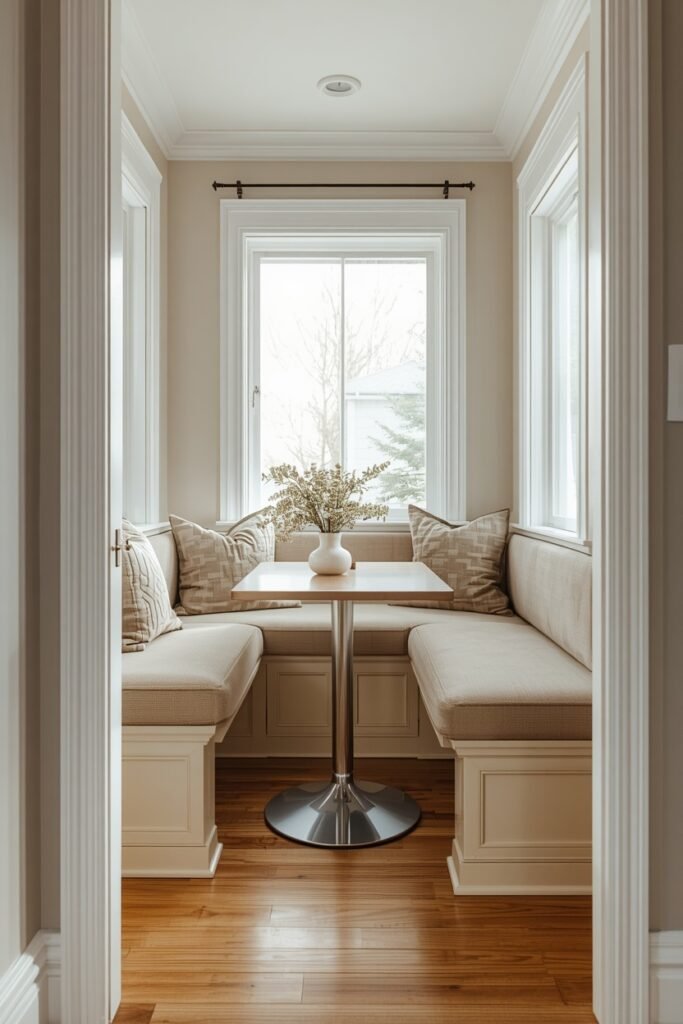
9. Create a Dining Nook With a Bench Along One Wall
A bench can make better use of a wall that would otherwise sit empty behind a row of chairs.
It works especially well in smaller dining rooms, breakfast areas, or spaces where you need to keep one side of the table visually quieter. A bench also lets people slide in closer together when an extra guest appears.
There are a few practical choices to make first:
- Backless benches keep the look open.
- Cushioned benches are better for longer meals.
- Built in seating can hide storage underneath.
- Freestanding benches are easier to move later.
Leave enough table clearance so nobody feels pinned against the wall. Comfort matters more than squeezing in one more seat.
10. Bring in Wood Tones to Keep a Neutral Dining Room From Feeling Flat
Neutral dining rooms need contrast in texture and tone, not necessarily more color.
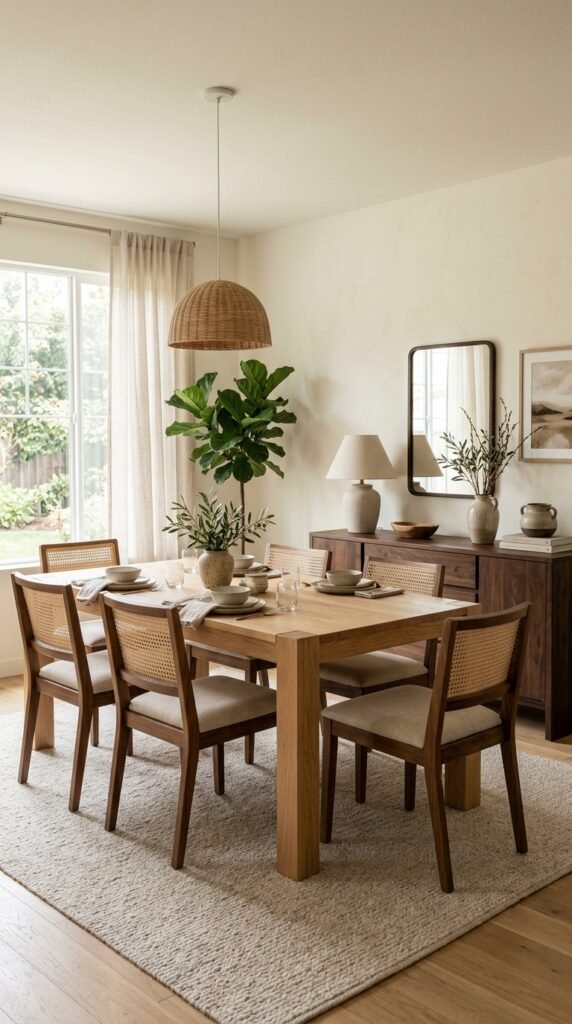
Wood is one of the easiest ways to add that variation. A pale oak table, darker walnut chairs, or a warm wood sideboard can break up large stretches of white, beige, or grey without making the room feel busy.
You do not need every wood finish to match.
Instead, look for a loose relationship between them. Two or three tones can work together if one feels dominant and the others show up in smaller amounts. Repeating the same wood family in a frame, chair leg, or cabinet detail can help tie the room together.
Too many unrelated finishes can make the space feel pieced together rather than layered.
📌 Good To Know
Choose one main wood tone, then let one or two secondary tones appear in smaller pieces. Matching every finish exactly can make the room feel more like a furniture set than a lived in space.
11. Use an Oversized Mirror to Bounce Light Through a Dark Dining Room
A large mirror can do more than fill an empty wall. In the right spot, it reflects windows, lamps, and open space back into the room.
Place it where it can catch something worth reflecting. A mirror facing a bright window usually does more for the room than one facing a blank wall or cluttered doorway. Scale matters too. A small mirror above a long sideboard can look lost, while a larger piece gives the wall enough visual weight.
Keep the surrounding styling simple:
- One lamp
- A low bowl
- A few stacked books
The mirror should feel like part of the room, not another surface competing for attention.
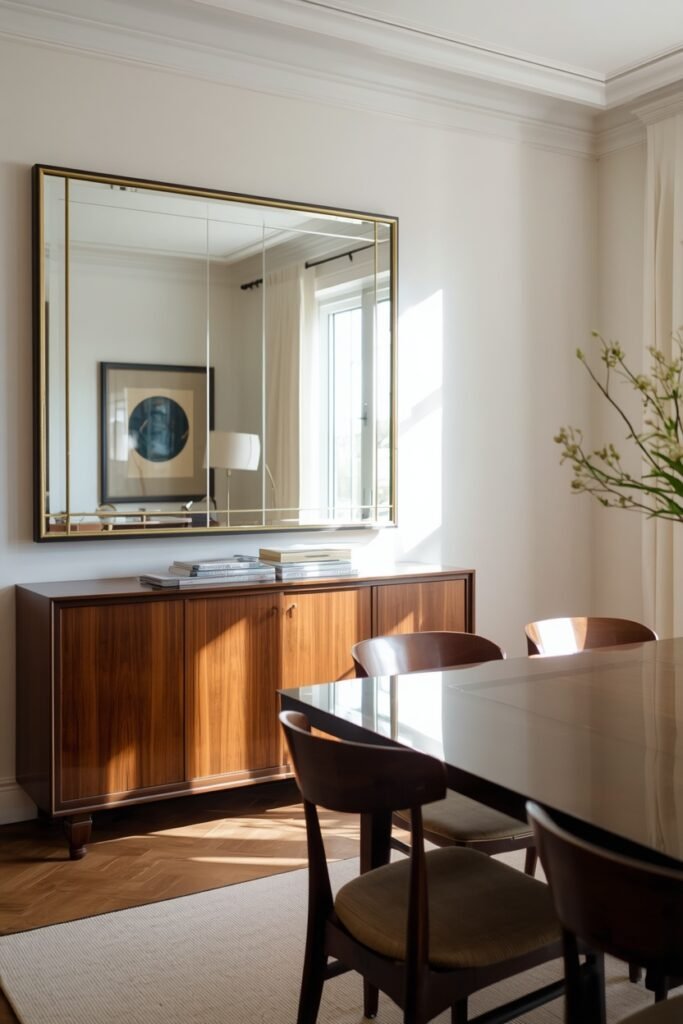
A dark wall absorbs light and makes the dining area feel more enclosed, especially in the evening.
A larger mirror reflects daylight, lamps, and open space so the room feels brighter and visually deeper.
12. Layer Overhead, Wall, and Table Lighting for Softer Evenings
One ceiling fixture has to work very hard if it is the only source of light in the room.
Layering a few sources makes the room easier to adjust. The pendant can handle the main light, a wall sconce can soften a dark corner, and a small sideboard lamp can keep the room glowing after dinner without flooding it with brightness.
A simple order works well:
- Start with the main fixture over the table.
- Add one secondary light away from the center.
- Finish with a lower, softer source near the edge of the room.
This gives you options for homework, weeknight meals, and slower dinners without changing the whole setup.
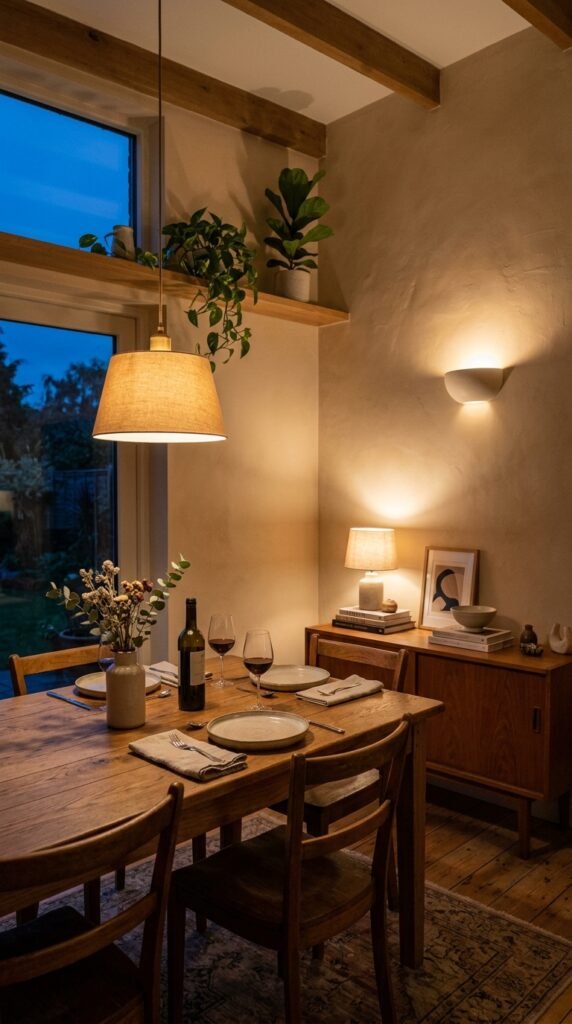
Main light: Use the pendant or chandelier for overall illumination above the table.
Side light: Add a sconce or floor lamp where a wall or corner still feels dark.
Low glow: Use a small sideboard lamp or candlelight for a softer layer once the main meal is over.
13. Turn an Empty Corner Into a Small Drinks or Serving Station
That awkward corner beside the dining table does not always need a plant or another chair.
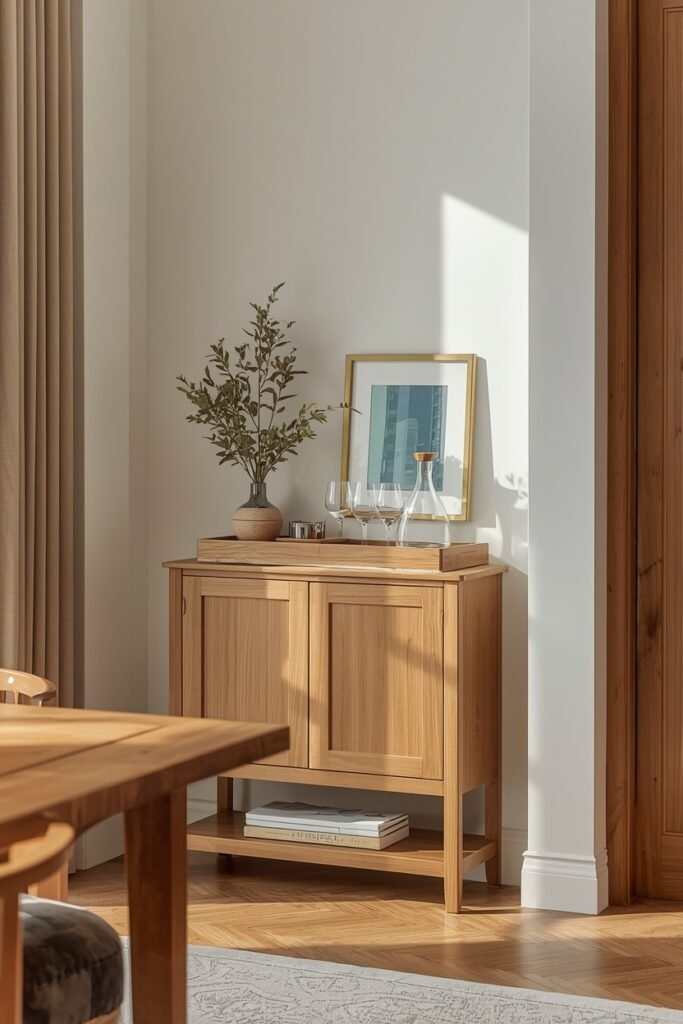
A narrow cabinet, small trolley, or compact console can turn it into useful support space. Keep glasses, a water carafe, napkins, or serving pieces there so the main table stays clearer during meals. If you entertain often, the same corner can hold drinks while people settle in.
The setup works best when it stays restrained.
A few useful pieces are enough:
- Tray for bottles or glasses
- Small lamp
- Ice bucket or carafe
- Closed storage underneath
Avoid filling every shelf. A drinks station should make serving easier, not become a permanent display of everything you own.
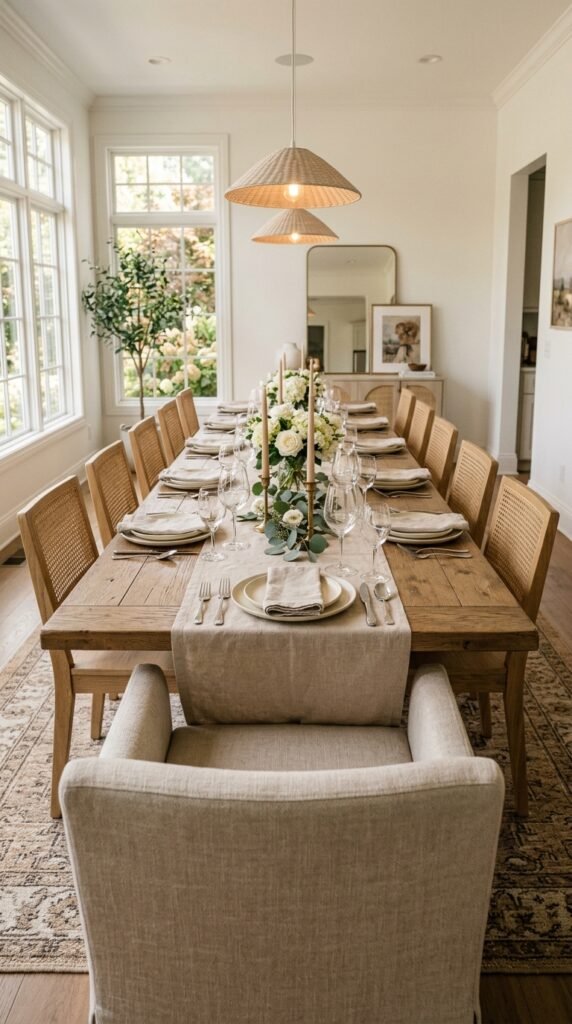
14. Choose Upholstered End Chairs for a More Relaxed Formal Look
Matching side chairs with softer end chairs is an easy way to make a dining table feel more finished without turning the room formal.
The upholstered chairs add visual weight at each end, while simpler chairs along the sides keep the setup from feeling heavy. This works especially well with long rectangular tables where the two ends naturally act as anchors.
Keep the contrast controlled.
If the side chairs are dark wood, you might choose upholstered chairs with dark legs. If the room is mostly neutral, use texture rather than a loud color for the fabric.
The extra comfort is useful too. End chairs often become the places people stay in longest after plates are cleared.
| All Matching Chairs | Upholstered End Chairs |
|---|---|
| Creates a cleaner, more uniform look | Adds stronger visual anchors at both ends |
| Usually keeps the room visually lighter | Adds softness and extra comfort for longer meals |
| Easy when you want a simple furniture set | Useful when the table needs a little more character without changing every chair |
15. Add Wall Molding to Give a Simple Dining Room More Structure
Wall molding can make a plain dining room feel more considered before you add a single piece of art.
The trick is restraint. Narrow panels, a chair rail, or simple box molding can give the walls rhythm while still leaving enough blank space for the room to breathe. Painting the molding the same color as the wall keeps the look softer. A contrasting tone makes the architecture more noticeable.
Before installing anything, map the spacing with removable tape.
Check how the panels line up with:
- Door frames
- Sideboards
- Light switches
- Artwork
Small spacing mistakes become much easier to notice once molding is repeated around the room.
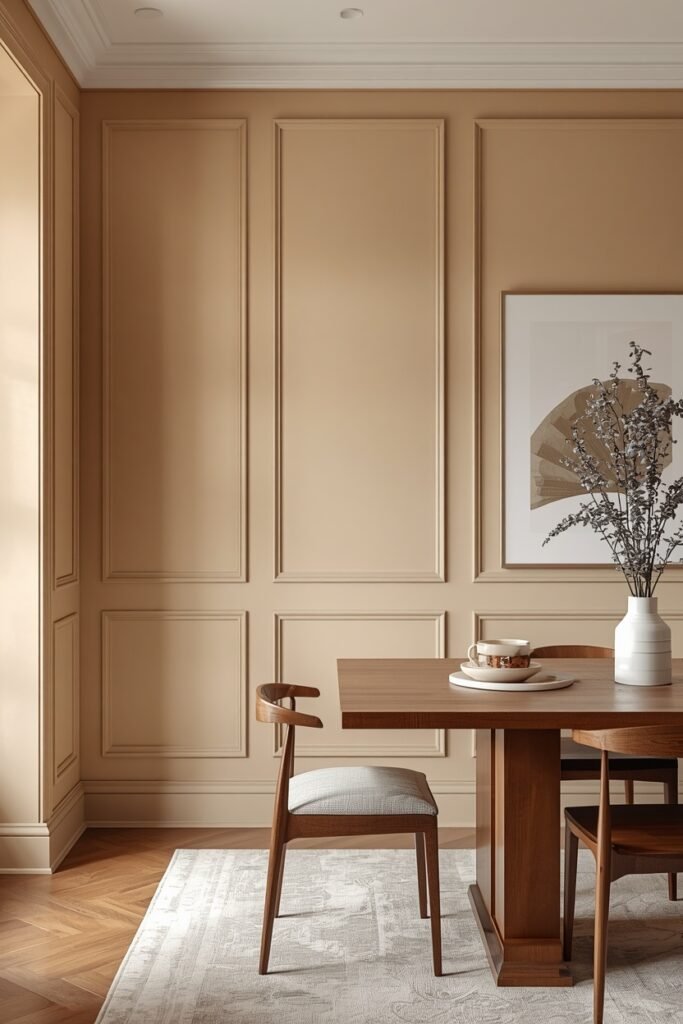
Treat molding like architecture, not extra decoration. Simple proportions and clean spacing usually look stronger than filling every wall with narrow panels.
16. Use Open Shelves for the Dishes You Actually Reach for
Open shelves work best when they hold useful things, not a collection of objects you have to dust around.
Keep everyday plates, bowls, pitchers, or glasses within easy reach. Then add only a few quieter pieces, such as a small framed print or serving board, so the shelves still feel tied to the dining room rather than a kitchen overflow area.
A practical mix might include:
- Frequently used dishes
- One stack of linens
- A serving board
- A small decorative object
- One piece with height
Leave a little empty space between groups. Shelves look calmer when every inch is not filled, and they are much easier to keep tidy.
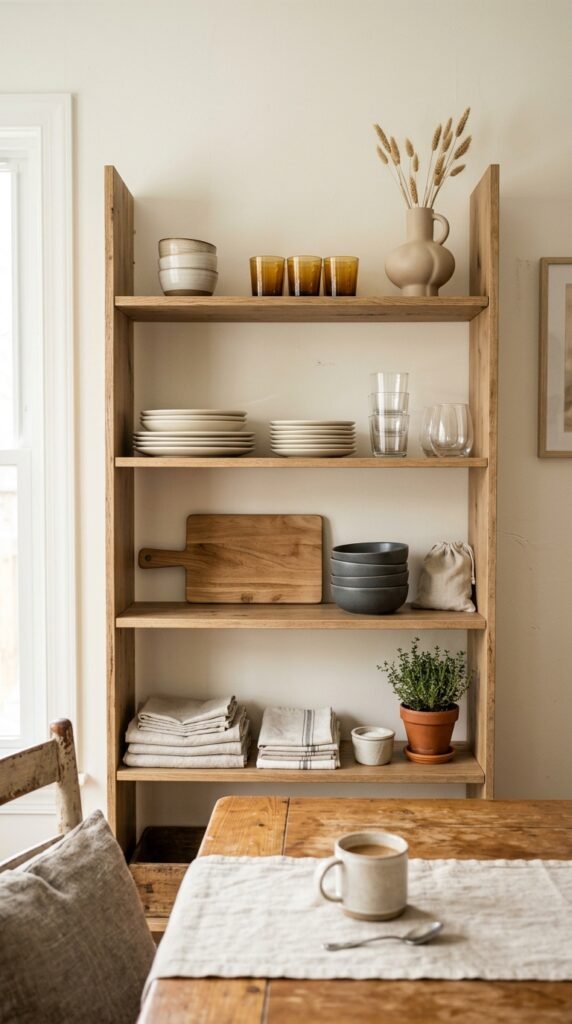
What belongs on open dining shelves
17. Pull a Color From the Artwork Into the Chairs, Rug, or Table Linens
A room feels more connected when one color quietly appears in more than one place.
Start with the artwork because it already gives you a palette to work from. Pick one shade that is noticeable but not dominant, then repeat it elsewhere in a smaller dose. It might show up in a chair cushion, a striped rug, napkins, or a vase on the sideboard.
The repetition should be subtle.
You do not need the exact same shade in every spot. Slight variations often feel more natural than a strict match. Keep the strongest color on one or two larger pieces, then let smaller accessories echo it.
That is usually enough to make the room feel considered.
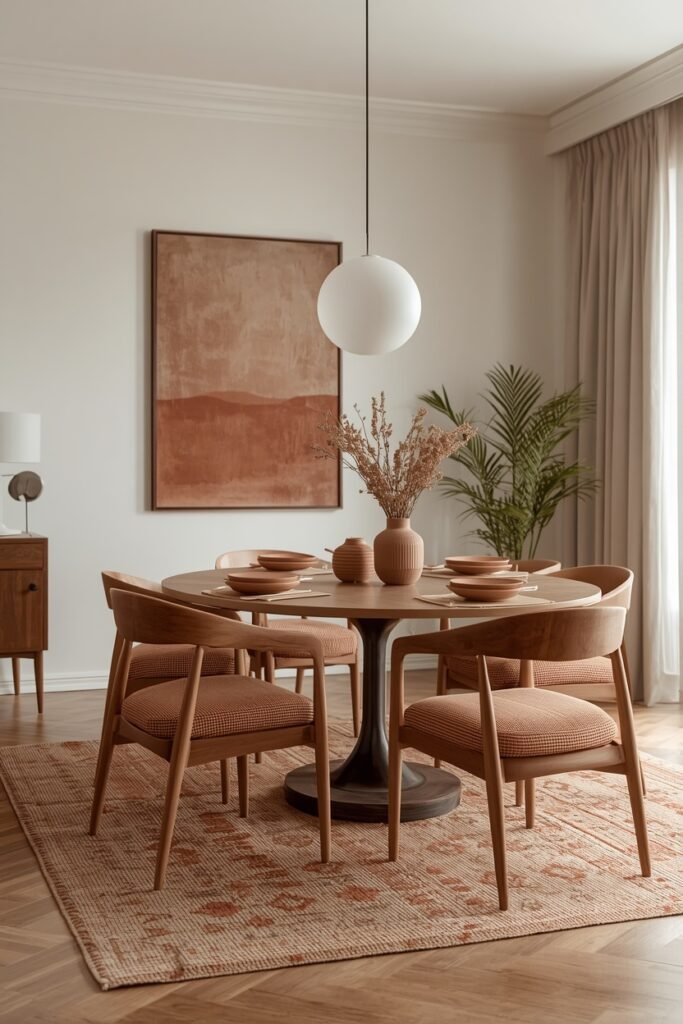
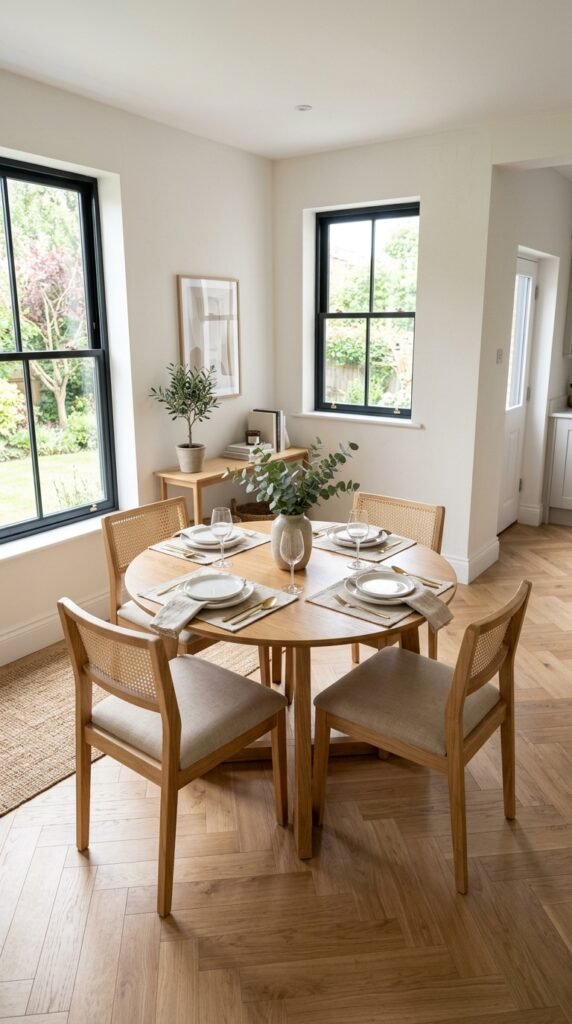
18. Let a Round Table Soften a Small or Boxy Dining Room
Square walls and straight furniture can make a compact dining room feel more rigid than it really is.
A round table breaks up those lines and removes sharp corners from the main walkway. It also makes it easier to pull in an extra chair without deciding who has to sit at the awkward end.
Round tables are especially useful when:
- The room is close to square
- A doorway cuts through one corner
- People need to move around the table often
- The dining area shares space with another zone
They are less practical in very long rooms where a rectangular table would use the available length better. Match the table to the room, not the trend.
💡 Quick Tip
A round table earns its place when it improves circulation. If you still have to squeeze around it or lose useful seating along a long wall, a narrower rectangular table may work better.
19. Create a Gallery Wall With Pieces That Share One Visual Thread
A gallery wall does not need matching frames, but it does need a reason for the pieces to belong together.
That connection could be similar colors, black and white photography, one frame finish, or artwork with a shared subject. Pick one thread and let the rest vary.
Lay everything on the floor before putting nails in the wall. It is easier to spot a heavy corner or a strange gap when you can move pieces around freely.
Keep the arrangement close enough to read as one group.
Too much space between frames can make the collection look scattered, while pieces packed tightly together can feel cramped. A little breathing room keeps the wall interesting without making it noisy.
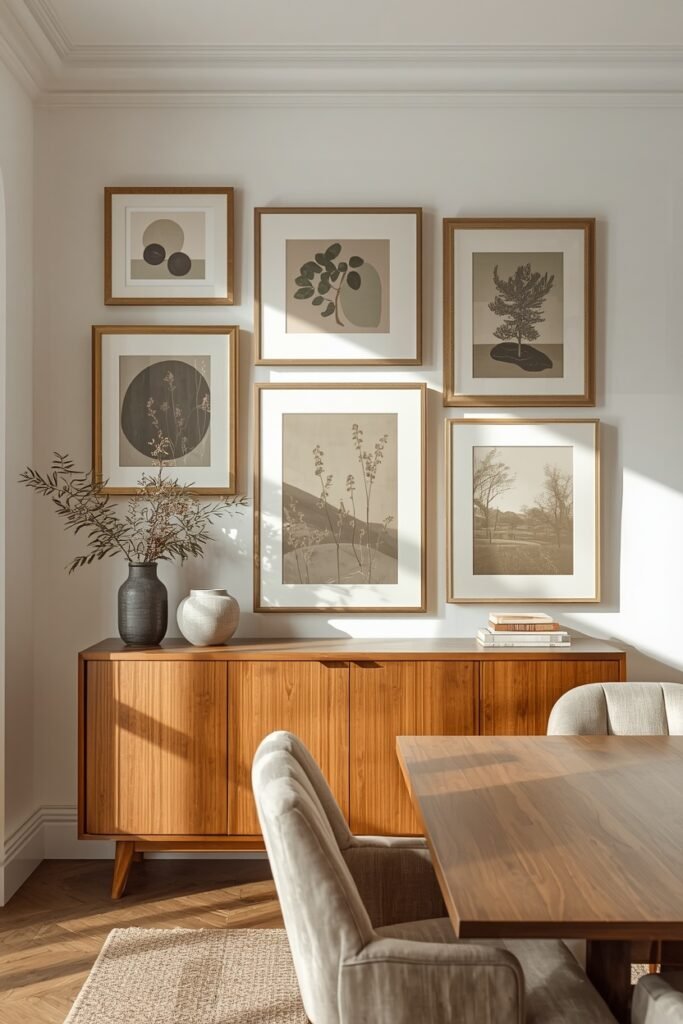
Repeat one visual link, such as frame color, subject, or a similar palette.
Arrange the full group on the floor before hanging anything.
Adding unrelated pieces simply because there is still empty wall space.
Spacing frames so far apart that they no longer read as one composition.
20. Keep Everyday Table Linens Within Reach Instead of Saving Them for Guests
Table linens are more useful when they are easy enough to grab on an ordinary Tuesday.
Keep a few washable placemats, cloth napkins, or a simple runner in a nearby drawer or sideboard. They can soften a hard tabletop, make quick meals feel a little more settled, and protect surfaces without turning dinner into a formal setup.
You do not need a large collection.
A practical rotation is usually enough:
- One neutral everyday set
- One darker set that hides stains well
- One patterned or seasonal option
- A small stack of spare napkins
Store them close to the table so using them does not feel like an extra task. Convenience is what makes them part of daily life.
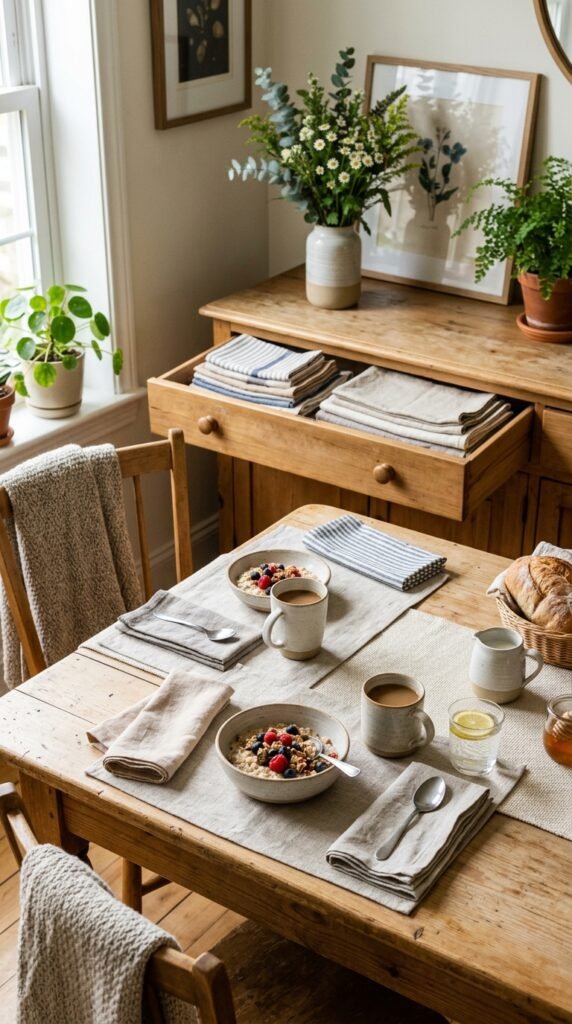
- ▸Neutral set: easy to use with almost any dishes or centerpiece.
- ▸Darker set: useful for busy family meals and foods that tend to stain.
- ▸Patterned set: adds variety without changing the whole room.
- ▸Extra napkins: helpful when someone joins the table unexpectedly.
21. Use a Built In Banquette to Turn an Awkward Wall Into Seating
An empty wall can become the hardest working part of the room once seating is built into it.
A banquette is especially useful where loose chairs would eat up too much floor space. It can tuck neatly against the wall, make a corner feel intentional, and create hidden storage under the seat for table linens, serving trays, or less frequently used dishes.
A few details make it more comfortable:
- Add a firm seat cushion instead of an overly soft one
- Use washable fabric if the table gets daily use
- Keep the table base clear enough for people to slide in easily
The best banquettes feel integrated with the room rather than squeezed into leftover space.
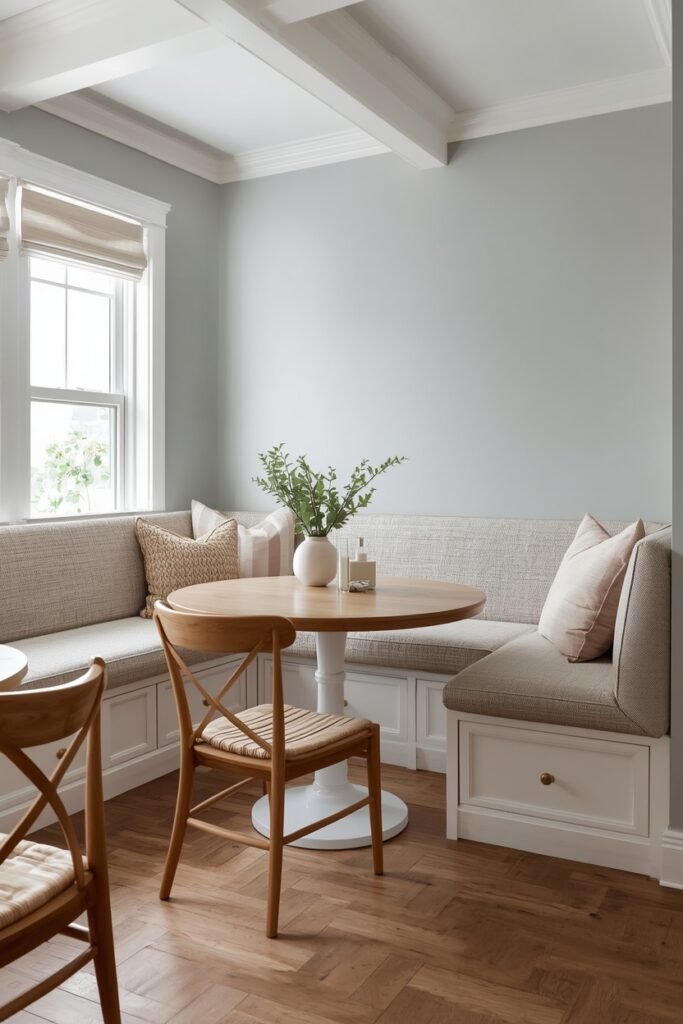
An unused wall or awkward corner adds no seating and often becomes a spot for stray chairs or clutter.
A fitted banquette turns the same wall into useful seating, gives the dining area more structure, and can hide storage underneath.
22. Add Plants Where They Can Soften Hard Furniture Without Crowding the Table
Dining rooms often contain a lot of hard surfaces. Wood tables, chair legs, glass, metal, and straight cabinet lines can make the room feel a little stiff.
Plants help break that up, but placement matters more than quantity.
A tall plant can fill an empty corner. A smaller one can sit on a sideboard. Trailing greenery works well on a high shelf where it does not interfere with serving or conversation.
Keep the table itself fairly clear, especially if it already holds a centerpiece.
Choose plants based on the light the room actually receives, not just the look you want. A struggling plant in a dark corner does not add much warmth.
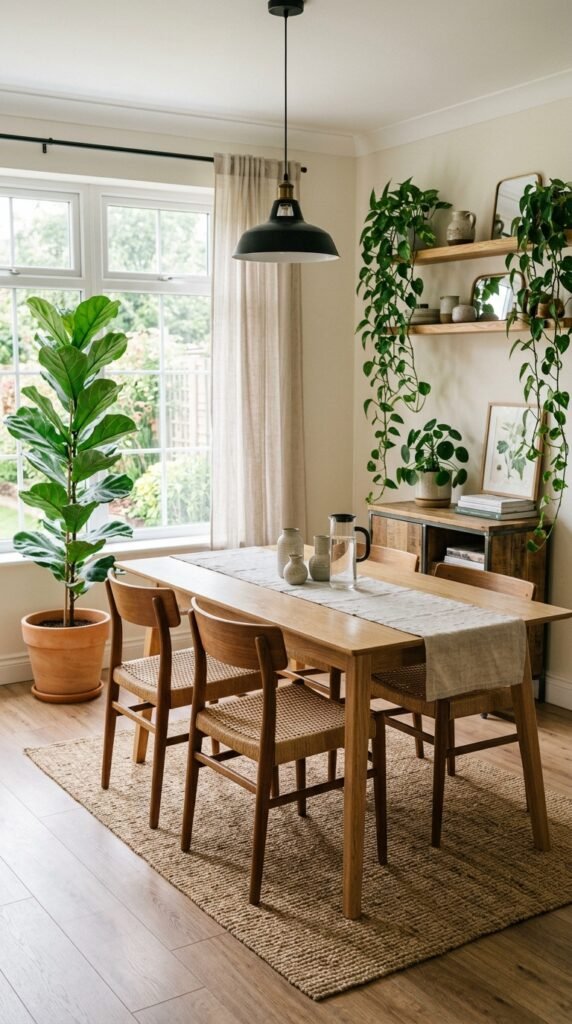
Easy plant placement check
23. Paint the Ceiling or Upper Wall for a Dining Room That Feels More Intimate
Color does not have to stop at eye level.
Painting the ceiling or the upper part of the wall can make the dining area feel more enclosed and settled, especially in rooms with tall ceilings or large stretches of blank wall. A soft warm tone keeps the effect gentle, while a deeper shade creates more contrast and mood.
Start small if you are unsure.
You could paint only the ceiling, add color above a chair rail, or use the same wall color in a slightly deeper tone overhead. Test the shade at night too, since dining rooms are often used under artificial light.
The goal is a cozier envelope, not a room that feels visually heavy.
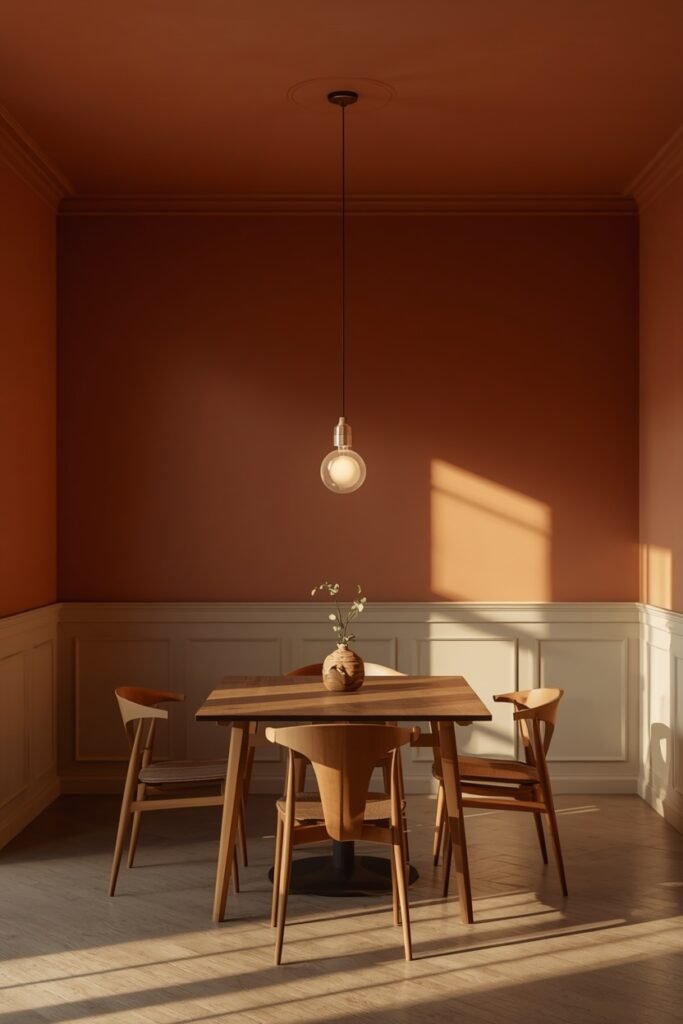
24. Leave Enough Breathing Room Around the Table for People to Move Easily
A dining room can look beautifully furnished and still feel uncomfortable if every chair backs into something.
Movement is part of the design. Pull out each chair as if someone were actually sitting there, then walk behind it. Open the nearby cabinet doors. Check whether someone can pass while another person stays seated.
Use the room as it really functions.
A simple check goes in this order:
- Pull the chairs out.
- Test the main walking path.
- Open drawers, cabinets, or doors nearby.
If the layout feels tight, removing one piece of furniture can sometimes improve the room more than adding another decorative item.
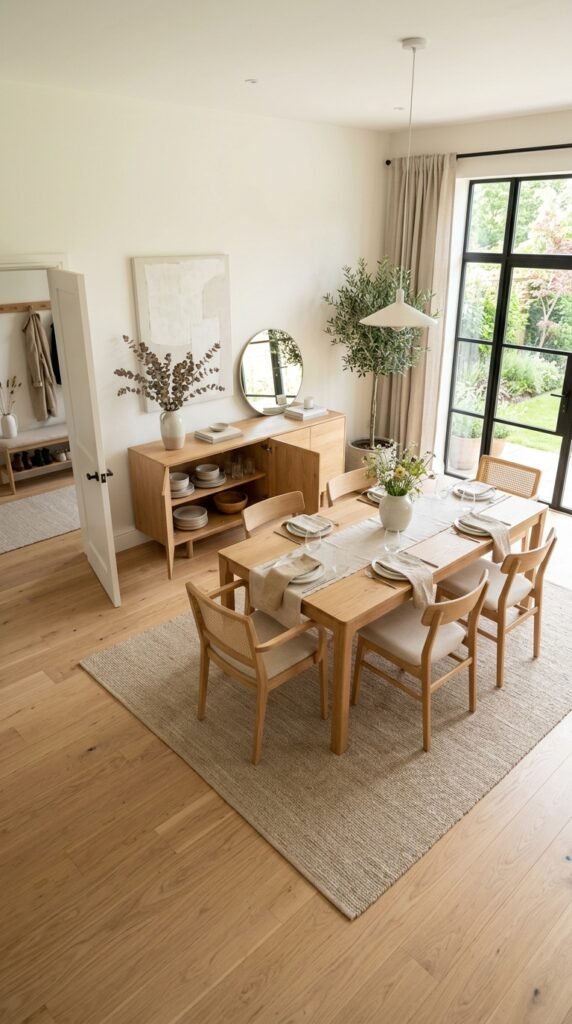
Pull every chair out to the position it reaches during a real meal.
Walk the usual path from the doorway to the table and around the seated chairs.
Open nearby cabinet doors and drawers to make sure storage still works when the room is occupied.
25. Set Up the Dining Room for Everyday Meals, Not Just Special Occasions
A welcoming dining room should work when nobody is coming over.
That means chairs comfortable enough for a normal dinner, lighting you can adjust quickly, surfaces that are easy to wipe, and storage close enough that setting the table does not feel like a project.
Keep the room attractive, but let daily life show up in the decisions.
A washable runner may serve you better than a delicate one. A sturdy sideboard can be more useful than another decorative cabinet. A simple centerpiece that stays put is often better than a large arrangement you constantly move.
The room should invite you to use it on an ordinary night. That is what makes it feel genuinely welcoming.
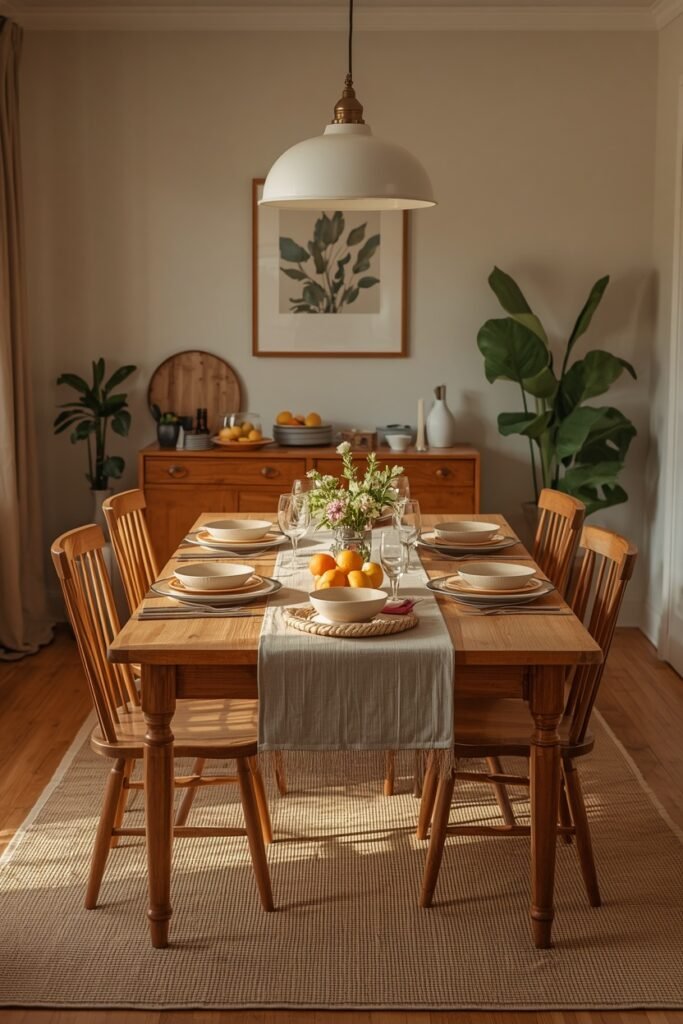
Design the dining room around the meals you actually eat there. Comfort, movement, easy cleanup, and useful storage matter more than making the room look ready for a formal dinner every day.
Conclusion
A dining room feels most welcoming when it looks good without becoming too precious to use. Start with the choices that affect everyday comfort first, such as the table size, chair placement, lighting, and enough room to move around easily. Then bring in the details that give the space warmth, including curtains, artwork, wood tones, plants, and simple table styling.
You do not need to use all 25 dining room ideas at once. Pick the changes that solve something in your own room and build from there. The goal is a space that makes an ordinary dinner feel worth sitting down for.
Save this list to Pinterest so you can come back to these ideas when you are ready to refresh your dining room.