18 Sloped Ceiling Bedroom Ideas That Feel Cosy, Not Cramped
A sloped ceiling can make a bedroom feel full of character, but it can also create awkward corners, limited headroom, and walls that seem difficult to decorate. Furniture that fits well in a square room may suddenly feel too tall, too bulky, or pushed into the wrong place.
These 18 sloped ceiling bedroom ideas that feel cosy, not cramped focus on working with the angles rather than trying to hide them. The right bed position can open a clearer walking path. Low furniture can create more breathing room. Built-in storage, wall lights, soft colour, and carefully placed curtains can turn low areas into useful parts of the room.
You do not need to fill every nook or place furniture under every slope. Some corners work better with open floor space, a small reading chair, or simple closed storage. Start by noticing where you can stand comfortably, where natural light falls, and which areas are better suited to sitting or storage. Those details will guide the rest of the room.
1. Place the Bed Beneath the Highest Part of the Ceiling
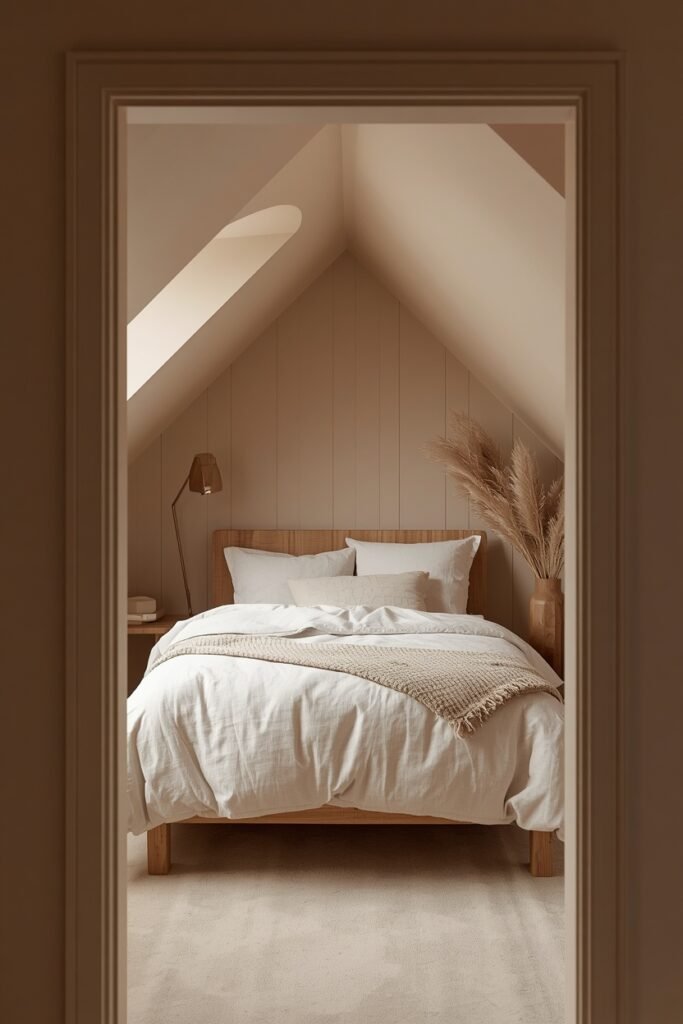
The bed usually carries the most visual weight, so placing it beneath the highest section helps the whole bedroom feel balanced. It also gives you more comfortable headroom when sitting up, changing the bedding, or getting out in the morning.
Before settling on the position, check:
- the walking path on both sides
- clearance above the headboard
- access to windows and wardrobes
- where the ceiling begins to slope
A centred bed often works well, but it does not need to sit exactly in the middle of the room. Comfort matters more than strict symmetry. Leave the lowest areas for storage, seating, or lighter furniture.
2. Paint the Walls and Slopes the Same Soft Colour
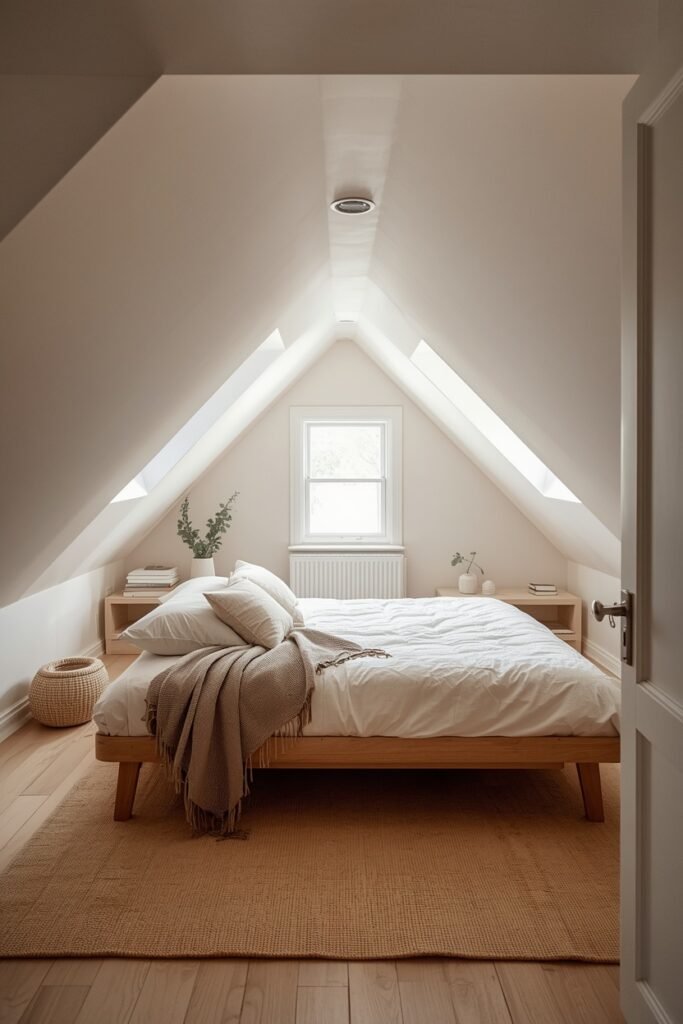
Sharp colour changes can make every ceiling angle stand out. Painting the vertical walls and sloped sections in one soft shade creates a smoother visual flow, so the room feels less chopped up.
Warm white, pale mushroom, soft beige, muted sage, and dusty blue can all work. Choose a finish that keeps glare low, especially where daylight hits the slope directly.
You can still add contrast through bedding, wood furniture, artwork, or a painted trim colour. Keeping the main shell consistent simply gives those details a calmer background.
💡 Quick Tip
Test the colour on both a vertical wall and the sloped ceiling. The same paint can look lighter overhead and deeper in a shaded corner.
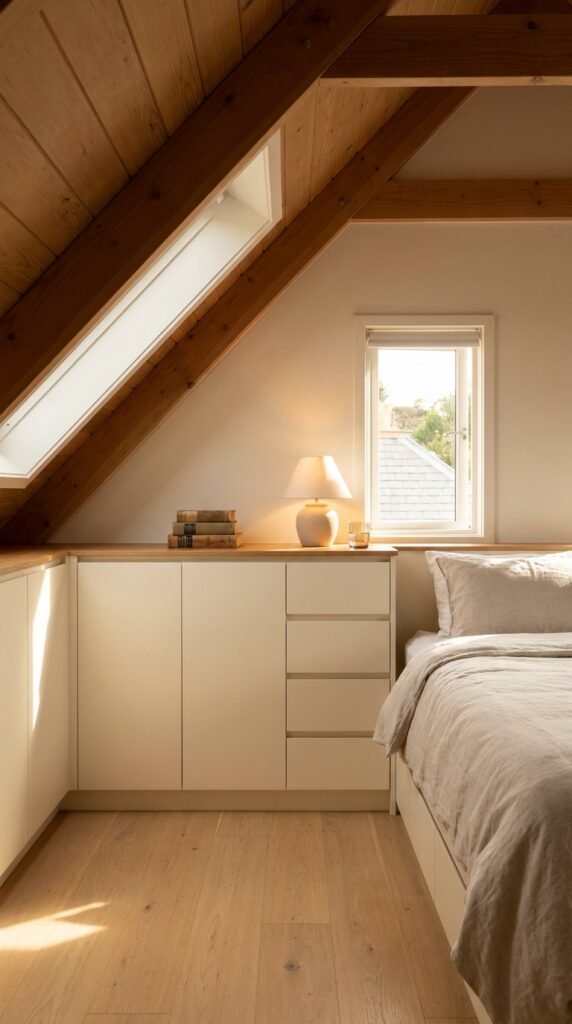
3. Turn the Lowest Wall into Built-In Bedside Storage
Low knee walls often sit unused because standard cabinets are too tall. Built-in drawers or cupboards can turn that awkward strip into valuable storage without pushing bulky furniture into the room.
Use the shallowest sections for smaller items:
- spare bedding
- books and chargers
- folded clothes
- seasonal accessories
Keep the upper surface clear enough to work as a bedside ledge. A lamp, glass of water, and phone are usually all it needs.
Flush doors or simple drawer fronts help the storage blend into the wall. The result feels planned, and the main floor area stays easier to move through.
A low wall collects boxes, loose bags, or empty floor space that is difficult to use well.
Built-in drawers create hidden storage and a useful bedside surface without crowding the room.
4. Choose a Low Bed Frame That Leaves More Air Above It
A tall bed frame can make a sloped bedroom feel tighter than it is. A lower frame creates a larger gap between the mattress and ceiling, which helps the sleeping area feel calmer and easier to use.
Look for:
- a slim platform base
- short or hidden legs
- a low headboard
- storage drawers that do not add extra height
Avoid placing the mattress directly on the floor unless ventilation and comfort have been properly considered. A low frame should still support the mattress and make changing sheets manageable.
The lower silhouette also leaves more of the sloped wall visible, which can make the architecture feel intentional rather than restrictive.
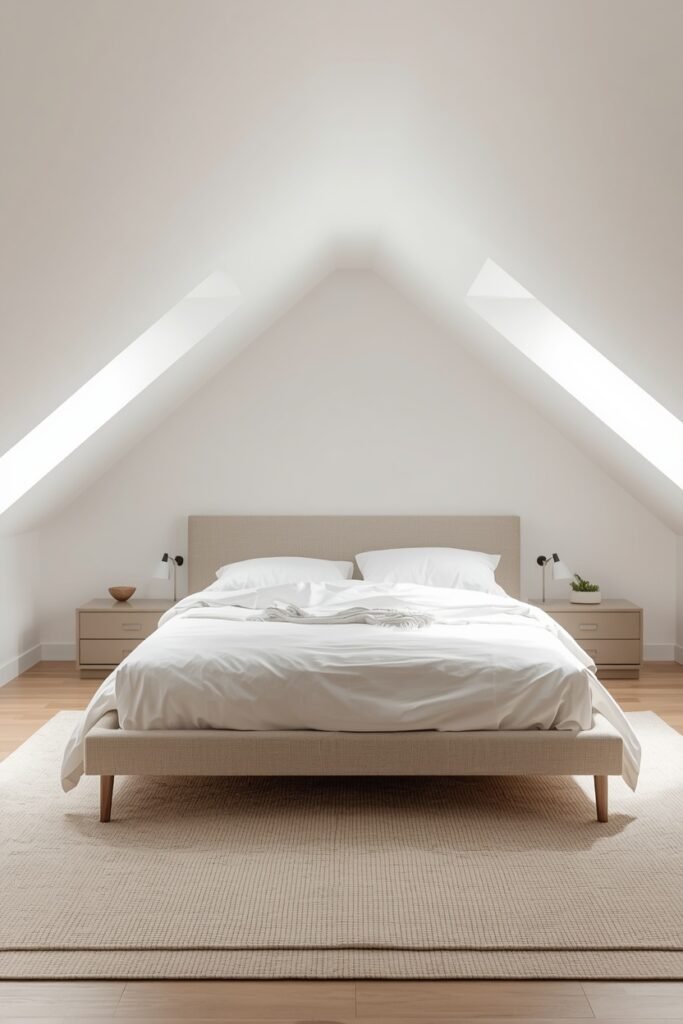
| Low-Profile Bed | Tall Bed Frame |
|---|---|
| leaves more visible space overhead | can sit too close to the ceiling slope |
| keeps the room visually lighter | adds more visual weight |
| works well with simple bedding | may suit the highest ceiling area only |
5. Fit a Window Seat Beneath the Sloping Roofline
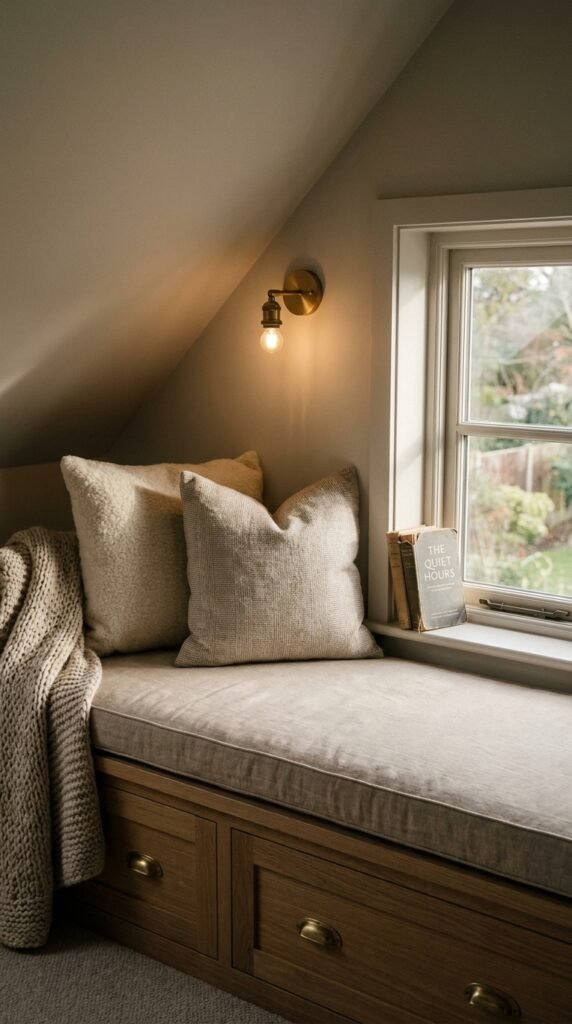
A window beneath a roof slope often leaves too little standing room for a desk or wardrobe. A low window seat uses that limitation well because the area only needs comfortable seated headroom.
Build the base with drawers or lift-up storage, then add:
- a firm seat cushion
- one or two back cushions
- a small wall light
- a nearby ledge for a mug or book
Keep the cushion depth comfortable without letting it block the window. This spot can become a reading nook, a place to put on shoes, or a useful surface for folding clothes. Low ceilings feel less awkward when the activity suits the height.
6. Use Wall Sconces Instead of Crowding Small Bedside Tables
Small bedside tables fill up quickly. A lamp base, phone, water glass, and book can leave almost no clear surface by the end of the day.
Wall sconces free up that space and keep light close to the bed. Choose adjustable arms if you read at night, or fixed shaded sconces for softer general light.
Before mounting them, check:
- where your head rests against the pillow
- whether the switch is easy to reach
- how far the shade projects from the wall
- whether the light points into your eyes
Keep cords hidden where possible. In a sloped room, clean wall space matters.
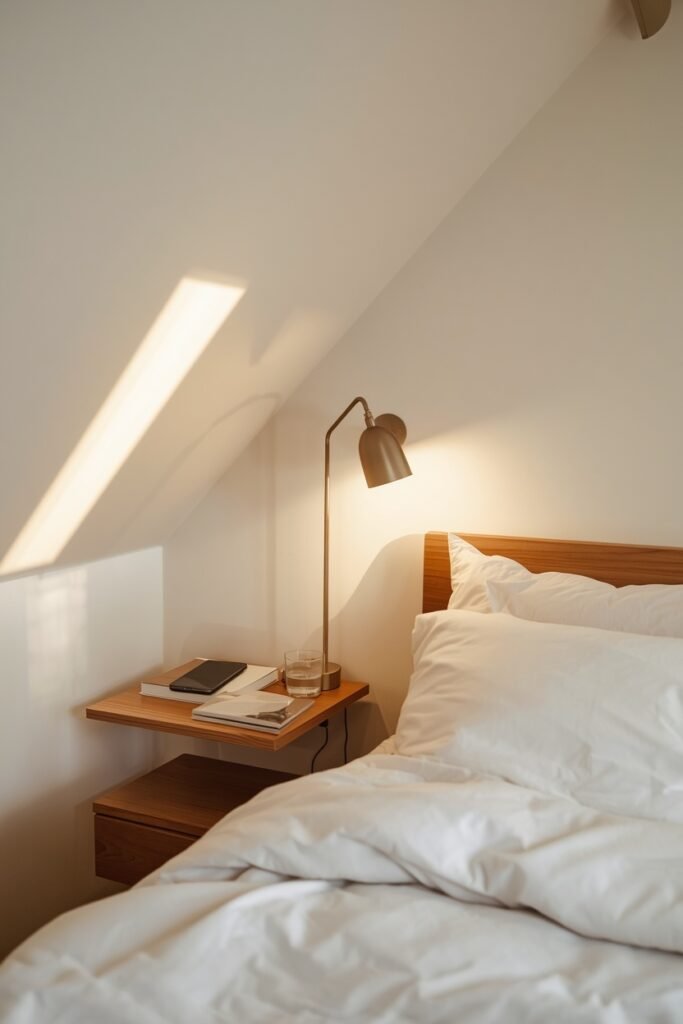
Plan the sconces before mounting
7. Wrap the Sloped Ceiling in Warm Wood Panelling
Wood can make an angled ceiling feel intentional rather than awkward. The grain follows the roofline, adding warmth and giving the eye a clear direction through the room.
The safest approach is to balance the wood with lighter surfaces below. Cream walls, pale bedding, and simple furniture stop the bedroom from feeling too enclosed.
Use a light or medium wood tone if the room receives limited daylight. Dark panelling can still work, but it needs more open floor space and stronger lighting. Avoid repeating heavy timber on every surface. One wood-clad slope usually has more impact than a room filled with matching brown finishes.
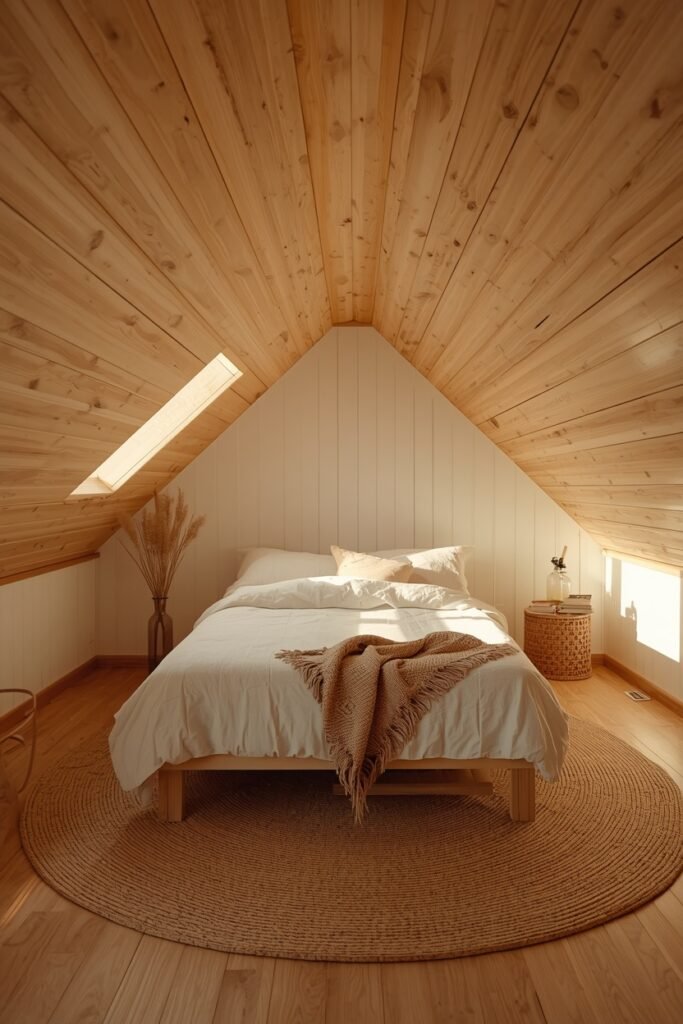
Pair wood slopes with pale walls and simple bedding.
Choose a lighter grain for rooms with little daylight.
Do not cover every wall in the same heavy timber.
Avoid bulky dark furniture beneath the lowest slope.
8. Place a Desk Where the Ceiling Drops Lowest
A low sloped area may be awkward for standing, but it can work well for seated tasks. A compact desk turns that difficult corner into a useful work or dressing zone.
Start by checking seated headroom, not standing height. Pull out the chair and make sure you can lean forward without meeting the slope.
Then work through the layout:
- centre the chair beneath the highest part of the nook
- place shallow storage at the lowest edge
- keep the desk surface narrow enough for easy movement
Natural light is helpful, but avoid direct glare on a laptop or mirror. Comfort should decide the final position.
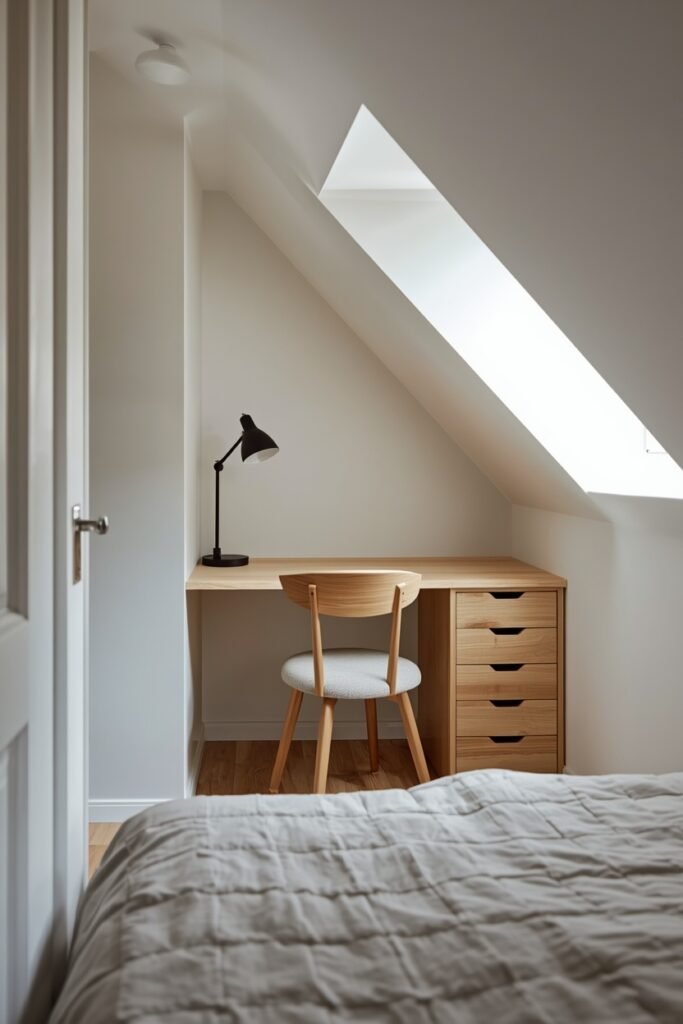
Sit in the chair and check headroom before choosing the desk depth.
Keep drawers and low storage beneath the shortest section of the slope.
Leave enough clearance to pull the chair back without hitting the bed.
9. Use a Statement Headboard to Ground an Uneven Wall
An angled wall can make the bed look slightly lost, especially when the ceiling rises more on one side than the other. A strong headboard gives the sleeping area a clear centre.
Upholstered shapes work well because they soften the room’s hard lines. A wide wood headboard can also create balance, particularly when it stretches beyond the mattress.
Keep the rest of the wall simple. One small artwork or a pair of sconces is usually enough. A busy gallery wall may compete with the ceiling angles.
The headboard does not need to follow the slope. A clean horizontal line can be exactly what the room is missing.
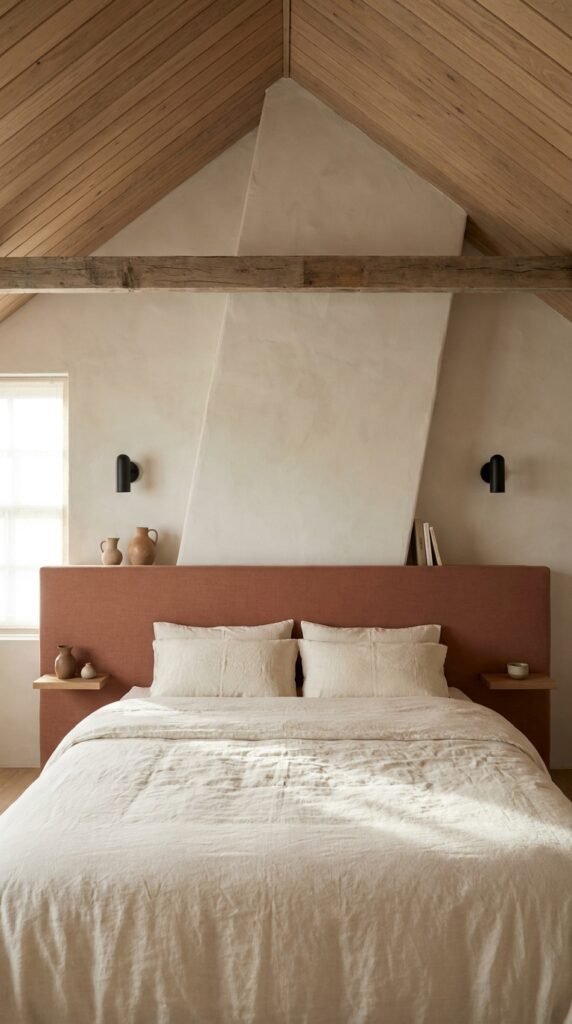
A wide, simple headboard gives the bed a stable horizontal anchor beneath an uneven ceiling line.
10. Hang Curtains from the Highest Practical Point
Short curtains can make a sloped bedroom feel chopped into even more sections. Hanging them from the highest usable point creates a longer line and helps the window feel more connected to the room.
Choose panels that reach the floor or finish just above a built-in seat. Keep the fabric soft and not too bulky, especially where the ceiling dips close to the rod.
Useful details include:
- a curtain colour close to the wall shade
- enough fullness to frame the window when open
- simple hardware that does not compete with the roofline
- tiebacks only where they improve access
Let the fabric follow the architecture without fighting it.
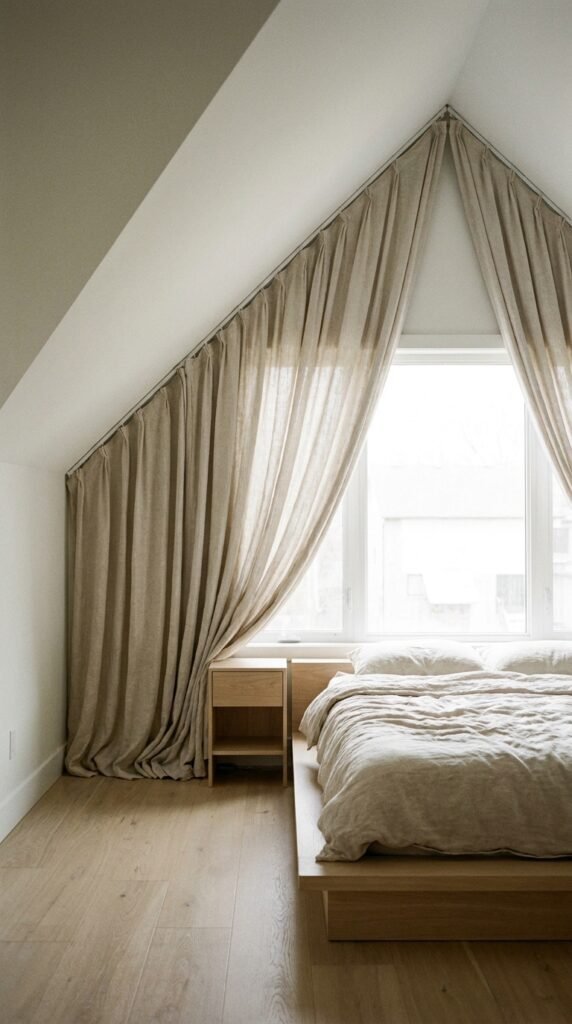
- ▸Mount the rod at the highest point that still allows the panels to hang freely.
- ▸Choose fabric close to the wall colour for a smoother visual line.
- ▸Use full-length panels unless furniture beneath the window makes that impractical.
- ▸Keep rods, rings, and tiebacks simple around busy ceiling angles.
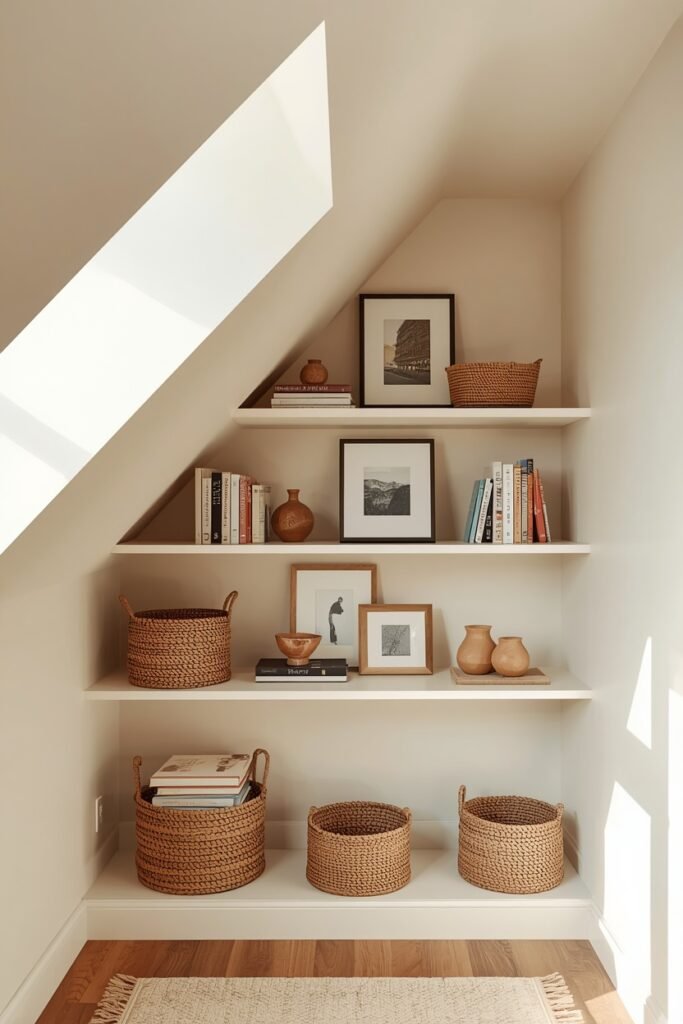
11. Build Open Shelves into a Narrow Sloped Nook
A narrow recess under the roofline can hold more than a pile of boxes. Shallow open shelves turn it into visible storage without stealing much floor space.
Use the upper shelves for lighter objects and keep heavier pieces closer to the bottom. A balanced mix might include:
- a few books stacked both ways
- one small lamp
- baskets for loose items
- framed photos or simple pottery
Avoid filling every gap. Empty space helps the shelves follow the slope instead of fighting it. Painting the shelving the same colour as the wall also keeps the nook calm, especially in a small bedroom with several ceiling angles.
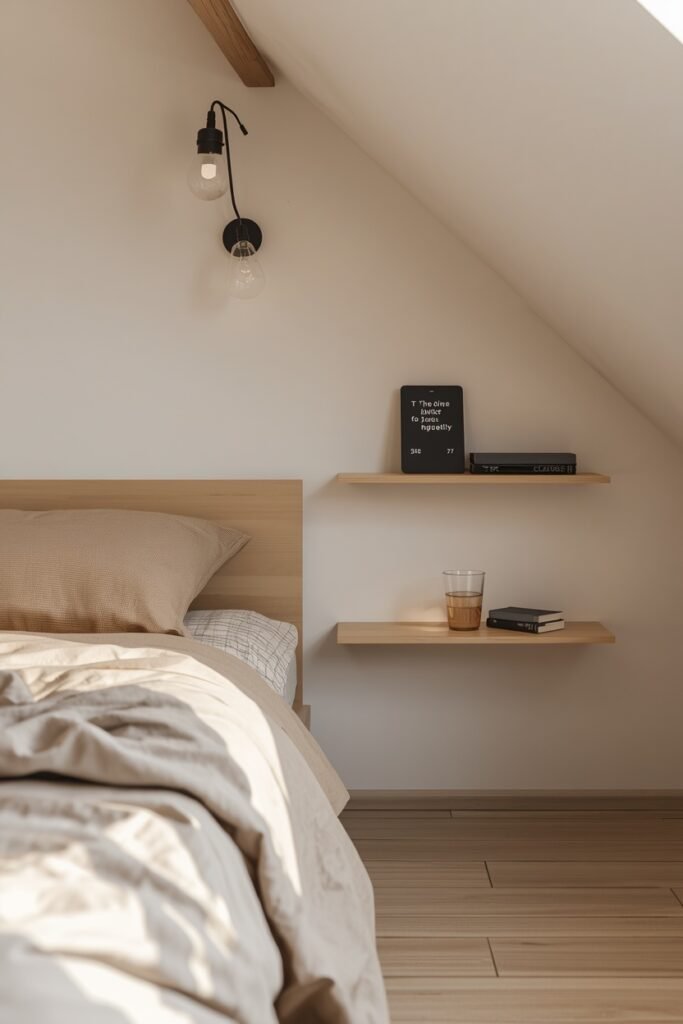
12. Keep the Floor Clear with Floating Bedside Shelves
Bulky nightstands can make the sides of the bed feel tight, especially where the roof slope already limits movement. A floating shelf gives you a landing spot without adding legs or a deep cabinet.
Keep the shelf close to the mattress height so reaching for a glass or phone feels natural. It only needs enough room for the basics:
- one small light or wall sconce nearby
- a phone
- a glass of water
- the book you are currently reading
Check the wall structure before mounting anything heavy. A slim shelf works best when it supports daily use, not a full display of decorative objects.
📌 Good To Know
Choose the shelf after measuring what you use at night. It should hold the essentials without extending into the path beside the bed.
13. Add a Cosy Reading Chair beneath One Roof Slope
That corner where nobody can stand comfortably may still work well for sitting. A compact reading chair gives the low section a clear purpose and keeps the centre of the room open.
Choose a chair with a lower back so it fits neatly beneath the slope. Then add only what the corner needs:
- a floor or wall lamp
- a narrow side table
- one cushion or folded throw
Avoid forcing in a large lounge chair that blocks the bed or wardrobe path. The nook should feel tucked away, not wedged into place. A small seat often makes better use of the angle than another storage unit.
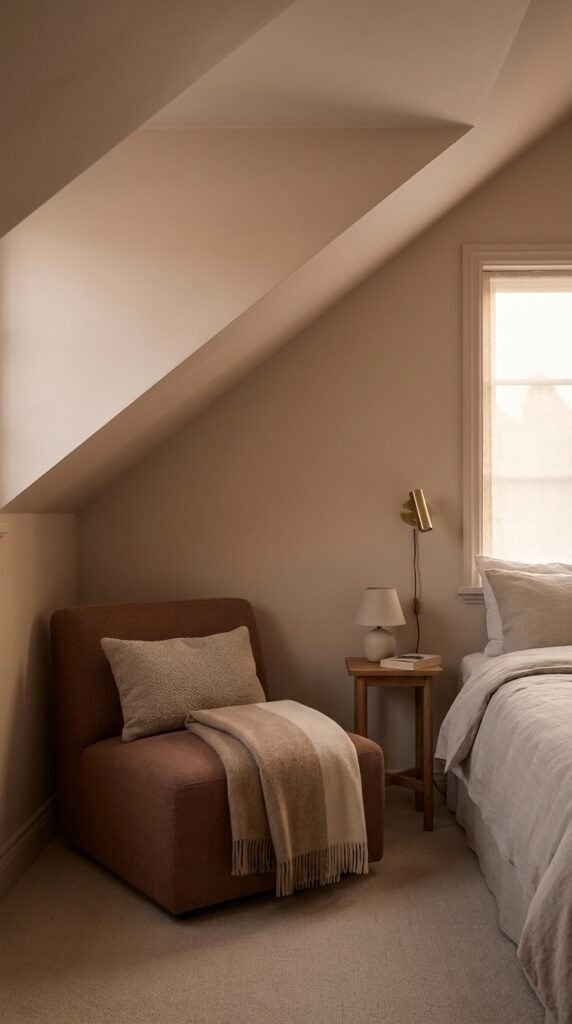
An empty low corner feels awkward and becomes a place where clothes or spare bags collect.
A low chair, small light, and narrow table turn the slope into a quiet reading spot.
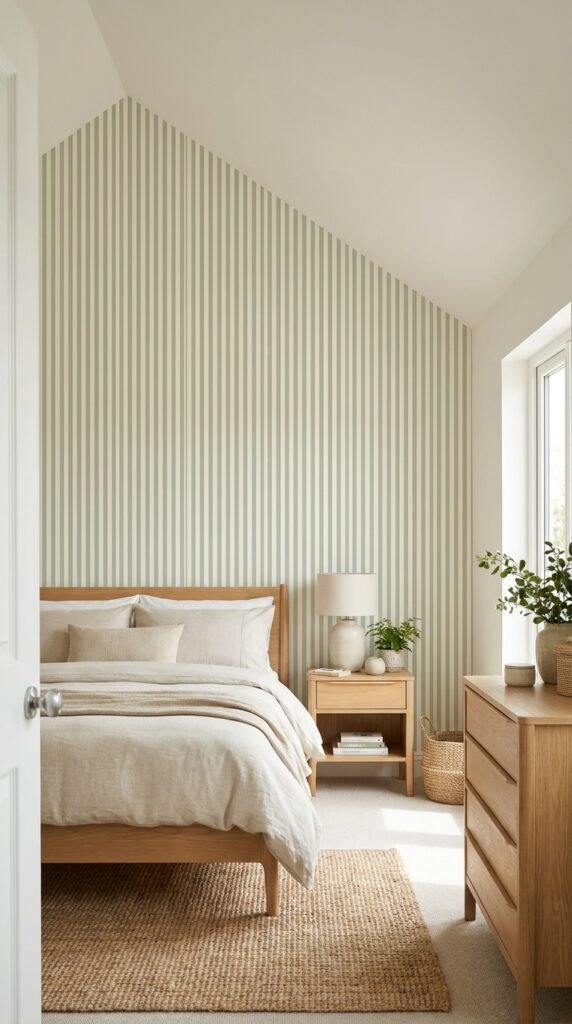
14. Use Vertical Stripes to Draw Attention toward the Highest Point
Stripes can help a sloped bedroom feel taller, but scale matters. Narrow vertical lines guide the eye upward, while large busy patterns may make the angles feel more crowded.
Use stripes on one main wall rather than wrapping every surface. A headboard wall, narrow gable end, or section beside a desk can carry the pattern without overwhelming the room.
Keep the contrast gentle. Soft cream with beige, pale blue with white, or muted sage with warm grey feels calmer than bold black and white. Let the ceiling slope remain plain so the pattern has a clear place to stop.
| Narrow Vertical Stripes | Busy Oversized Pattern |
|---|---|
| guides the eye toward the taller area | can compete with changing ceiling angles |
| works well in soft, related colours | may dominate a compact bedroom |
| best kept to one feature wall | can feel restless across several surfaces |
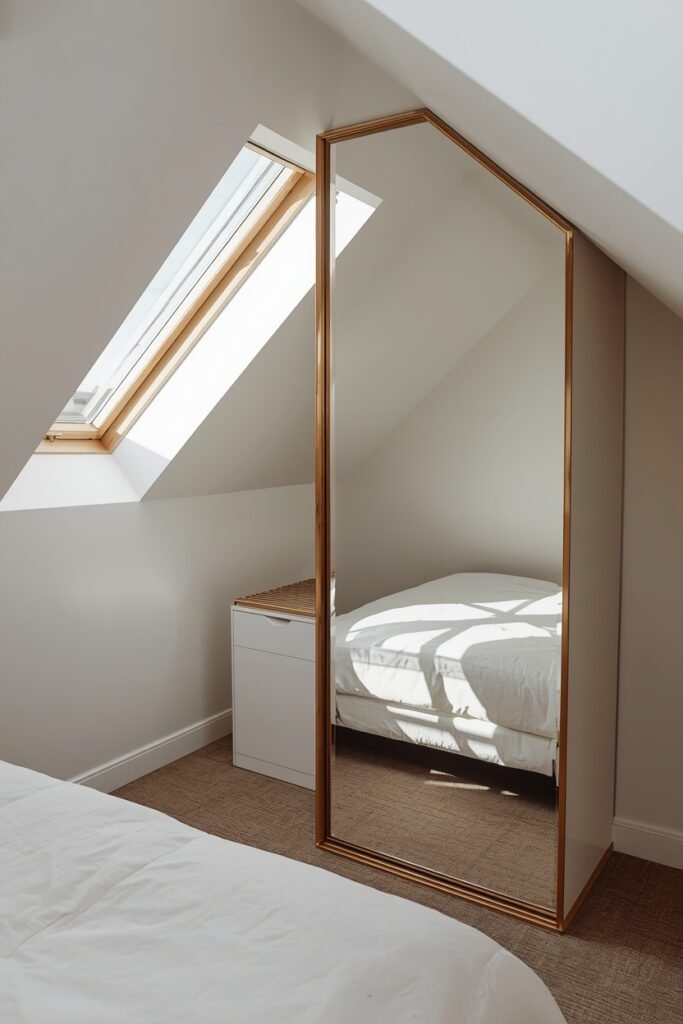
15. Place Mirrored Panels Where They Reflect the Tallest View
A mirror helps most when it reflects open height, daylight, or a calm part of the room. Pointing it toward the lowest slope may only repeat the cramped section you are trying to balance.
A tall leaning mirror can work on the highest wall, while smaller mirrored panels fit neatly beside a wardrobe or dressing area. Keep the frame slim if the room already has strong beams or busy ceiling lines.
Check the reflection from the doorway and the bed before fixing the position. Seeing a clear window, open wall, or raised roofline makes the bedroom feel broader. Reflecting clutter has the opposite effect.
16. Hide Seasonal Storage behind Knee-Wall Doors
Low knee walls are useful for storage, but open bins can make the bedroom look unfinished. Simple fitted doors keep the awkward space calm while giving bulky, rarely used items a proper home.
Store things that do not need daily access:
- spare duvets and blankets
- suitcases and travel bags
- seasonal clothes
- holiday decor
- extra pillows
Use labelled boxes inside so you are not crawling through a dark space to find one item. Wide doors or pull-out sections are easier to manage than several tiny openings. Keep vents, pipes, and electrical access clear where needed. Hidden storage works best when it stays organised behind the doors too.
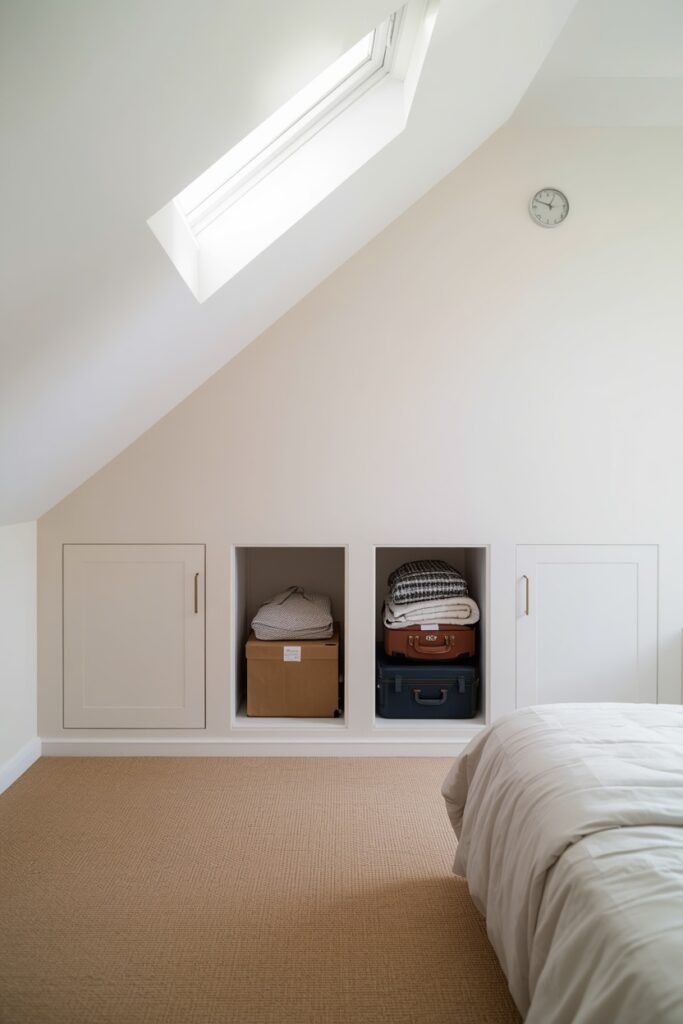
What belongs behind knee-wall doors
17. Layer Soft Lighting instead of Relying on One Ceiling Fixture
One bright light in the centre can throw harsh shadows across a sloped ceiling. It may also leave the lowest corners dim while making the highest point feel overly bright.
A layered plan feels softer after dark. Combine a modest ceiling fixture with wall sconces, a bedside lamp, or a small light near a reading chair.
Keep each source focused on a job:
- sconces for reading
- a shaded lamp for soft bedside light
- a low lamp for an awkward corner
- the ceiling light for general visibility
Warm, gentle pools of light make the bedroom feel settled. More fittings do not mean every light needs to be switched on at once.
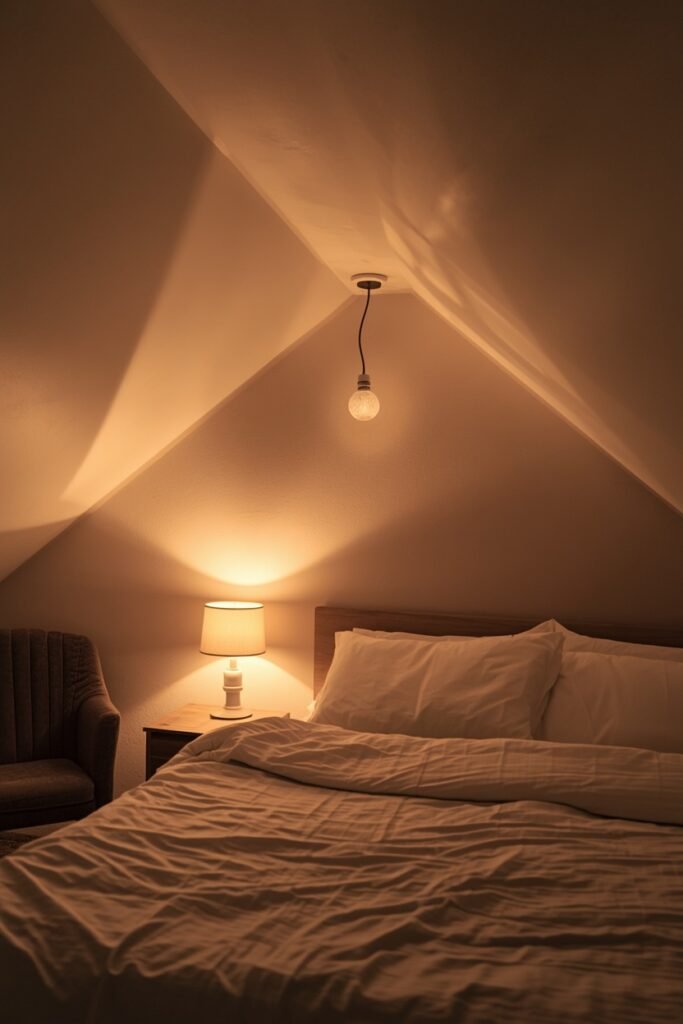
Use several soft light sources at different heights.
Aim each light toward a task or dark corner.
Avoid depending on one exposed bulb overhead.
Do not aim bright light directly at the bed or reflective slopes.
18. Finish with a Large Rug That Pulls the Whole Room Together
Several ceiling angles can make a bedroom feel visually broken into pieces. A large rug creates one steady shape on the floor and helps connect the bed, bedside pieces, and any small seating area.
Start with the bed as your guide:
- choose a rug wide enough to extend beyond both sides
- slide it beneath the lower part of the bed
- leave a visible border around the edges
Low-pile wool, flatweave, or soft textured rugs are easier to place beneath furniture than very thick styles. Avoid a tiny rug floating at the foot of the bed. One generous foundation makes the whole room feel calmer.
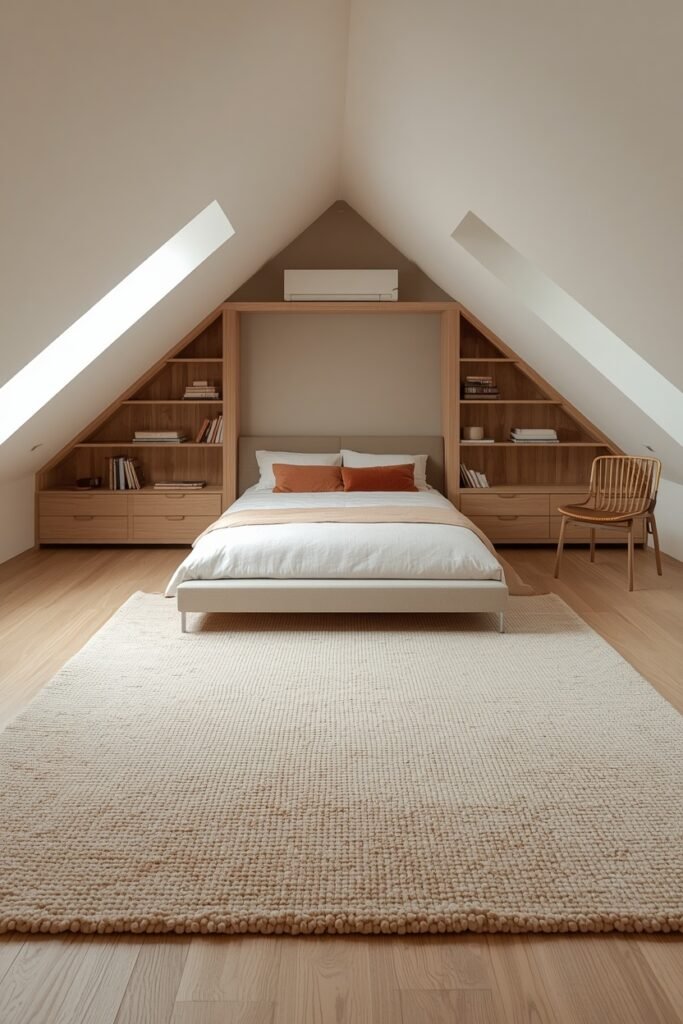
Choose a rug that reaches beyond both sides of the bed.
Position it beneath the lower portion of the bed rather than floating at the foot.
Use a calm colour and manageable pile so furniture stays stable.
Conclusion
A sloped ceiling can become one of the bedroom’s best features once the layout works with it. Keep taller furniture where headroom is strongest, then use the lower sections for storage, seating, a desk, or floating shelves. Soft colour, low furniture, layered lighting, and one large rug can also help the room feel calmer and more connected. These sloped ceiling bedroom ideas are less about hiding the angles and more about giving each awkward area a clear purpose. Save this list to Pinterest for the next time you plan or refresh an attic bedroom.