15 Bed Placement Ideas for Tricky Bedroom Layouts
A difficult bedroom layout can make even good furniture feel wrong. The door catches the bed frame, the wardrobe barely opens, or one side of the mattress ends up pressed into a wall because there seems to be nowhere else for it to go.
These 15 bed placement ideas for tricky bedroom layouts focus on the parts of the room that affect daily use most: walking space, door clearance, window access, storage, privacy, and headroom. The best spot is not always the most symmetrical wall. Sometimes shifting the bed slightly, turning it sideways, or choosing a lower frame creates a far more comfortable room.
Before moving anything, notice the routes you use every day. Walk from the door to the wardrobe, window, and both sides of the bed. Then check which wall gives the headboard support without blocking those paths.
The ideas below cover narrow rooms, sloped ceilings, awkward windows, studio spaces, and bedrooms where standard furniture layouts simply do not fit.
1. Centre the Bed on the Strongest Unbroken Wall
Start with the wall that has the fewest interruptions. A solid wall without doors, windows, radiators, or built-in storage usually gives the bed a calm visual base.
Centred placement can help you create:
- a clear path on both sides
- room for matching or mismatched bedside pieces
- a natural focal point when entering
- enough wall area for a headboard or artwork
Do not centre the bed only because the wall looks balanced in a photo. Check the wardrobe doors and room entry first. If centring creates a narrow squeeze beside the mattress, a small off-centre shift may work better.
2. Place the Bed Beneath a Window Without Blocking the Light
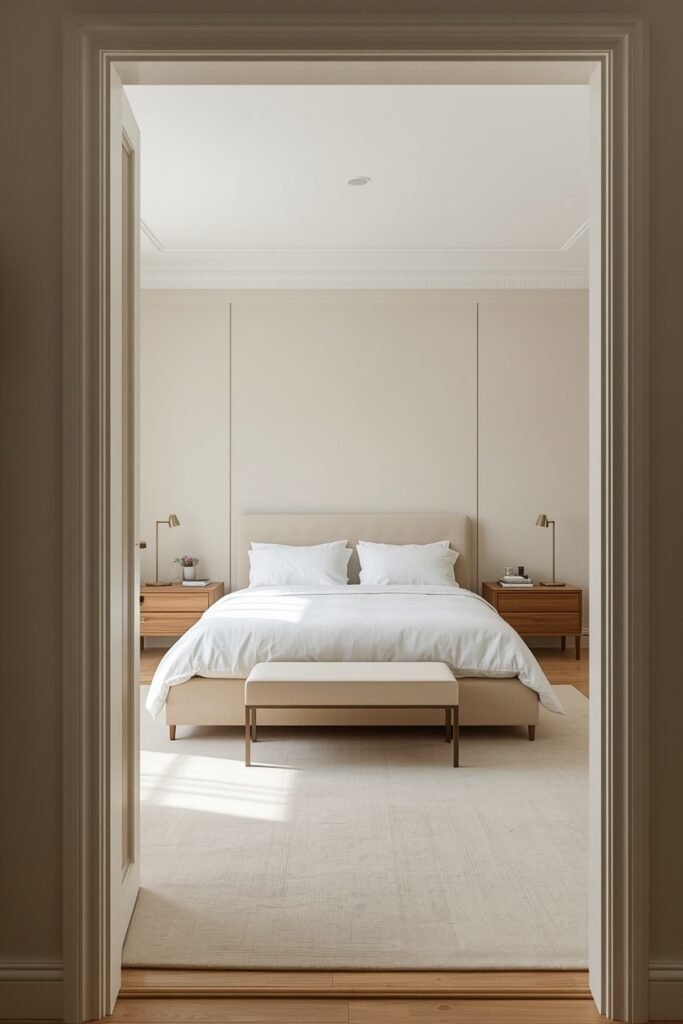
A window wall is sometimes the only one wide enough for the bed. That placement can work well when the headboard stays below the main glass area and the curtains can still move freely.
Keep the setup light:
- choose a low or open headboard
- use short bedside furniture
- avoid piling tall cushions against the window
- make sure the window can still open safely
Check for cold drafts, strong morning sun, or a radiator below the sill before settling on the layout. A fabric headboard may feel more comfortable than bare metal near a cooler window.
📌 Good To Know
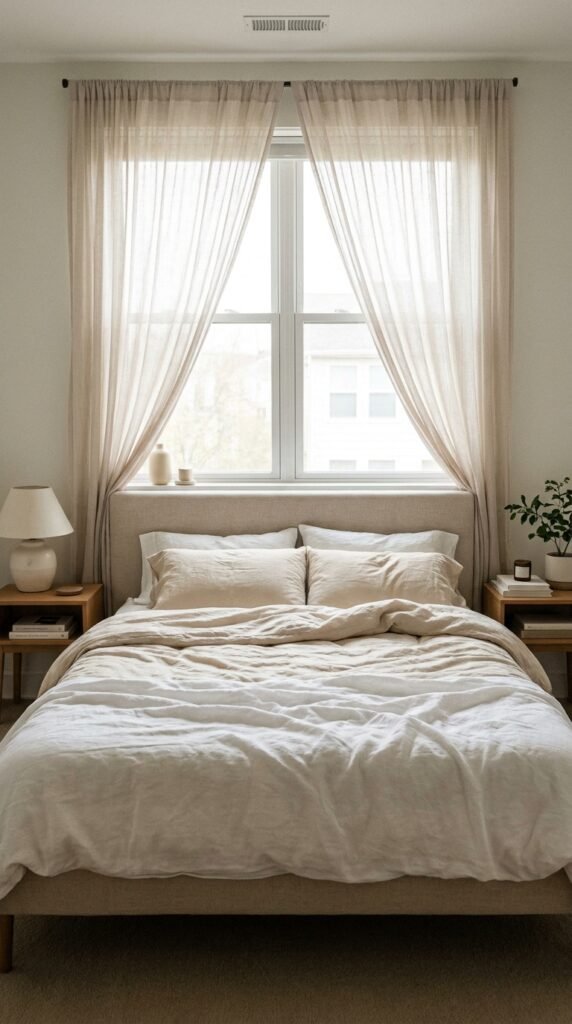
Open the curtains and window fully before measuring for a headboard. The bed should not trap fabric, block handles, or make routine cleaning difficult.
3. Shift the Bed Off Centre to Clear the Bedroom Door
Perfect symmetry is not useful when the bedroom door opens into the side of the mattress. Moving the bed a little to the left or right can create a cleaner entry and make the room feel less cramped.
Use the extra space where it matters most. The wider side might hold a normal bedside table, while the narrow side uses:
- a slim wall shelf
- a small sconce
- a hanging bedside pocket
Keep the headboard visually connected to the wall with centred artwork or a wider rug. The bed may sit off centre, but the room can still feel balanced.
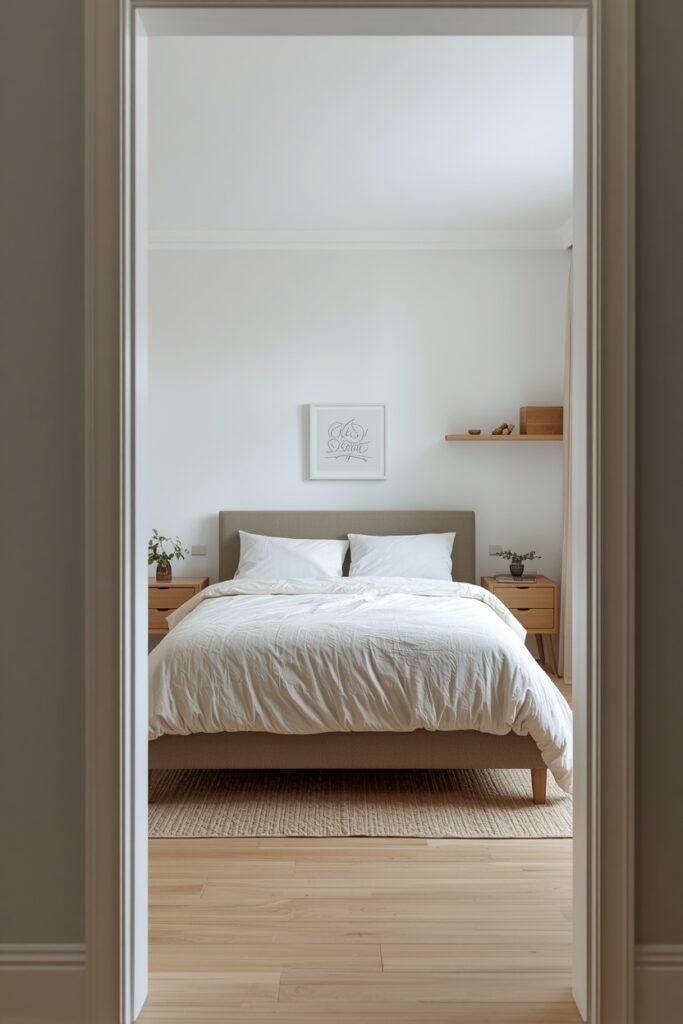
The centred bed narrows the entrance and forces the door to swing close to the frame.
A small sideways shift opens the entry path while slim bedside pieces keep the layout useful.
4. Fit the Bed Between Two Windows for Natural Symmetry
Two windows on the same wall can create an obvious place for the bed, especially when the space between them is wide enough for the headboard.
This arrangement keeps both windows useful and gives each side of the bed a natural boundary. It also reduces the need for large artwork above the headboard because the windows already frame the area.
Keep the window treatments consistent. Matching shades or curtains help the wall read as one full composition rather than three separate sections.
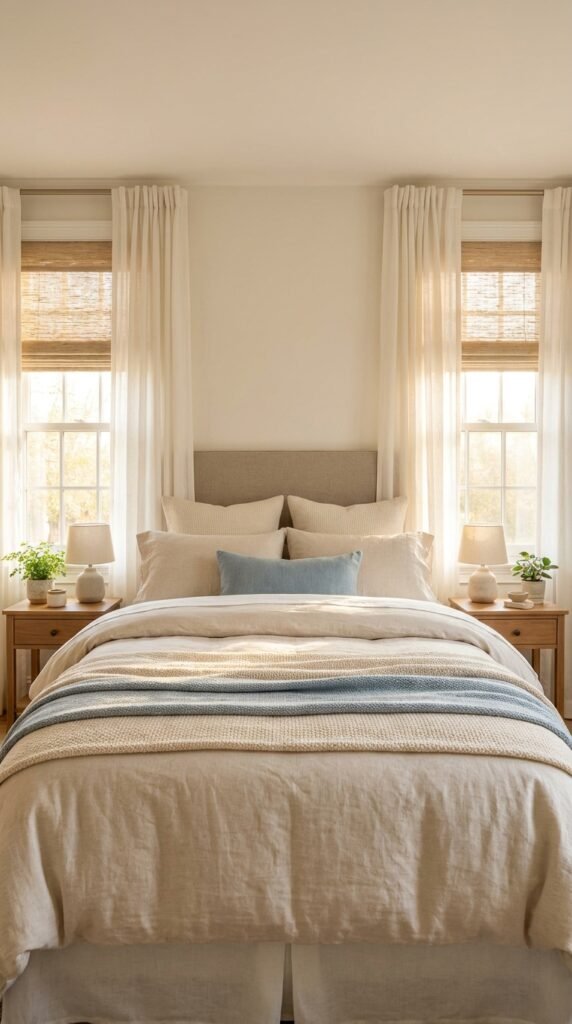
| Between Two Windows | Beneath One Window |
|---|---|
| creates natural symmetry | may suit a narrower wall |
| keeps both windows mostly clear | can block part of the glass or curtains |
| works best with a narrow headboard | works best with a low headboard |
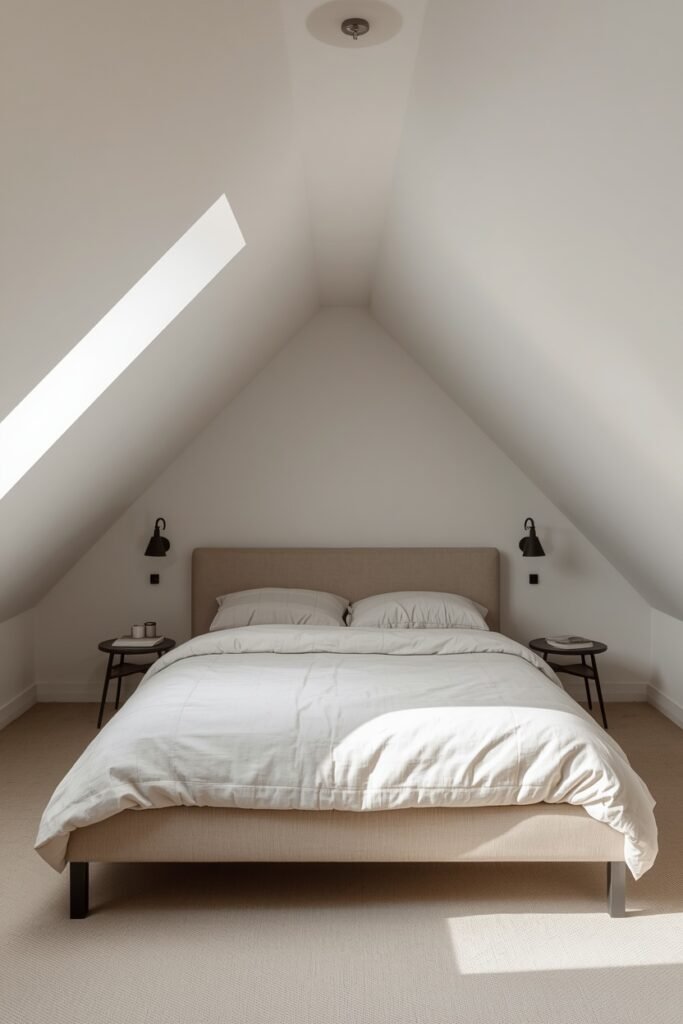
5. Tuck the Headboard Under the Lowest Part of a Sloped Ceiling
The low side of a sloped ceiling often looks difficult, but it can be a smart place for the headboard. You need less standing height directly above the pillows than you do near the foot of the bed.
Choose a low bed frame so the mattress does not rise too close to the slope. Then keep bedside furniture short and simple. Wall-mounted sconces can save surface space, but their position should be easy to reach without bumping your head.
Sit up in bed before finalising the spot. The ceiling should feel close and cosy, not restrictive.
6. Use One Bedside Table When Two Will Not Fit
Two matching bedside tables are not worth squeezing into a narrow room. Give the available floor space to the side that gets used most, then keep the tighter side simple.
A balanced setup might include:
- one normal bedside table with drawers
- one slim floating shelf on the narrow side
- wall-mounted lights instead of two table lamps
- a bedside pocket for a phone or book
Keep both sides visually linked through matching lights, wall colour, or similar small accessories. The furniture does not need to match in size. It only needs to support the same basic bedtime routine.
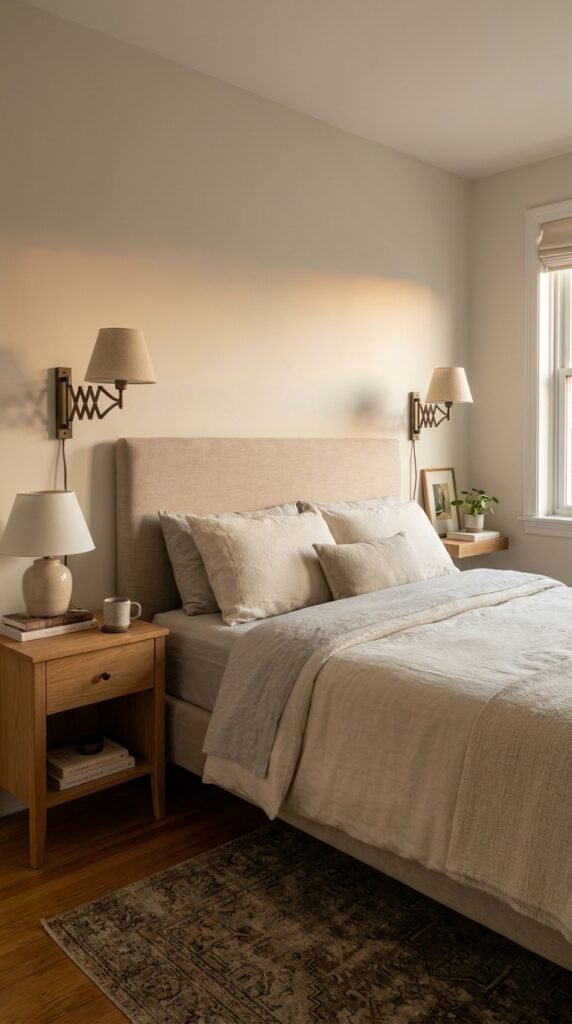
Build an uneven but balanced setup
7. Turn the Bed Sideways in a Long, Narrow Bedroom
A bed placed lengthwise can make a narrow bedroom feel like one long corridor. Turning it sideways may shorten the visual line and create a wider open zone near the door or wardrobe.
This works best when the bed fits across the room without blocking both sides. In a guest room or child’s bedroom, placing one long side near the wall can free enough floor space for a desk or dresser.
Use a broad rug beneath the bed to make the new direction feel planned. Before moving heavy furniture, check that bedding can still be changed without an awkward struggle.
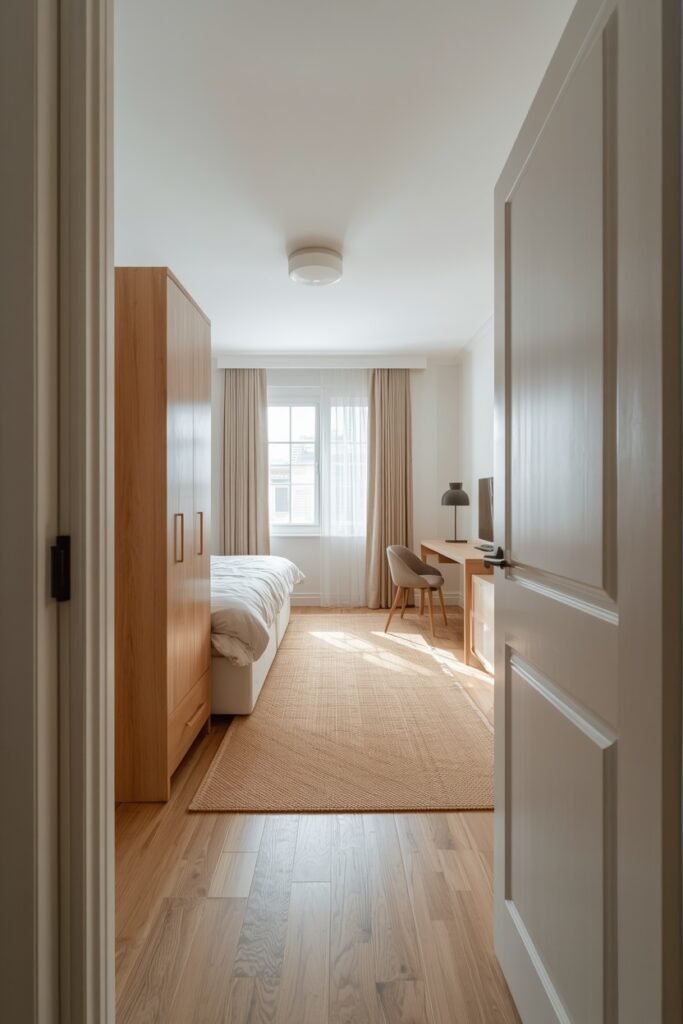
Use the sideways layout to create a wider activity or storage zone.
Keep the foot of the bed away from the door swing.
Do not trap the mattress between two walls if both sides are used daily.
Avoid blocking wardrobe drawers with the bed corner.
8. Float the Bed Away from the Wall to Create a Dressing Zone
A bed does not always need to sit flat against the room’s outer wall. In a larger bedroom, floating it forward can create a useful zone behind the headboard for wardrobes, a dressing table, or open clothing storage.
Plan the layout carefully:
- choose a stable freestanding headboard or low dividing wall
- leave a clear path into the space behind the bed
- use softer lighting to separate the sleeping and dressing areas
Keep the back of the headboard tidy because it will remain visible. This move suits deep rooms where furniture pushed around the edges leaves an empty middle.
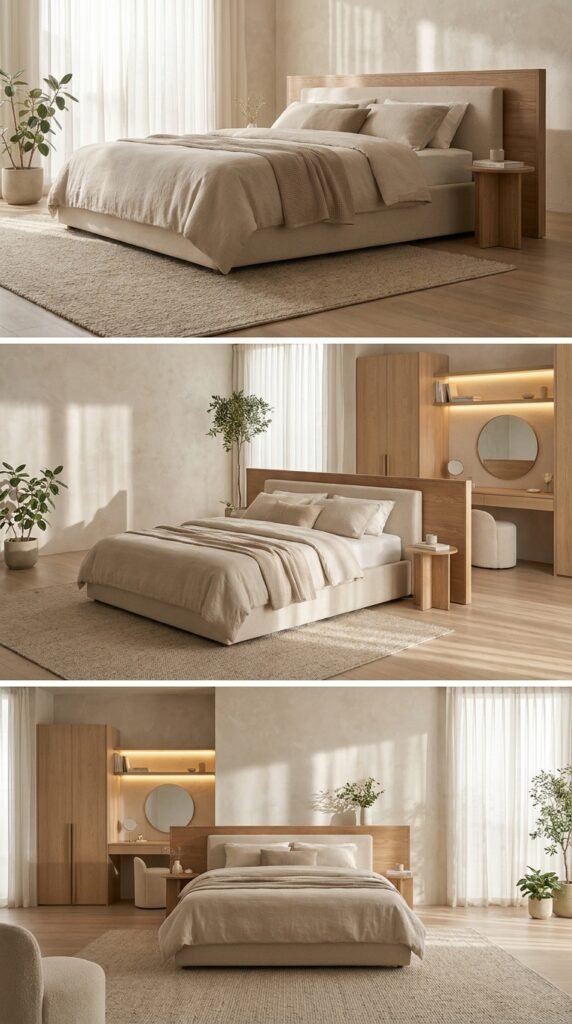
Mark the bed footprint and walking paths with painter’s tape first.
Choose a finished headboard that looks neat from the front and back.
Keep the dressing zone simple so the area behind the bed stays easy to use.
9. Angle the Bed into a Difficult Corner
Straight walls are not always the best guide in a room with a diagonal corner, bay window, or unusual cutout. Angling the bed can make the awkward architecture feel intentional instead of leaving a strange wedge of unused floor.
Use the space behind the headboard carefully. A tall plant, floor lamp, or custom triangular shelf can fill the gap without creating a clutter trap.
Keep the rest of the furniture aligned with the room rather than copying the bed’s angle. Too many diagonal pieces can make the layout feel restless. One angled focal point is usually enough.
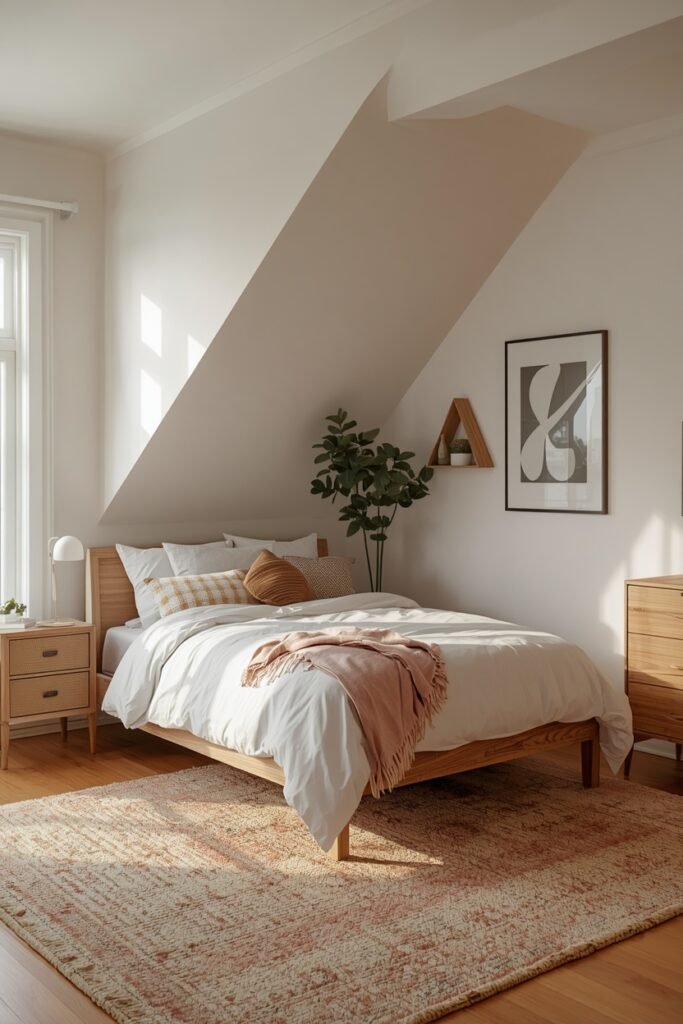
Angle the bed only when the move improves access or uses an awkward corner. A diagonal layout should solve a problem, not create a new one.
10. Place the Bed Opposite the Door Without Leaving It Fully Exposed
Sometimes the only workable wall puts the bed directly in view from the hallway. You can soften that sightline without blocking the doorway or moving the bed to a worse position.
A few quiet changes help:
- add a bench or low chest at the foot
- place a tall plant near the room entrance
- use a slim screen where floor space allows
- keep bedding colours calm and coordinated
- avoid placing open laundry baskets in the direct view
The goal is not to hide the bed completely. A gentle visual pause makes the sleeping area feel more private while keeping the room open and easy to enter.
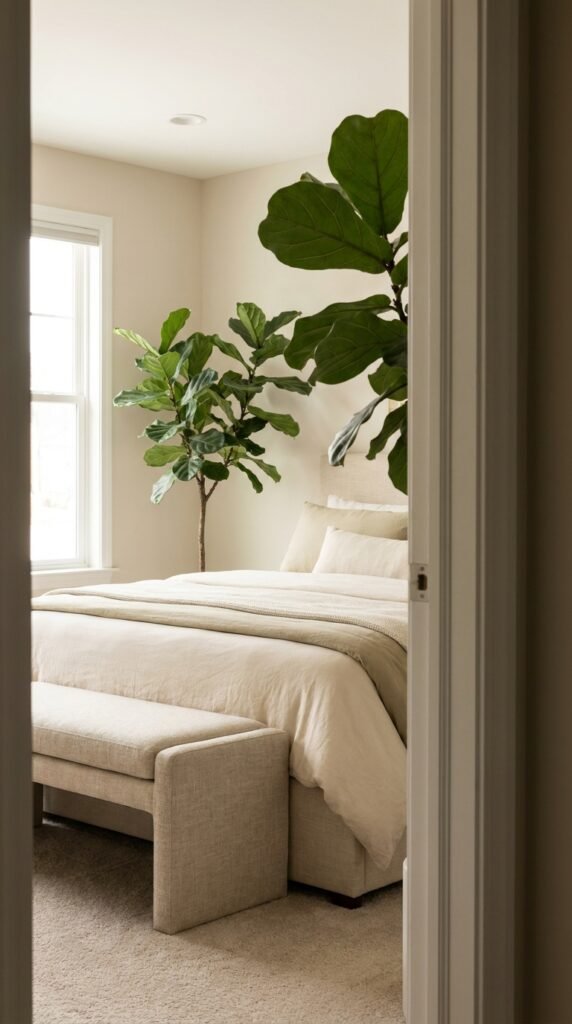
- ▸Use a low bench to create a boundary without blocking the bed
- ▸Place a plant or slim screen beside the doorway, not across it
- ▸Keep the direct sightline free of laundry and loose storage
- ▸Use simple bedding so the first view feels calm
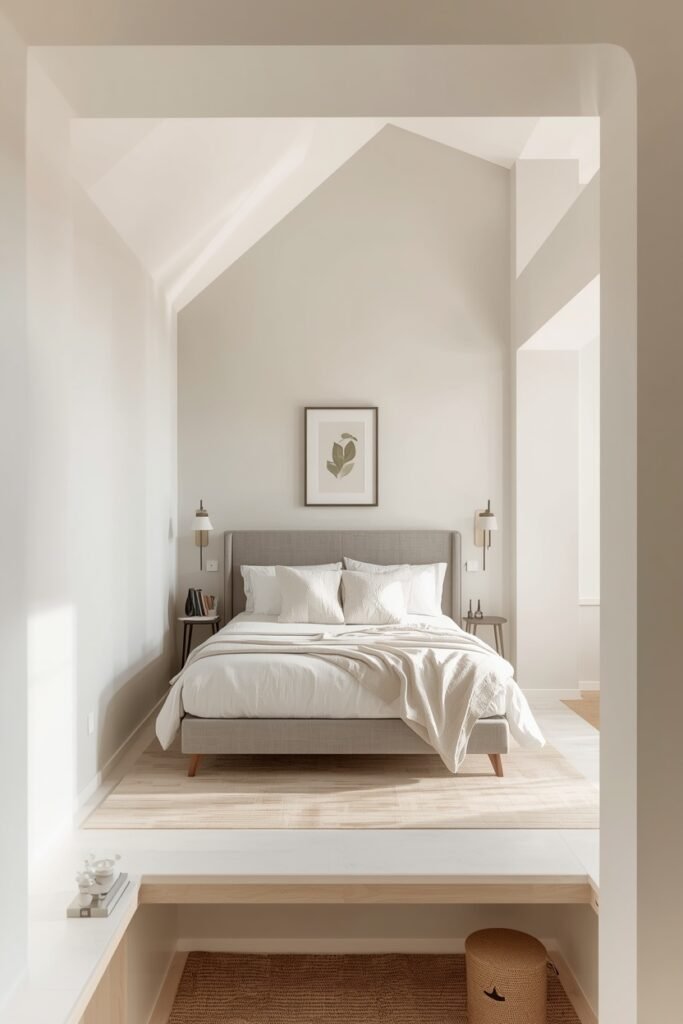
11. Use a Low Bed Beneath a Half Wall or Loft Edge
A low bed can fit beneath architectural features that would overwhelm a taller frame. Half walls, loft edges, and raised platforms often leave enough room for sleeping, but not for a high headboard or bulky canopy.
Keep the setup visually light:
- choose a platform frame or low upholstered base
- use short lamps or wall-mounted lighting
- avoid tall artwork directly above the pillows
- keep shelves clear of objects that could fall
Measure the sitting height, not just the mattress height. You should be able to sit up comfortably without feeling boxed in. A lower profile also helps the room look wider and less crowded.
12. Move the Bed Away from a Radiator or Air Vent
Warm air, cool air, and blocked airflow can make a bedroom uncomfortable even when the layout looks tidy. A bed placed directly over a vent or tight against a radiator may also trap curtains and make cleaning harder.
Before settling on the wall, check:
- where heated or cooled air enters the room
- whether curtains fall near the heat source
- whether the bed blocks access for maintenance or cleaning
A small sideways shift may be enough. Do not cover active vents with the frame, mattress, rug, or storage boxes. The room should breathe as well as it looks.
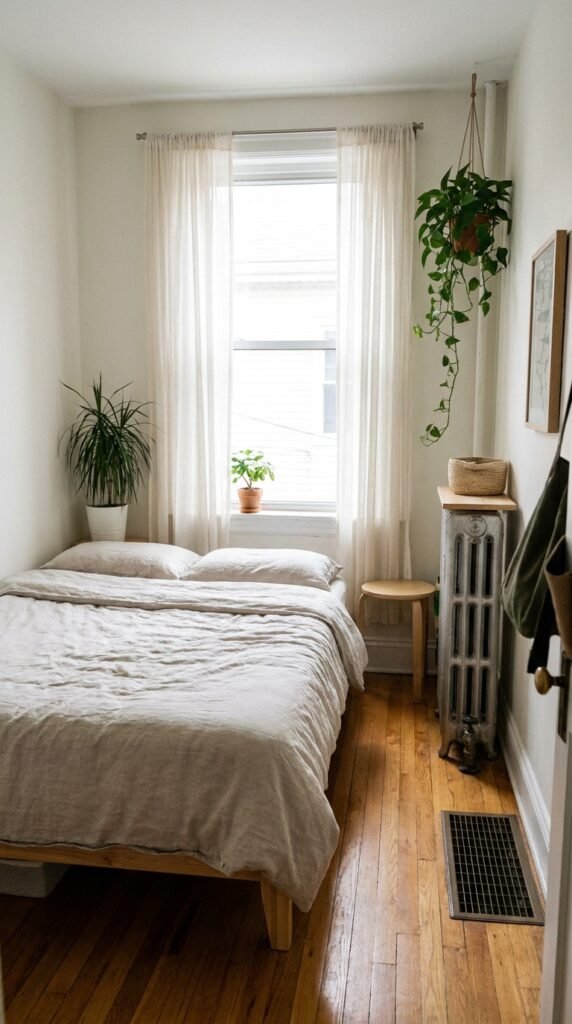
⚠️ Watch Out
Keep bedding, curtains, and stored items clear of radiators and vents. Air needs space to move, and heat sources should remain easy to inspect.
13. Position the Bed Beside the Wardrobe Instead of Facing It
Wardrobes need more space than they appear to. Hinged doors swing outward, drawers pull forward, and sliding doors still need a clear standing area in front.
Placing the bed beside the wardrobe can protect that working zone. Keep the bed frame parallel to the storage where possible, then use the space between them as a direct walkway.
Before moving anything, open every wardrobe door and drawer fully. A layout that works with the doors closed may fail the first morning you need clothes. The best position lets one person use the wardrobe without forcing the other person to climb over the bed.
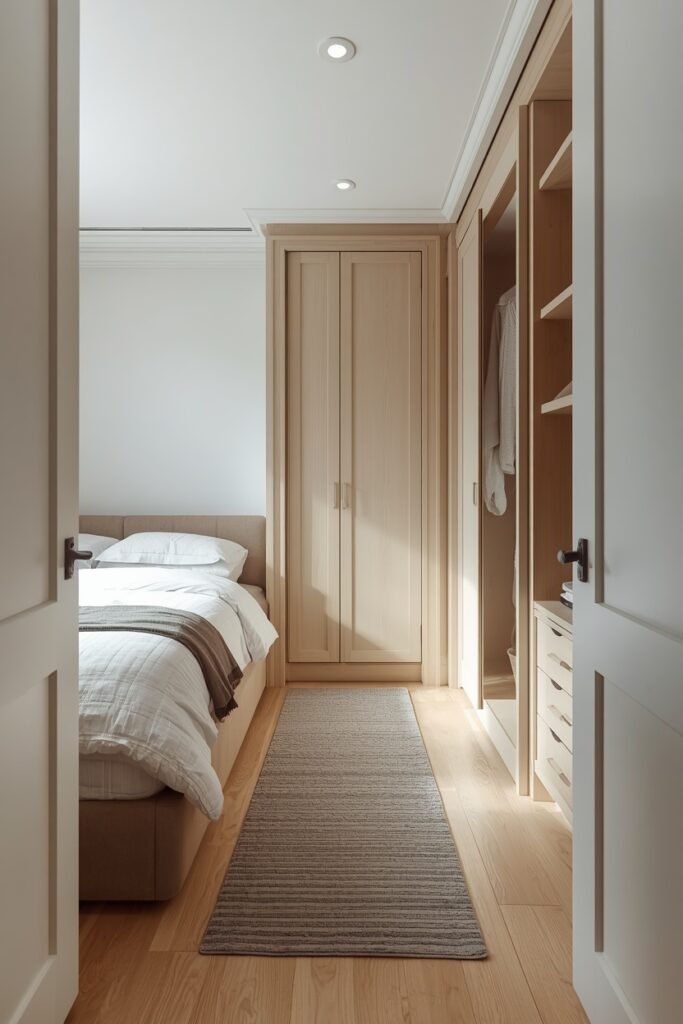
The bed faces the wardrobe and leaves little room for open doors, drawers, or getting dressed.
Turning the bed beside the wardrobe creates a longer, clearer access zone in front of the storage.
14. Create a Sleeping Corner in a Studio or Multiuse Bedroom
A sleeping area feels calmer when it has a clear edge, even if the room also works as an office, lounge, or dressing space. You do not need a solid wall to create that separation.
Start with the floor. Place a rug under the bed so the sleeping zone reads as one unit. Then use a slim divider, curtain, open shelf, or tall plant to soften the view from the rest of the room.
Keep lighting separate too. A bedside lamp should serve the bed, while task lighting belongs near the desk. Small boundaries help each part of the room do its own job.
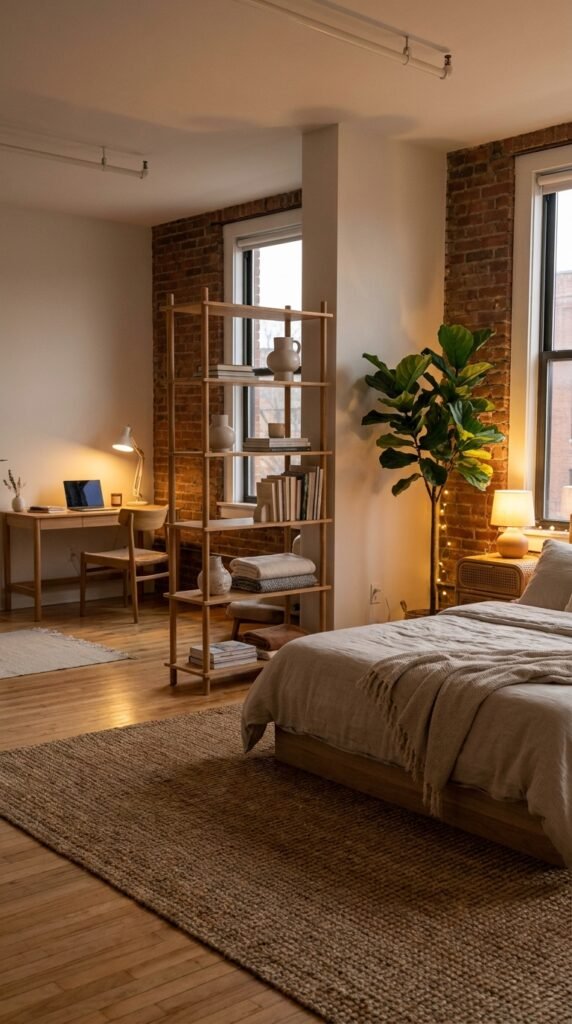
Define the sleeping corner
15. Choose the Wall That Leaves the Widest Everyday Walkway
The best bed wall is often the one that makes ordinary movement easiest. A centred bed may look balanced, but it is not the right choice if you brush past the frame every time you open the door or reach the wardrobe.
Test each option by walking the room as you normally would:
- enter and leave without turning sideways
- reach the wardrobe and drawers easily
- open the window or curtains
- change the bedding without moving furniture
Prioritise the routes you use every day. A slightly uneven layout with a generous walkway will usually feel calmer than a symmetrical room filled with narrow gaps.
Conclusion
A tricky bedroom layout becomes much easier once the bed supports the way you move through the room. Focus first on door clearance, wardrobe access, window use, and comfortable walking space. Symmetry can help, but it should never come before function.
These bed placement ideas show that small changes, such as shifting the frame, lowering the bed, or using only one bedside table, can make the whole room feel calmer and more practical. Choose the layout that fits your daily routine, not just the one that looks balanced in a photo. Save this list to Pinterest for the next time you need to rethink an awkward bedroom.