20 Canopy Bed Ideas That Feel Romantic and Modern
A canopy bed can make a bedroom feel intimate and special, but the wrong styling can quickly turn heavy, dated, or overly formal. Thick curtains, bulky frames, and too many decorative layers often hide the clean shape that makes the bed interesting in the first place.
These 20 canopy bed ideas that feel romantic and modern focus on lighter fabrics, simpler frames, thoughtful lighting, and bedding that still feels comfortable enough for everyday life. Some ideas keep the structure completely bare. Others use sheer curtains, washed linen, warm wood, or an upholstered headboard to soften the bed without overwhelming the room.
The best approach depends on the size of your bedroom and how much visual weight it can handle. A slim black frame may suit a bright modern room, while natural wood can make a large space feel warmer. You do not need a grand bedroom or layers of expensive fabric. A few controlled choices can give the bed presence while keeping the room calm, current, and easy to live in.
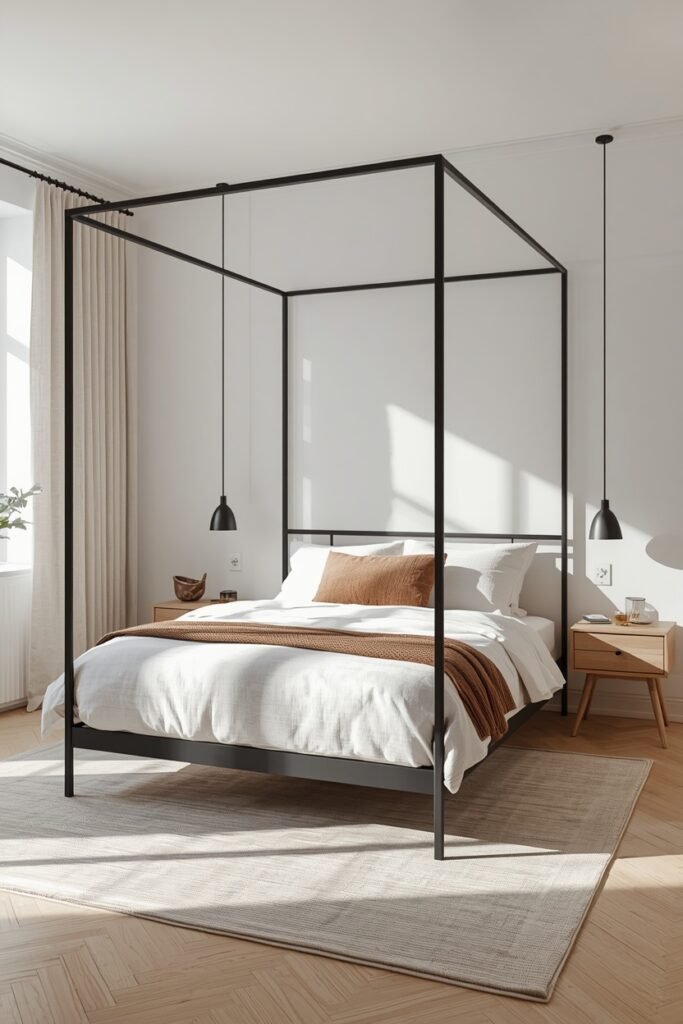
1. Choose a Slim Black Canopy Frame for Clean Modern Contrast
A thin black frame gives a canopy bed definition without making it look bulky. The straight lines stand out clearly against pale walls, while the open structure allows light to move through the room.
Keep the rest of the setup soft:
- warm white or oatmeal bedding
- light oak bedside tables
- simple linen curtains
- one muted accent colour
Avoid filling the upper frame with heavy fabric. The contrast works because the structure remains visible. A matte finish usually feels calmer than glossy metal, especially in a bedroom with natural textures. The final look feels sharp, but not cold.
2. Hang Sheer White Curtains for a Light Romantic Layer
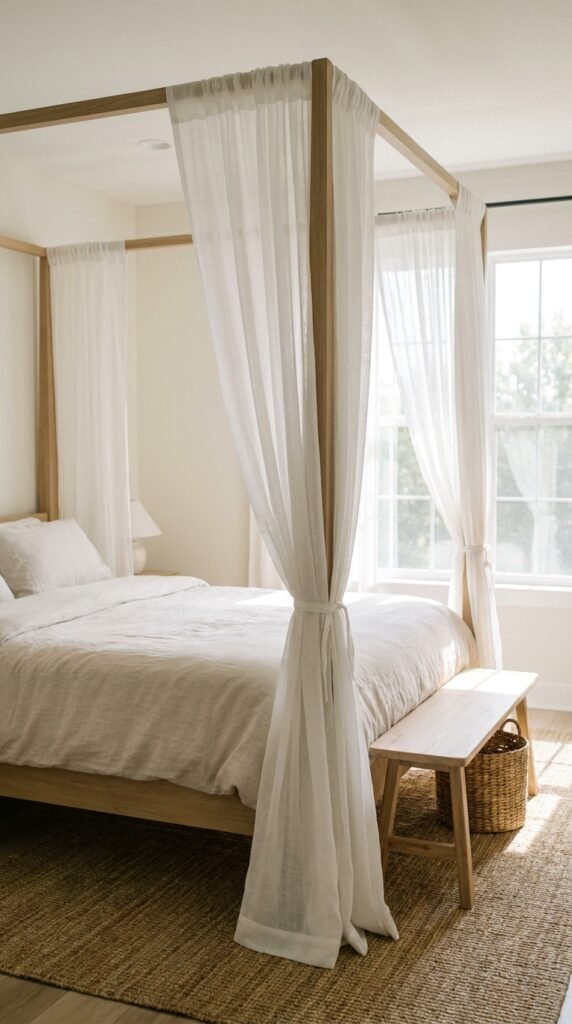
Sheer curtains bring softness to a canopy bed while keeping the room bright. They move gently with open windows and create privacy without turning the bed into a closed box.
Use fewer panels than you think you need. Two or four light pieces are usually enough.
For a cleaner result:
- keep the fabric close to the frame colour
- let the panels fall in loose, straight lines
- gather them lightly at the corners during the day
Avoid thick bunches of fabric around the posts. The curtains should frame the bed, not swallow it.
💡 Quick Tip
Choose sheer panels with enough length to reach the floor, but avoid extra fabric pooling around the bedposts where it can look messy and collect dust.
3. Leave the Canopy Frame Bare and Let the Architecture Lead
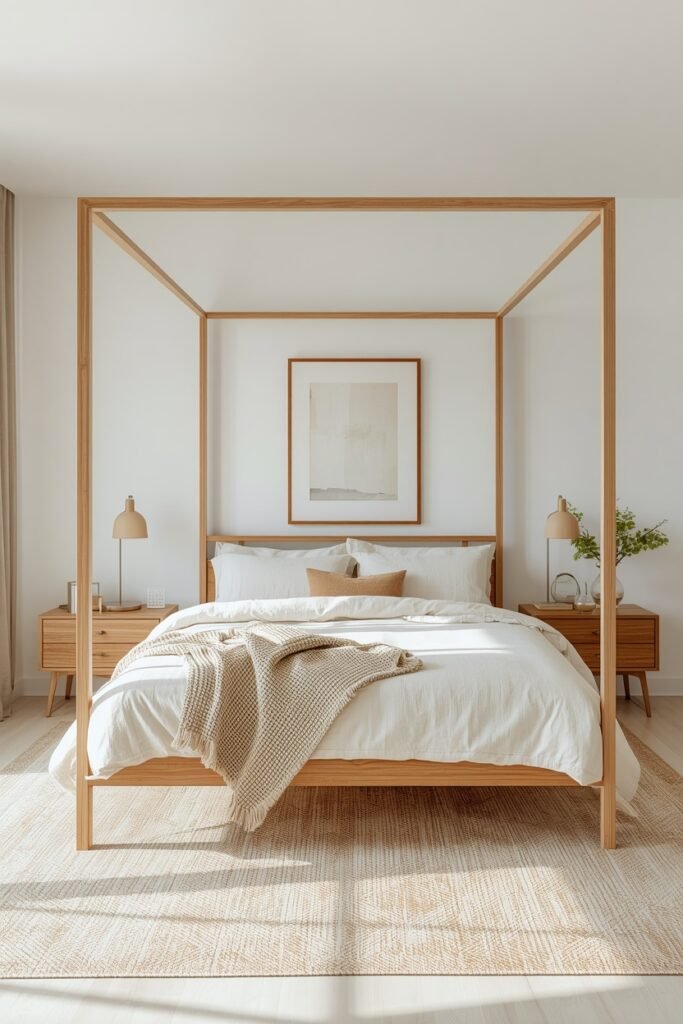
Fabric is not required for a canopy bed to feel complete. A bare frame can look calmer and more current, especially in a bedroom with textured bedding, artwork, and strong natural light.
The open structure creates a clear outline around the sleeping area without closing it off. It also makes daily care easier because there are no panels to tie back, wash, or straighten.
Add warmth lower down through:
- layered pillows
- a quilt or soft throw
- wood bedside pieces
- one large rug beneath the bed
The frame gives the room height. The textiles below keep it comfortable.
Heavy panels hide the frame, reduce light, and make a modest room feel more crowded.
The open structure adds height and shape while keeping the bedroom clear and easy to maintain.
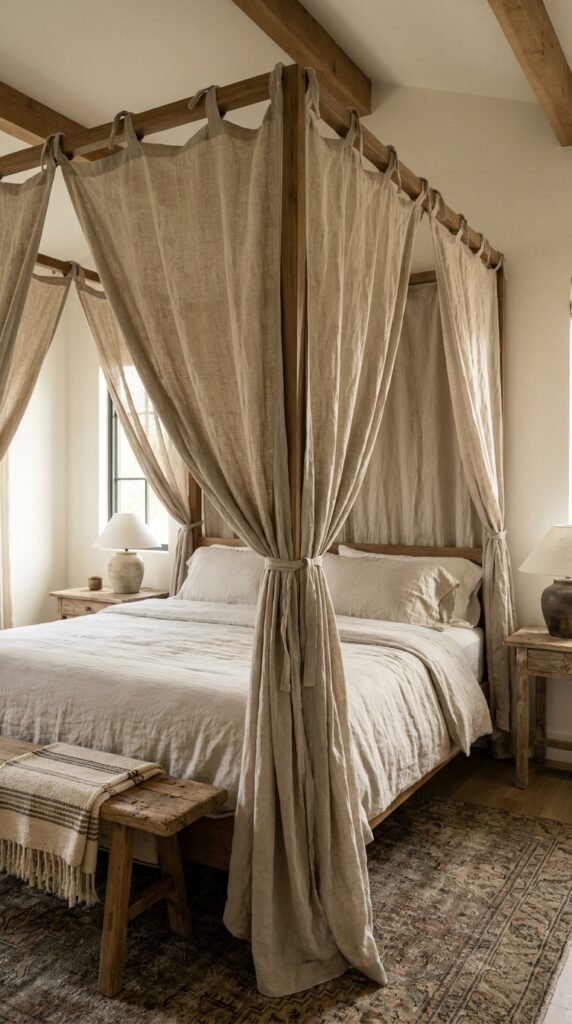
4. Use Washed Linen Panels for a Relaxed, Lived-In Look
Crisp fabric can make a canopy bed feel too formal. Washed linen has softer folds and a slightly rumpled surface, so the bed looks comfortable rather than staged.
Choose muted shades such as warm white, flax, stone, or dusty rose. Then hang the panels loosely instead of pulling them into tight, even pleats.
A relaxed setup needs:
- light or medium-weight linen
- simple ties made from the same fabric
- enough length to reach the floor
- open space between the panels
A few natural wrinkles suit this look. Over-steaming the fabric can remove the softness that makes linen work.
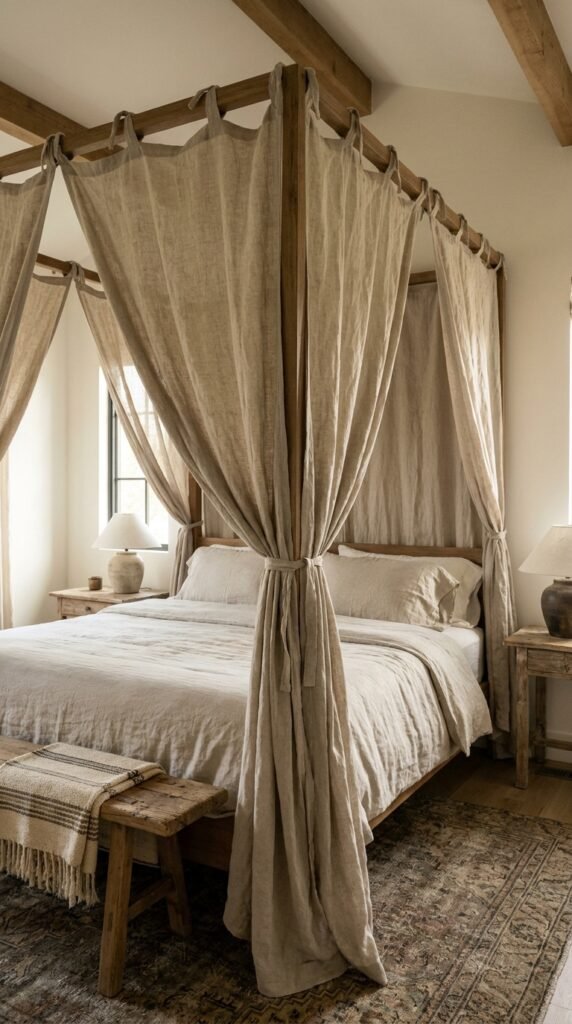
Choose the right linen details
5. Warm the Room with a Natural Wood Canopy Bed
Natural wood gives a canopy bed presence without the sharp contrast of black metal. Visible grain brings warmth overhead, which helps a large bedroom feel more settled.
The finish changes the mood. Pale oak feels airy and relaxed, while walnut or stained timber creates a deeper, more intimate look.
Pair the frame with materials that support it:
- linen bedding
- wool or jute rugs
- ceramic lamps
- woven baskets
- soft plaster or warm white walls
Avoid matching every wooden piece exactly. A slight mix of tones feels more natural than a full furniture set in one finish. Let the canopy bed remain the strongest wood feature.
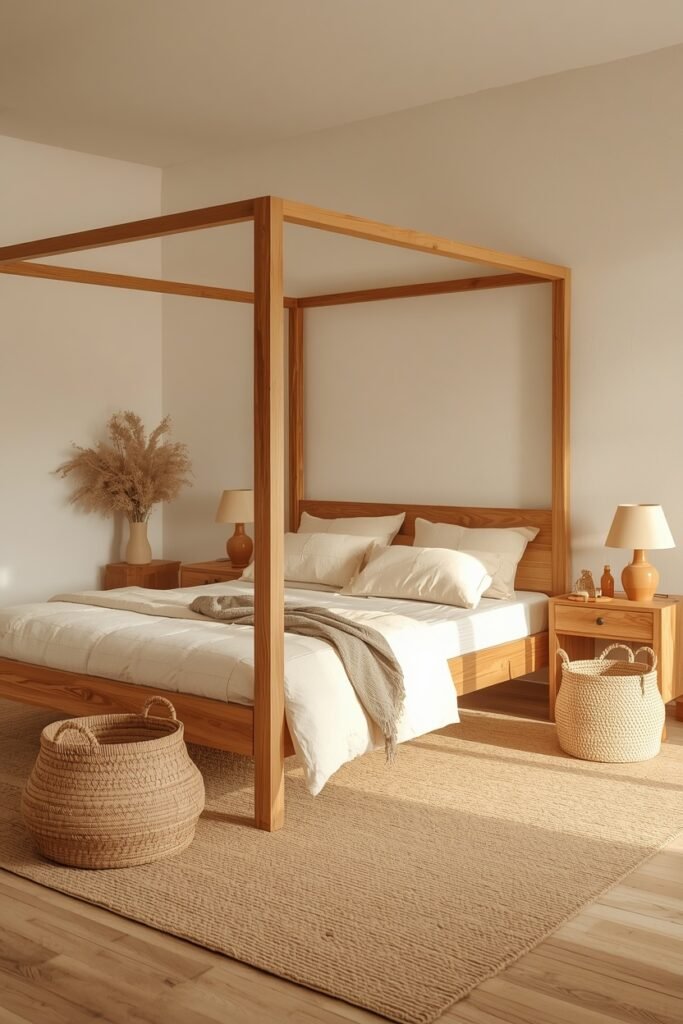
6. Pair a Canopy Frame with a Tall Upholstered Headboard
A canopy frame gives the bed height, while an upholstered headboard adds comfort where it matters most. The mix works well in bedrooms that need softness but still benefit from a clean outline.
Choose a headboard that sits clearly inside the frame rather than competing with it.
A practical balance looks like this:
- slim posts around the bed
- one tall padded headboard
- plain bedding with a few textured layers
- simple bedside tables
An open frame feels lighter and more architectural. The upholstered centre feels warmer and easier to lean against. Together, they create contrast without needing extra fabric overhead.
| Upholstered Centre | Fully Open Frame |
|---|---|
| softer for reading in bed | lighter and more minimal |
| adds warmth behind the pillows | keeps the wall more visible |
| works well in a larger bedroom | suits tighter or brighter rooms |
7. Create a Canopy Effect with Ceiling-Mounted Curtain Tracks
You do not need a four-poster frame to create the feeling of a canopy bed. Ceiling-mounted curtain tracks can outline the sleeping area while leaving the furniture itself simple.
The effect works best when the tracks follow the shape of the bed and the fabric remains light.
Keep the layout controlled:
- mount the tracks slightly wider than the mattress
- use panels that reach the floor
- pull the curtains back fully during the day
Avoid hanging heavy fabric from weak fittings. The ceiling structure and track system need to suit the weight of the panels. A soft outline is the goal, not a closed tent.
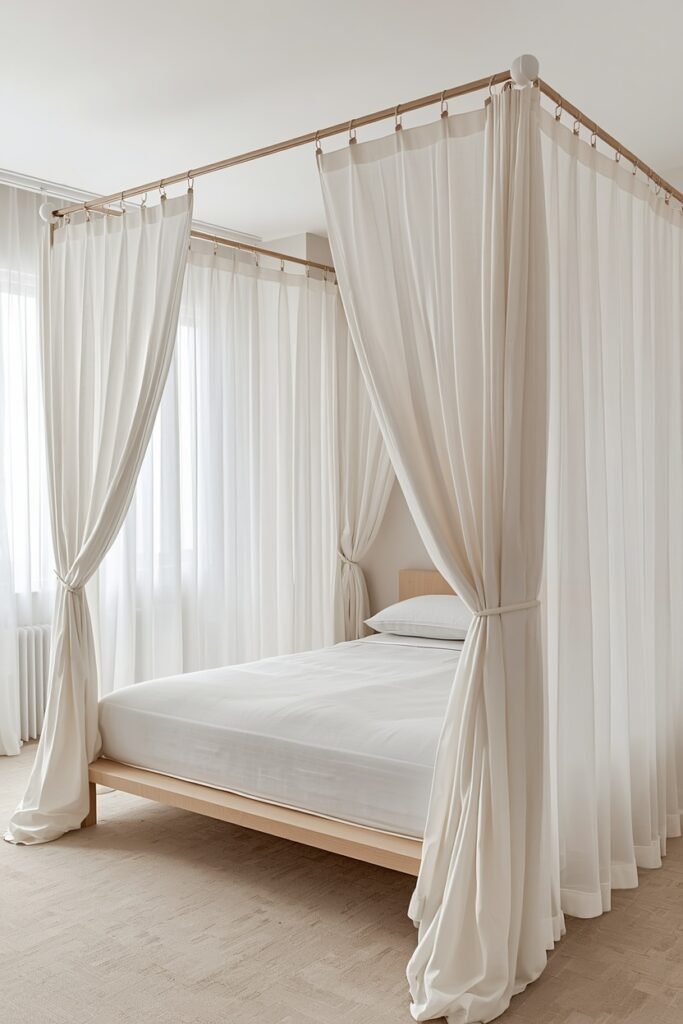
Follow the bed’s outline with clean ceiling tracks.
Use light panels that slide and gather easily.
Do not let curtains block bedside access.
Avoid dense fabric that makes the bed feel boxed in.
8. Keep the Frame Low and Wide in a Smaller Bedroom
A small bedroom can still handle a canopy bed when the frame does not tower over everything else. A lower, wider structure feels calmer because it follows the proportions of the mattress instead of drawing all attention upward.
Start with the room itself.
- leave clear space between the top rails and ceiling
- choose slim posts without carved details
- keep the bedding low and lightly layered
Place the bed where all four posts can be seen without blocking a door, wardrobe, or main walkway. A frame that technically fits can still feel too large if it interrupts how the room works.
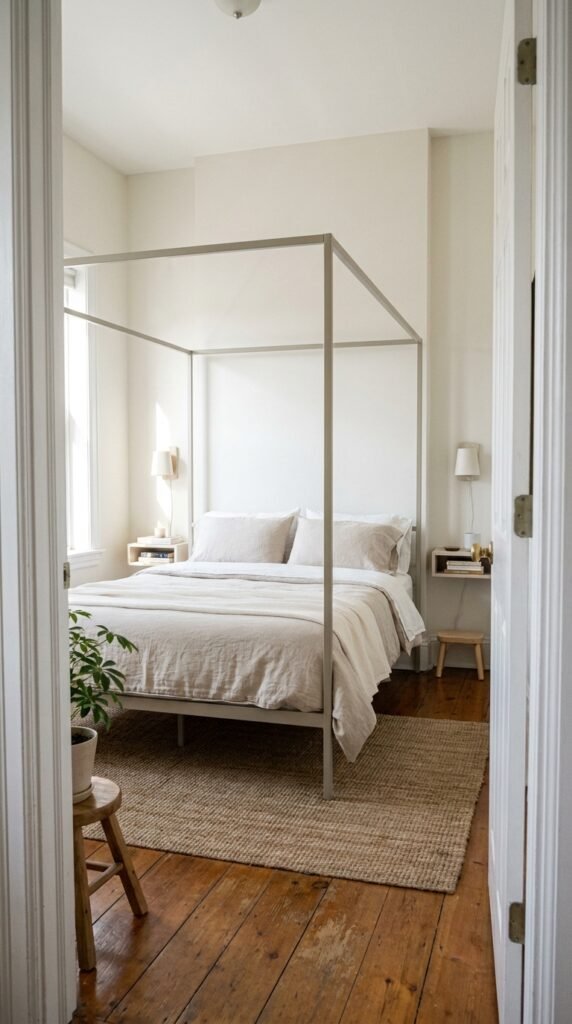
Measure the ceiling clearance above the top rails.
Choose slim posts and a frame close to the mattress width.
Check that doors, drawers, and walkways remain easy to use.
9. Wrap Warm String Lights Around the Upper Frame
Soft lights can make a canopy bed feel intimate after dark, but the setup needs restraint. A few warm points of light along the upper rails look calmer than dense strands wrapped around every post.
Keep the wiring neat and out of the way. Battery packs or cords should not hang near the pillows, and loose strands should never trail across the sleeping area.
Choose warm white lights rather than cool blue ones. Then leave the rest of the bedside lighting simple. The string lights should create a gentle glow, not become the only light source in the room.
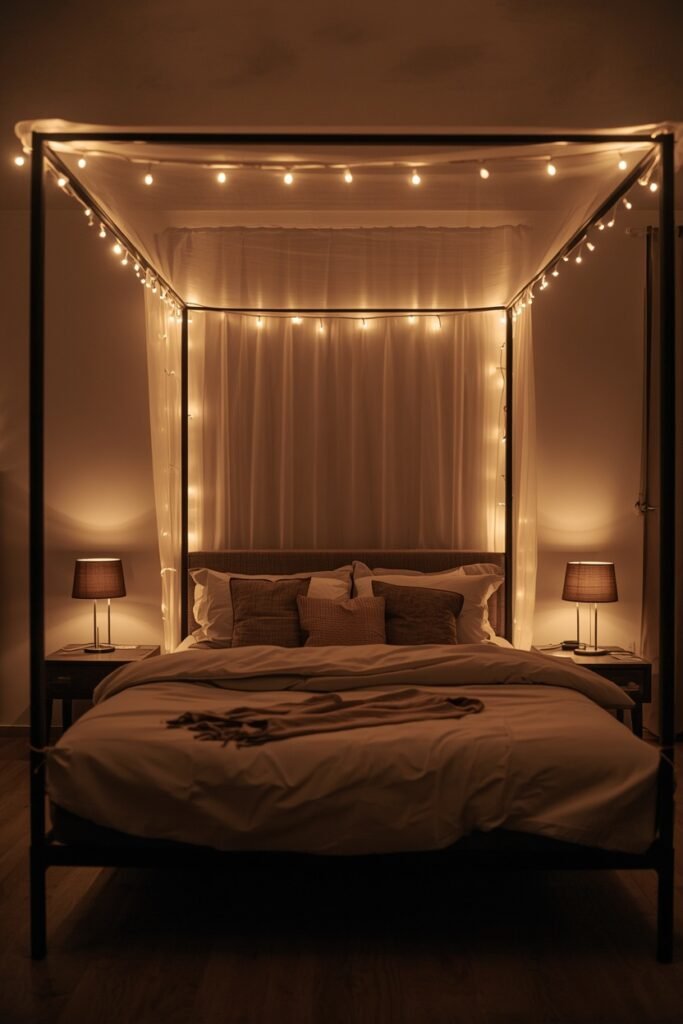
Use one neat strand along the upper frame, then secure every loose section so the bed still feels tidy and restful.
10. Drape Fabric Across Only the Head of the Bed
A full fabric canopy can be too much for a warm or compact bedroom. Draping fabric across only the head section gives the bed softness while keeping the foot and sides open.
Let the panel fall gently behind the pillows or gather it loosely around the two back posts.
Good choices include:
- lightweight linen
- cotton voile
- soft gauze
- a muted solid colour
Keep the drape away from reading lamps and wall lights. It should also be easy to remove for washing. This half-canopy treatment creates a sheltered feeling around the headboard without hiding the full frame.
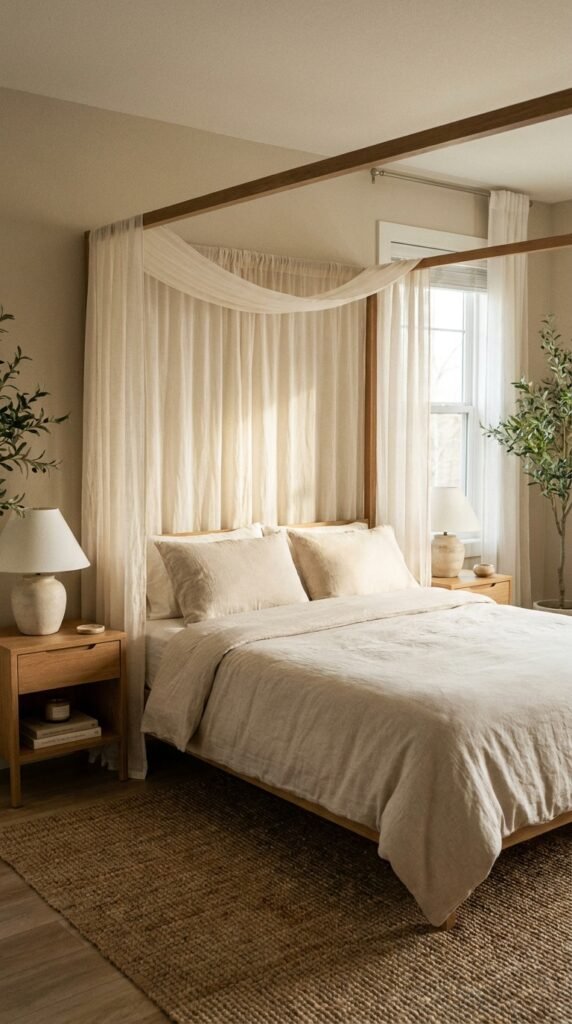
- ▸Drape fabric across the upper head rail only
- ▸Leave both sides and the foot of the bed open
- ▸Use a light fabric that can be removed and washed
- ▸Keep the panel clear of lamps, bulbs, and cords
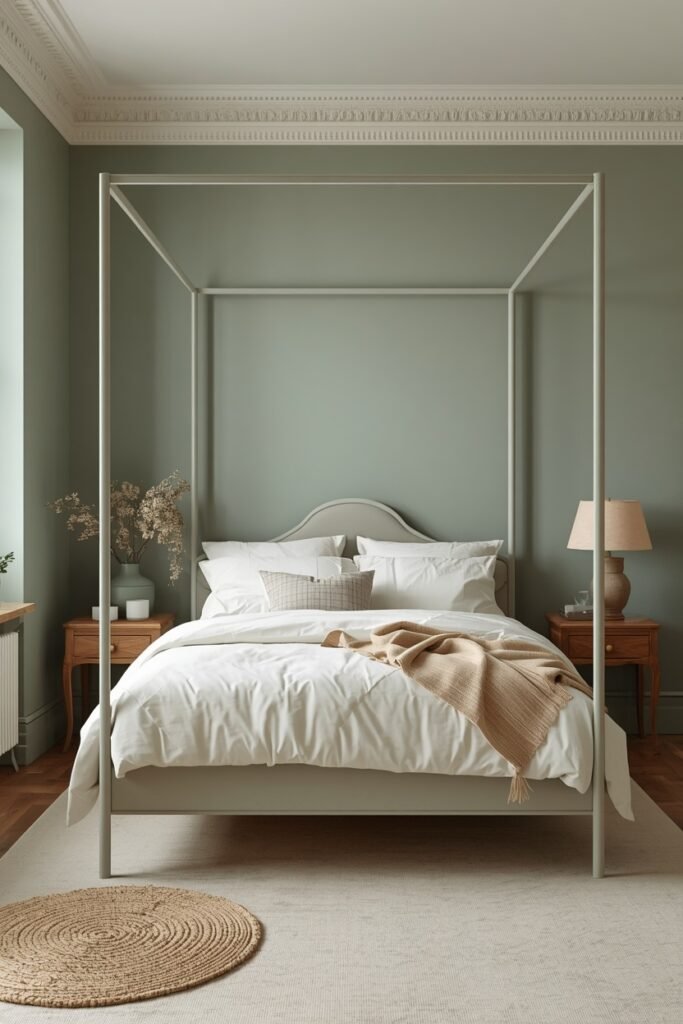
11. Colour-Drench the Walls and Canopy Frame in One Soft Shade
Matching the frame to the walls can make a canopy bed feel calmer and less dominant. Instead of reading as a separate dark structure, the bed blends into the room and lets the bedding take more attention.
Soft shades work best:
- dusty rose for gentle warmth
- muted sage for a quiet natural look
- pale taupe for an earthy bedroom
- warm grey for a cleaner finish
Use a slightly different sheen on the frame so its shape remains visible. Matte walls with a soft satin frame create enough contrast without breaking the colour story. Keep the bedding lighter or deeper than the room so the bed does not disappear completely.
12. Balance a Dark Canopy Bed with Pale Layered Bedding
A dark canopy frame already carries plenty of visual weight. Pale bedding keeps the centre of the bed open and prevents the room from feeling too stern.
Start with warm white sheets rather than a sharp blue white. Add an oatmeal or cream duvet, then finish with one soft quilt or throw near the foot.
Texture matters more than adding many colours:
- washed cotton
- linen
- light wool
- subtle stitched details
Keep the pillow arrangement relaxed. Too many upright cushions can make a tall frame feel formal. A few generous layers will soften the structure while leaving its clean outline easy to see.
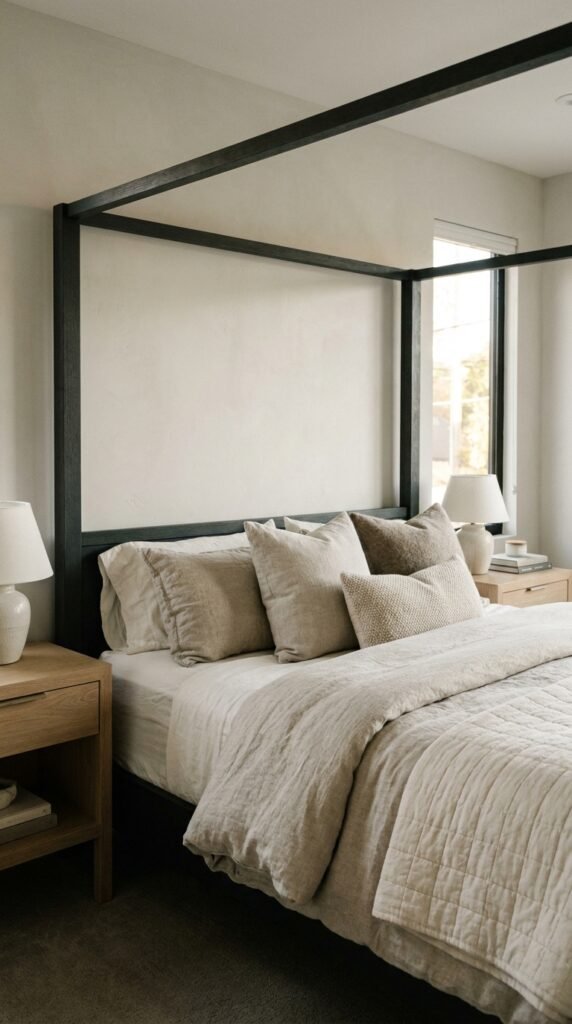
📌 Good To Know
Warm whites, cream, and oatmeal usually sit more comfortably beside black or dark wood frames than bright white bedding with a cool undertone.
13. Place the Canopy Bed in Front of a Statement Wallpaper Wall
Bold wallpaper can feel busy until a canopy frame gives it structure. The posts create a clean boundary around the pattern, helping the bed look connected to the wall instead of lost against it.
Choose a wallpaper with a repeat large enough to suit the bed’s scale. Tiny patterns may blur behind the frame, especially once pillows and lamps are added.
Keep nearby pieces quieter:
- use plain bedding
- choose simple bedside lamps
- repeat only one wallpaper colour elsewhere
The frame should organise the pattern, not fight it. A slim black, brass-toned, or natural wood canopy usually leaves enough wallpaper visible to make the idea work.
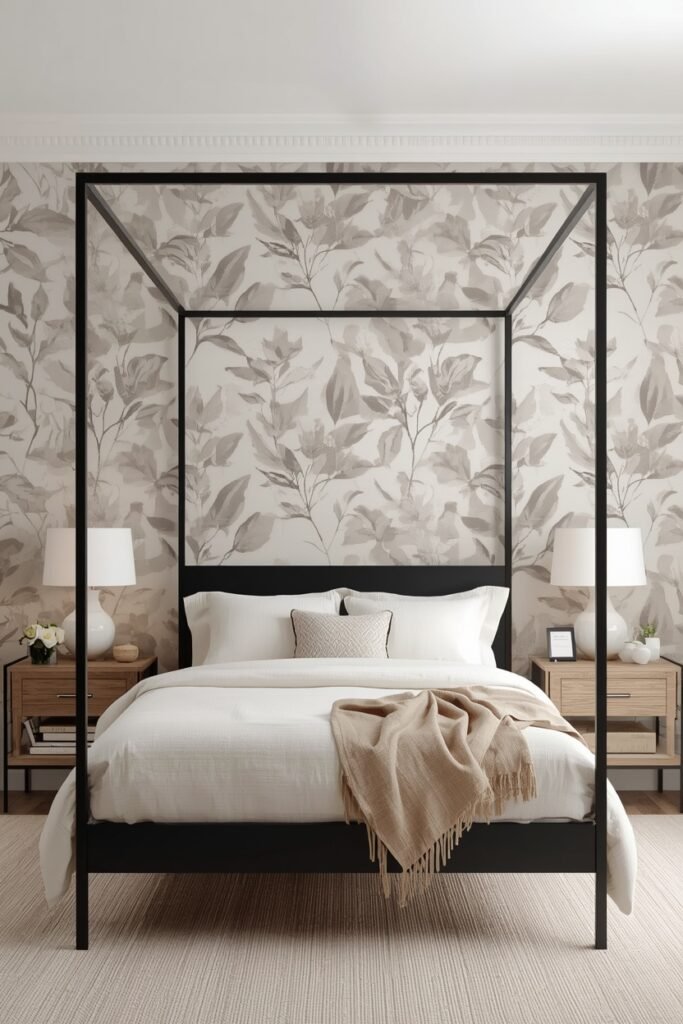
A strong wallpaper pattern can spread across the wall without a clear visual centre.
The bed creates a defined focal area while allowing the pattern to remain visible around it.
14. Use One Asymmetrical Curtain Panel for a Casual Modern Twist
A single curtain panel can soften a canopy bed without making every side feel dressed. Drape it from one upper corner, then let it fall loosely along the head or side of the bed.
The uneven placement should look deliberate. Keep the opposite side completely clear rather than adding a second smaller piece.
A simple setup needs:
- one light linen or voile panel
- a hidden tie or neat fabric loop
- plain bedding beneath it
- enough open frame to show the contrast
Place the drape on the side away from a busy walkway. The result feels relaxed and expressive, while the bed stays open.
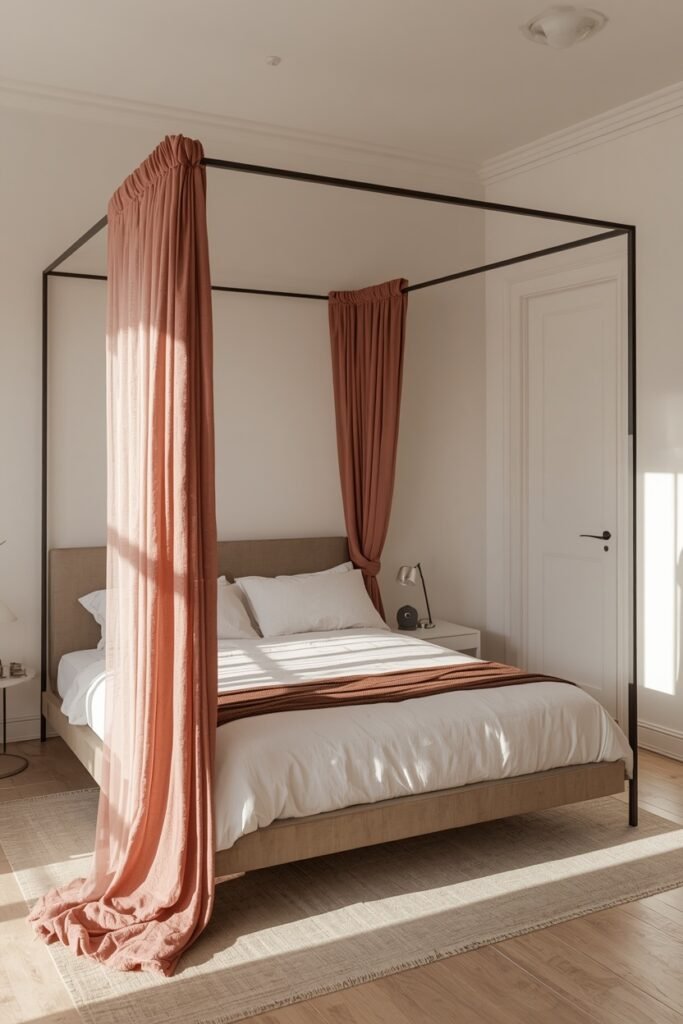
Make the uneven drape feel intentional
15. Add Small Pendant Lights Inside the Canopy Frame
Pendant lights suspended near the head of the bed free up space on small bedside tables. They also draw attention inward, making the canopy feel like a room within the room.
Scale is important. Large shades can crowd the frame, while very small bulbs may look unfinished. Choose compact pendants with soft light and enough clearance above the pillows.
Keep both cords at the same height unless the room has a clearly asymmetrical layout. The switches should also be easy to reach from bed. A warm glow against linen, wood, or matte metal makes the sleeping area feel intimate without adding more fabric.
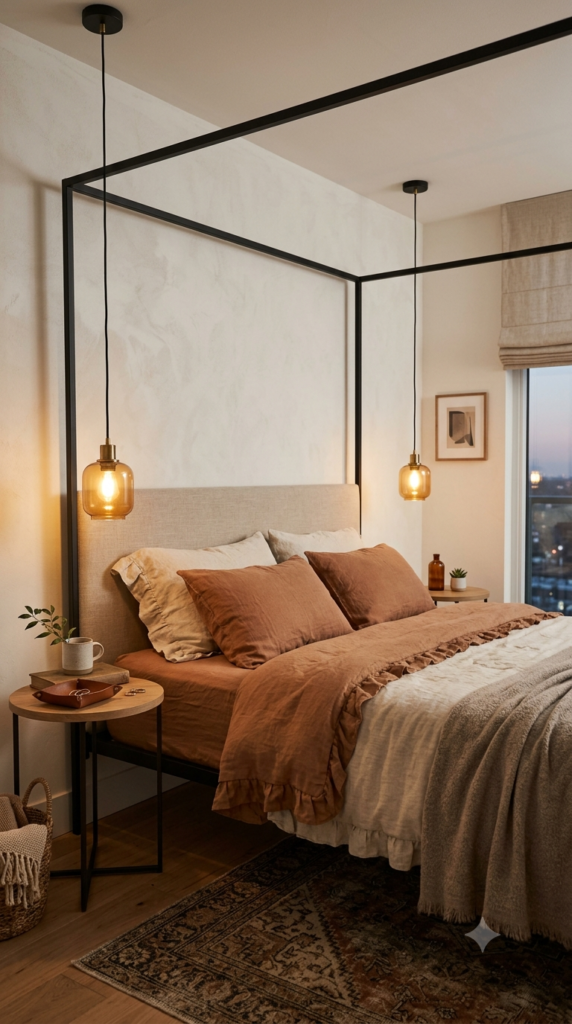
16. Style a White Canopy Bed with Warm Earthy Textures
An all-white canopy bed can feel crisp, but it may also look flat if every nearby surface has the same finish. Warm texture gives the room depth without taking away from the clean frame.
Build the look with a few grounded materials:
- flax or oatmeal linen
- a wool or jute rug
- warm oak bedside tables
- clay or stone lamps
- one rust or brown throw
Keep the colours muted so the white frame still feels light. The contrast should come from texture more than bold colour. A slightly rumpled duvet and a woven bench at the foot can make the room feel settled rather than overly polished.
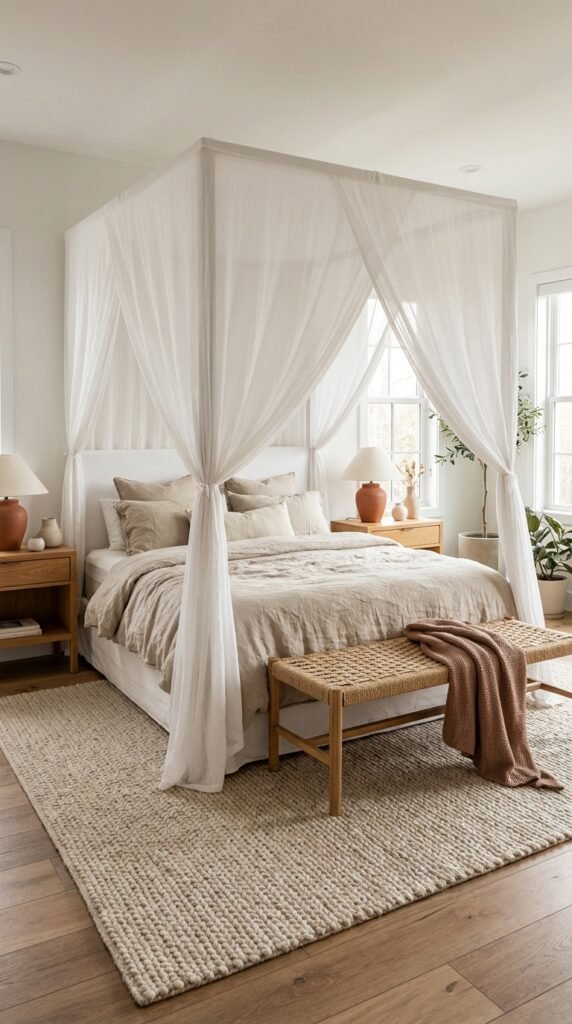
| Flat All-White Styling | Warm Textured Styling |
|---|---|
| similar smooth surfaces throughout | linen, wool, wood, and clay add depth |
| can feel cool or unfinished | feels softer and more lived in |
| depends mainly on colour | uses texture to create contrast |
17. Build a Hotel-Like Canopy Bed with Floor-Length Curtains
Floor-length curtains can make a canopy bed feel polished, but only when the fabric hangs cleanly and the room still has space to breathe. Dense folds around every post often look heavier than expected.
Use fewer panels and give each one a clear place to fall. During the day, tie them back neatly so bedside tables and walkways remain open.
The strongest setup usually includes:
- matching panels on both sides
- a straight hem that reaches the floor
- plain bedding with limited decorative pillows
The curtains should frame the mattress rather than hide it. Clean lines make the look feel calm and considered.
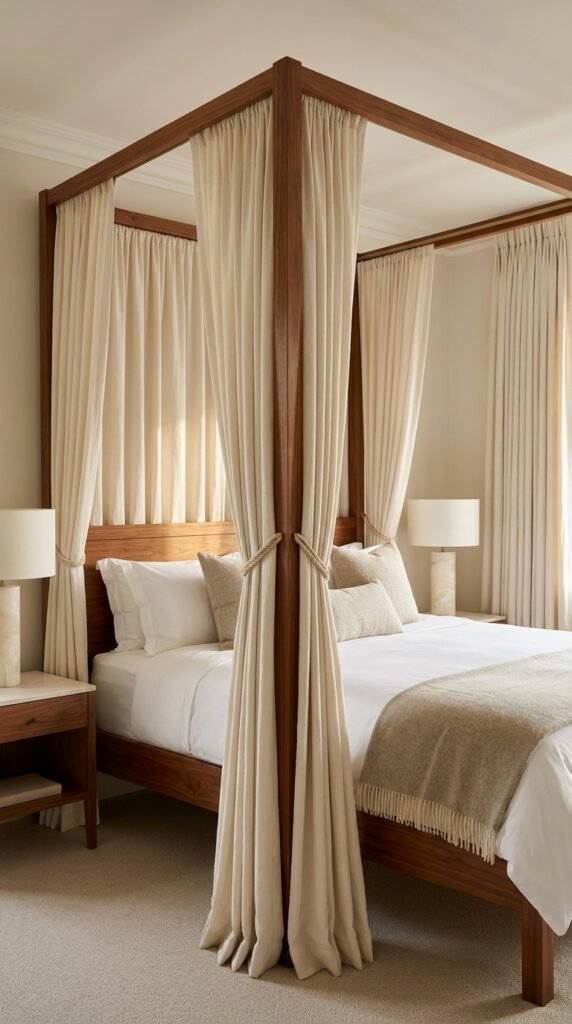
Use full-length panels with a clean, even fall.
Tie curtains back so the bed stays open during the day.
Avoid thick fabric bunched around every post.
Do not block lamps, drawers, or bedside access.
18. Use a Corner Canopy Layout to Make the Bed Feel Sheltered
Placing a canopy bed closer to two walls can create a more enclosed feeling, especially in a large room where the bed seems to float without enough visual support.
The layout still needs practical clearance.
- leave space to make the bed and reach both sides
- keep curtains gathered toward the wall corners
- use compact bedside pieces so the area stays open
A corner position often works best with a light frame and limited fabric. Heavy posts beside two walls may make the bed feel boxed in. The aim is a protected sleeping zone that still feels easy to move around.
Position the bed near two walls without pressing the frame tightly against them.
Gather any fabric toward the back corners to keep the open side clear.
Check that bedding, drawers, and bedside lights remain easy to reach.
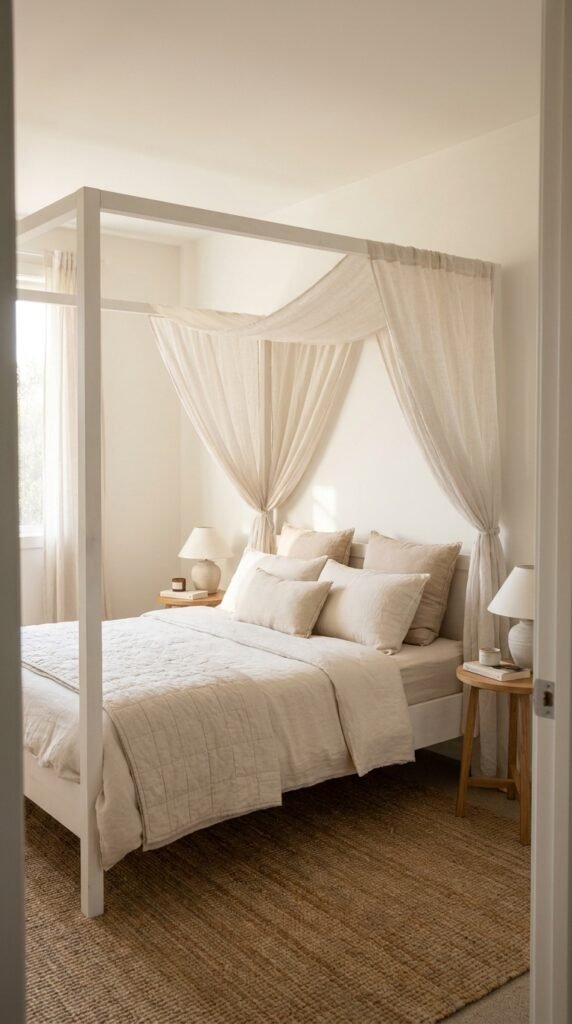
19. Layer a Soft Fabric Ceiling Inside the Canopy Frame
Fabric stretched loosely across the top of a canopy frame creates softness overhead while leaving the sides open. It can make the sleeping area feel more intimate without using full curtain panels.
Choose a light fabric that drapes gently rather than hanging in deep folds. Cotton voile, gauze, or thin linen works better than thick upholstery cloth.
Secure the panel evenly so it cannot sag toward the bed. Keep it well away from bulbs, heaters, and ceiling fans. The effect should feel airy and controlled, with enough open frame still visible to keep the bed modern.
Keep the overhead panel light, secure, and shallow so it softens the frame without hanging too close to the bed.
20. Finish the Canopy Bed with Quiet, Tonal Bedding Layers
A canopy frame already gives the bed strong visual structure, so the bedding does not need loud pattern or many colours. Tonal layers keep the centre calm and allow the shape of the bed to remain clear.
Start with one colour family, then vary the shades and textures.
A simple mix could include:
- warm white sheets
- a cream or oatmeal duvet
- two deeper taupe cushions
- one textured throw at the foot
Avoid stacking too many decorative pillows against the headboard. The bed should still look easy to get into at night. Soft colour shifts and tactile fabrics create enough interest without making the frame compete with the bedding.
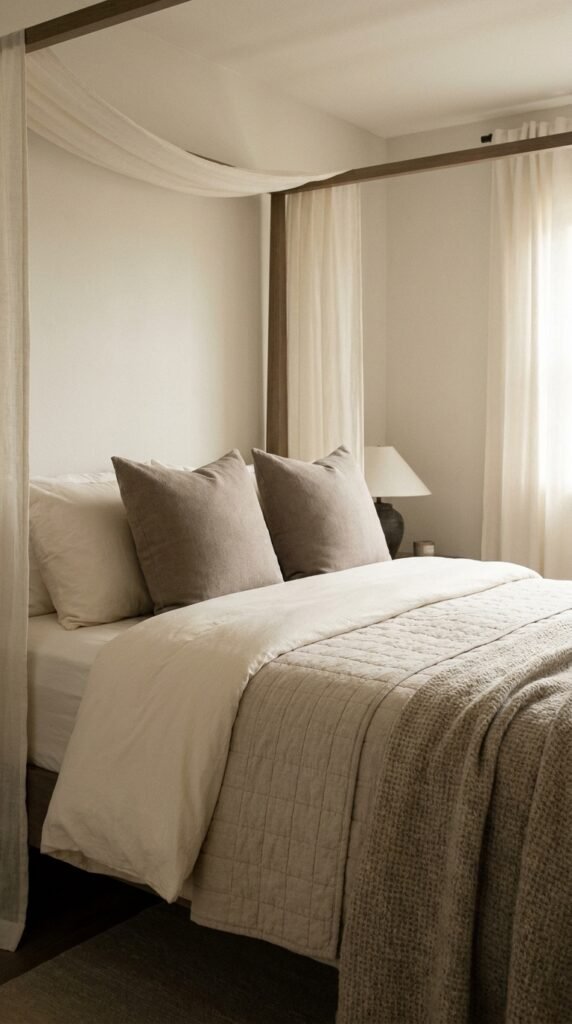
- ▸Choose one warm neutral colour family
- ▸Vary linen, cotton, wool, and stitched textures
- ▸Keep decorative pillows limited and easy to move
- ▸Finish with one relaxed throw near the foot of the bed
Conclusion
A canopy bed feels romantic without looking dated when the frame, fabric, lighting, and bedding stay balanced. Slim posts, pale layers, warm wood, soft linen, and restrained draping can give the bed presence while keeping the bedroom calm and easy to use. Start with the idea that suits your room size, then add only the details that support it. You do not need curtains on every side or stacks of decorative pillows to create a cosy result. These canopy bed ideas show how a few thoughtful choices can make the whole bedroom feel softer, warmer, and more modern. Save your favourite looks to Pinterest for your next bedroom refresh.