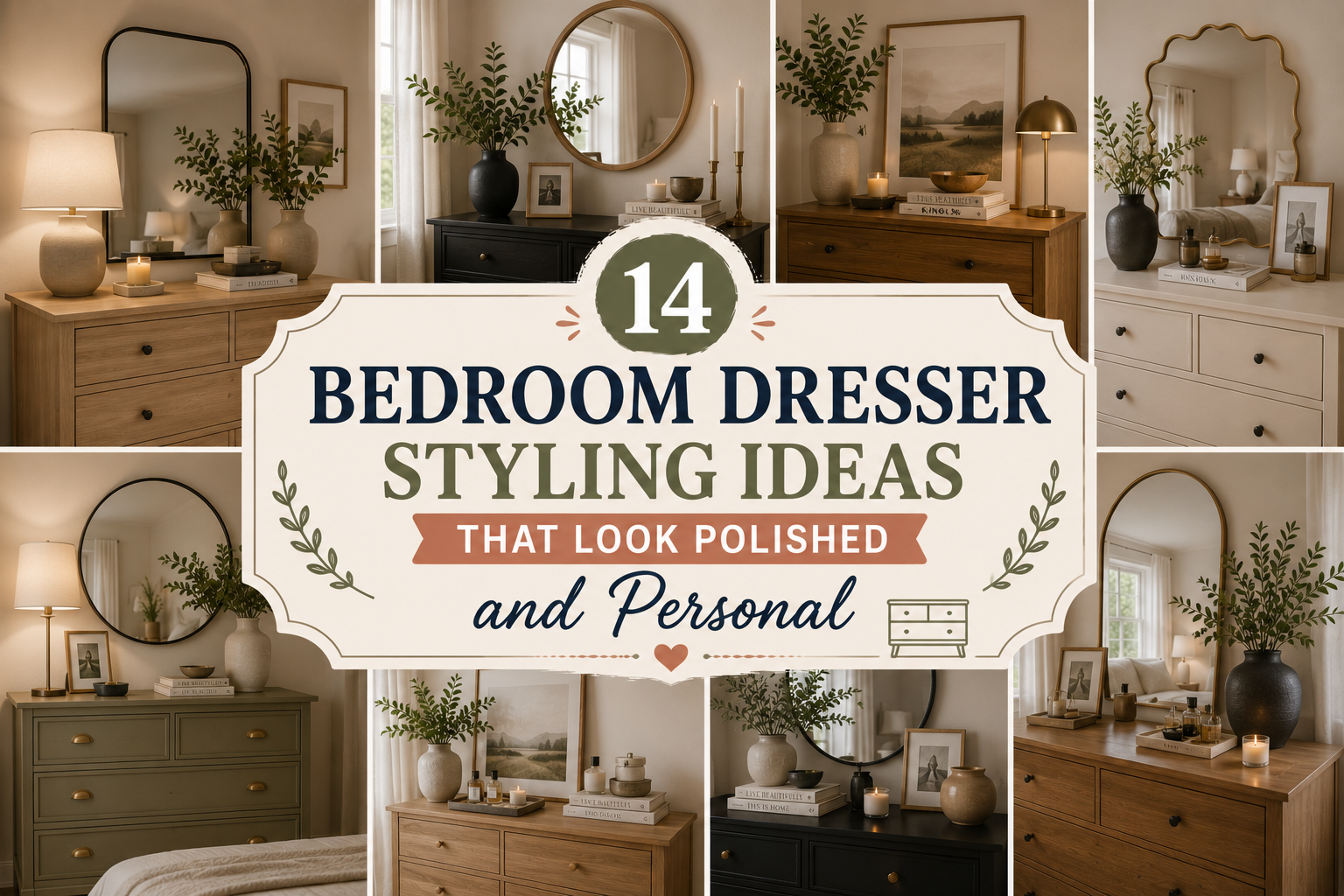
14 Bedroom Dresser Styling Ideas That Look Polished and Personal
A bedroom dresser can look messy even when it only holds a few things. Jewellery, perfume, chargers, receipts, hair clips, and half-folded clothes tend to collect there because the surface is easy to reach.
The usual fix is to add more decor, but that often creates a second problem. The dresser starts to look crowded, and the useful space disappears. These 14 bedroom dresser styling ideas that look polished and personal focus on balance instead. Each setup gives decorative pieces a clear place while leaving room for the things you use every day.
You will find ideas for mirrors, lamps, artwork, trays, books, branches, and personal objects. Some work well on wide dressers, while others suit smaller surfaces or rental bedrooms where you may not want to hang much on the wall.
The goal is not to make the dresser look staged. It should feel connected to the rest of the bedroom, easy to reset, and personal enough that it does not resemble a showroom display.
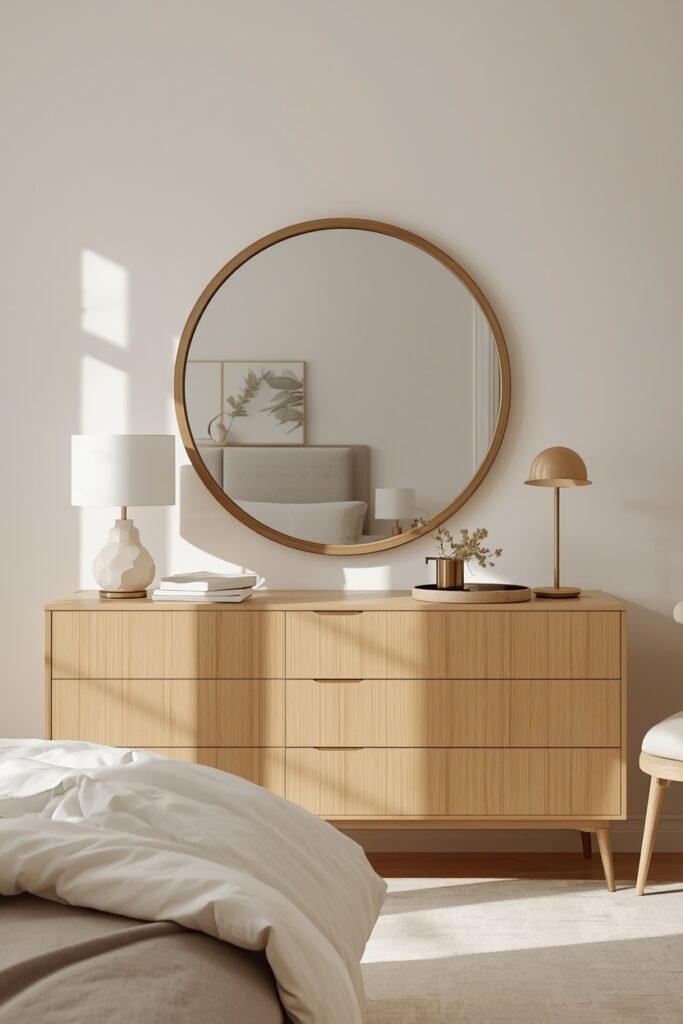
1. Anchor the Dresser with a Large Round Mirror
A large round mirror gives the dresser a clear centre without making the wall feel too rigid. The curved shape also softens the straight lines of a wide dresser, framed bed, or nearby doorway.
Keep the supporting decor lower than the mirror:
- place a lamp or vase to one side
- add a small tray on the other
- leave some open space between the objects
- avoid lining everything up at the same height
A mirror with a simple wood, brass, or black frame is easy to connect to other finishes in the bedroom. The setup feels balanced without needing many accessories.
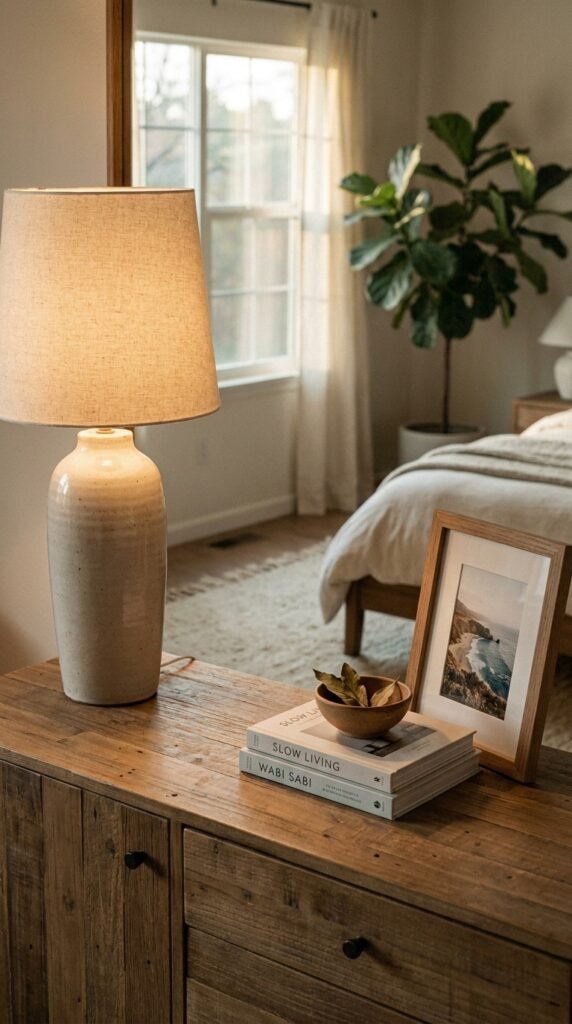
2. Build an Asymmetrical Display with One Tall Lamp
Matching objects on both sides are not required for a dresser to feel balanced. One tall lamp can create height on one end, while a lower group of objects carries the visual weight on the other.
A simple opposite-side cluster might include:
- two stacked books
- a small bowl or box
- one framed photo leaning behind them
Keep the lamp shade simple so it does not compete with the rest of the arrangement. The uneven layout feels relaxed, but the difference in height should still look deliberate. Too many small pieces on the lower side can make the balance feel shaky.
💡 Quick Tip
Balance one tall lamp with a compact low cluster on the opposite side. Leave the middle quieter so the arrangement does not look crowded.
3. Keep Daily Jewellery Together in a Small Catchall Tray
Loose earrings, watches, rings, and hair clips can make the dresser look untidy by the end of the day. A small catchall tray gives those pieces one place to land.
Choose a tray that is large enough for the items you actually remove before bed, but small enough that it does not become a storage pile. Ceramic, glass, wood, or lined metal can all work.
Place it near the side of the dresser you naturally use. A beautiful tray across the room from where you stand will not stay useful for long. The change is small, but it makes the surface much easier to reset each morning.
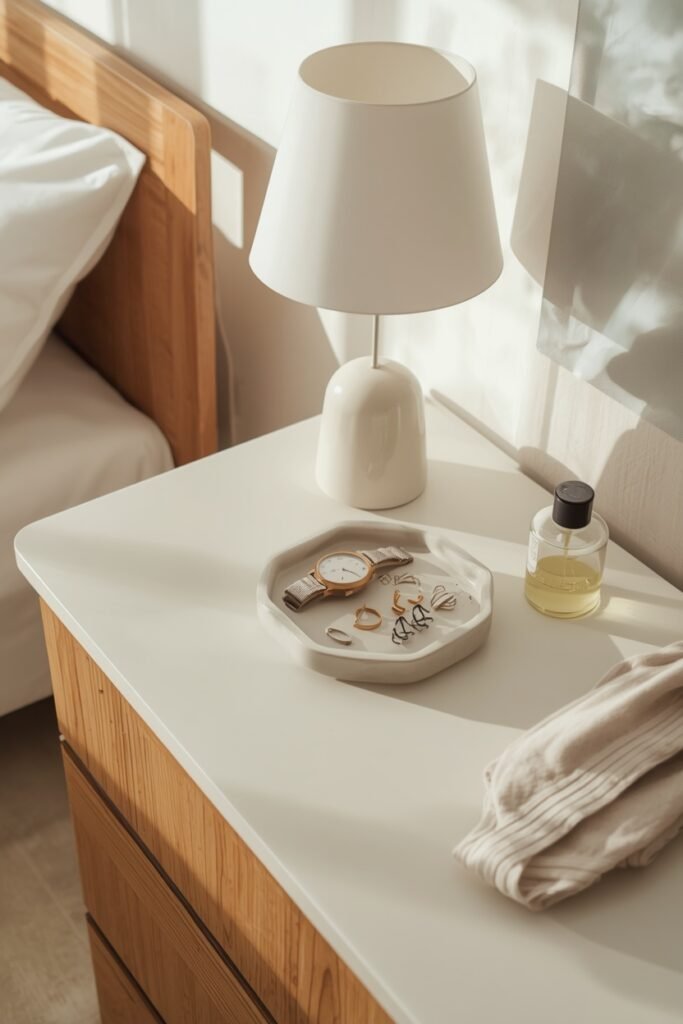
Small jewellery, clips, and a watch spread across the surface and disappear between other objects.
One compact tray holds the daily pieces together and keeps the rest of the dresser clear.
4. Lean Layered Artwork Instead of Hanging a Single Frame
Layered artwork gives a dresser more depth and makes the display easier to change. It also works well in rental bedrooms where drilling several holes may not be practical.
Start with the larger frame at the back. Then overlap a smaller piece in front, but keep enough of the first image visible that both still matter.
Use this order:
- large vertical or square frame
- smaller contrasting frame
- one low object near the front edge
The frames can share a colour, subject, or finish, but they do not need to match exactly. Keep the rest of the surface light so the layered art remains the focus.
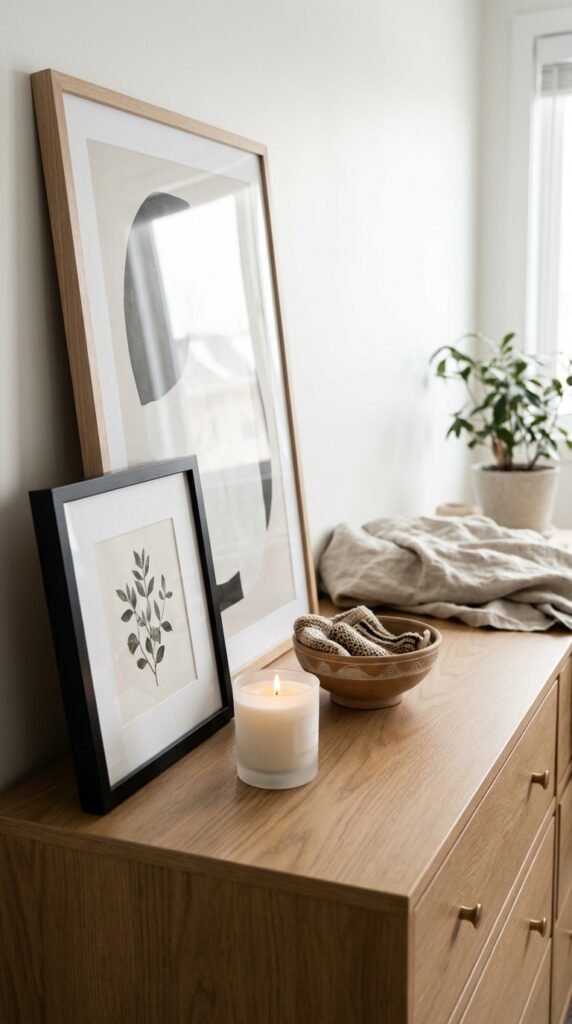
Lean the largest frame against the wall as the back layer.
Overlap a smaller frame without covering the main part of the artwork behind it.
Add one low bowl, candle, or small box to ground the layered frames.
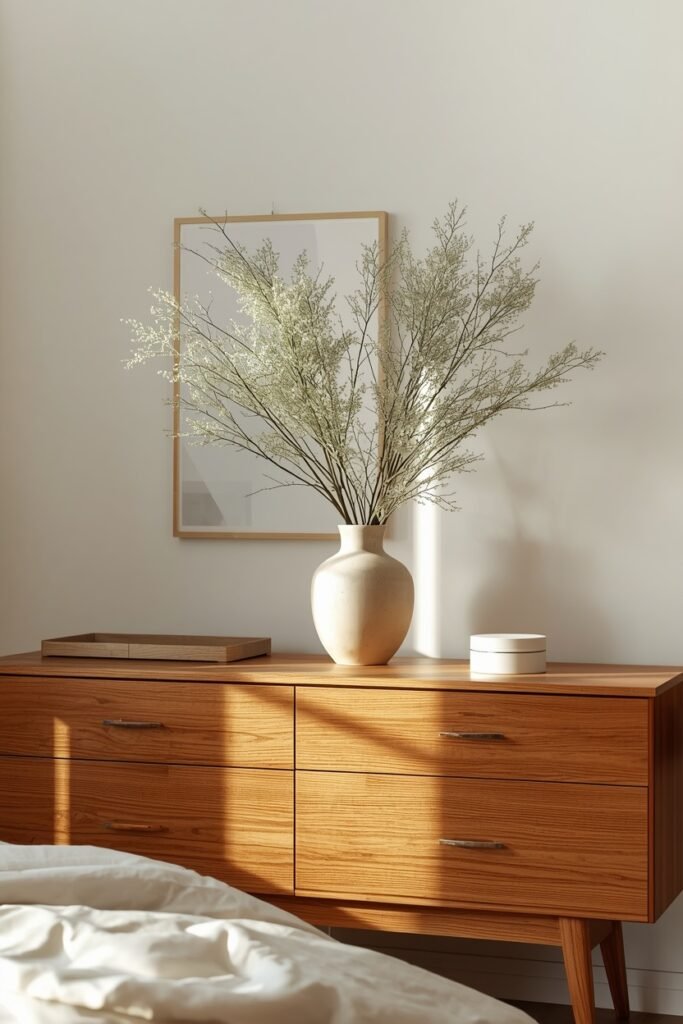
5. Soften a Wide Dresser with Loose Branches in a Tall Vase
A wide dresser can look flat when every object sits at the same low height. Loose branches in a tall vase break that horizontal line and bring movement to the surface.
Choose stems that spread gently rather than forming a dense, formal bouquet. Olive-style leaves, budding branches, or simple green stems work well because their open shape still lets the wall show through.
Place the vase slightly off centre. Then balance it with a lower object, such as a tray, books, or a lidded box. Check the arrangement from the bed as well as from the doorway. The branches should frame the dresser, not block the mirror or artwork behind them.
6. Create a Useful Getting-Ready Station without Covering the Surface
A dresser can support your morning routine without turning into a full vanity. The trick is to keep the everyday pieces together and leave a clear area for setting down clothes, a hairbrush, or a cup of tea.
Build the setup around four basics:
- a mirror at a comfortable height
- one small tray for daily items
- a lamp or soft light source
- one open section of the dresser
Store backups inside a drawer rather than keeping every perfume bottle or skincare product on display. The dresser should help you get ready, not make the routine feel busier.
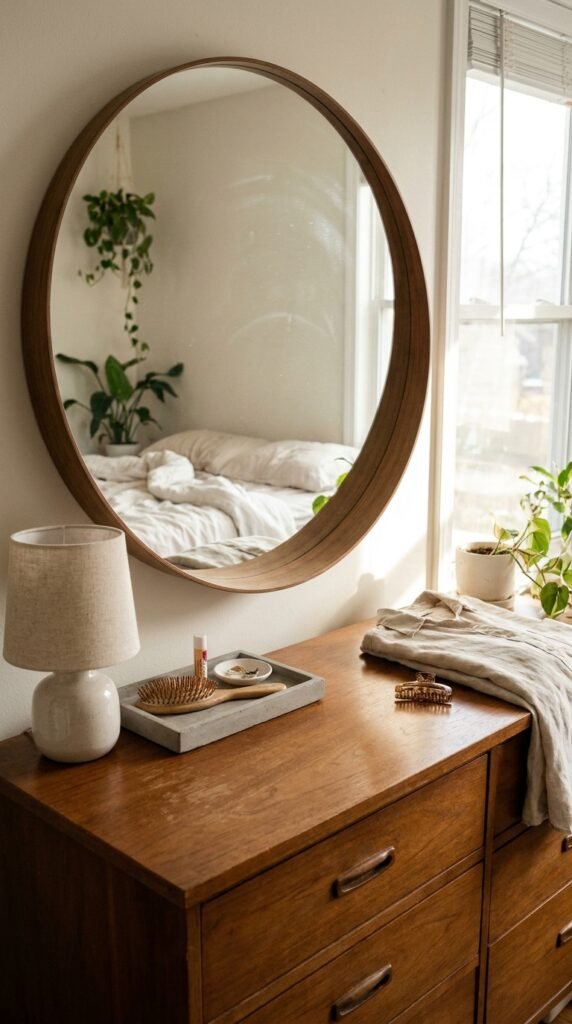
A simple getting-ready setup
7. Balance Matching Lamps with Different Objects in the Centre
Two matching lamps can make a long dresser feel calm and finished. The middle section is where the display can start to feel stiff, especially if every object is repeated or lined up too neatly.
Keep the lamps symmetrical, then loosen the centre with a mixed group:
- one leaning frame
- one low bowl or box
- one small personal object
Vary the heights slightly and avoid placing everything in a straight row. The lamps provide order, so the centre can feel softer and more personal. Symmetry works best when it gives the eye structure without making the dresser look like a hotel console.
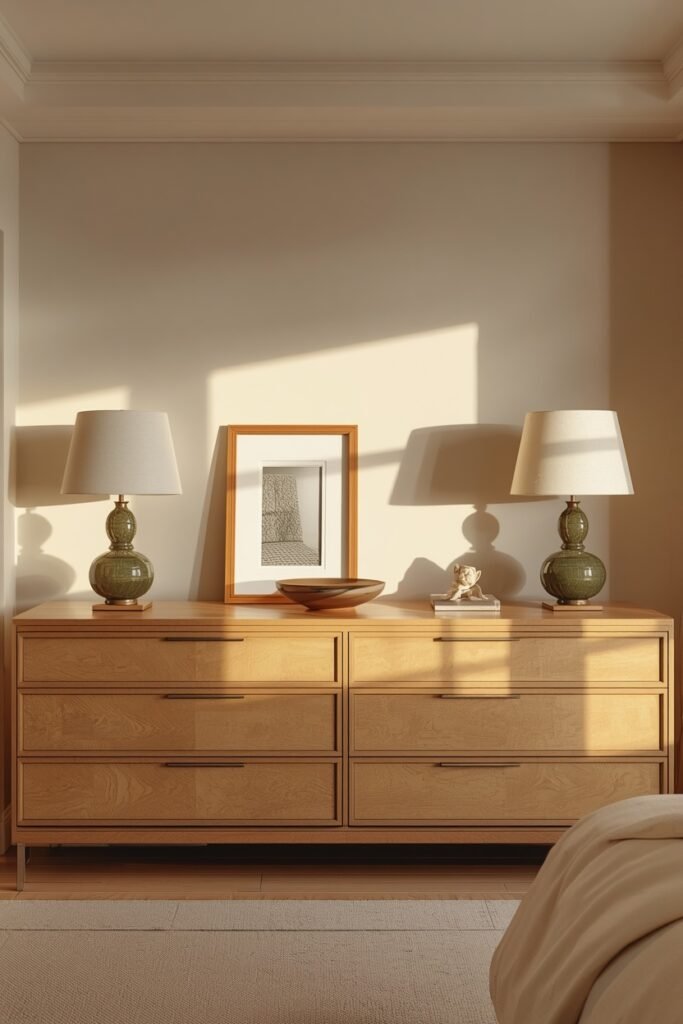
Use matching lamps to frame the dresser.
Keep the centre relaxed with mixed shapes and heights.
Avoid repeating every object on both sides.
Do not line up the centre pieces in one flat row.
8. Stack Two Books beneath a Small Decorative Object
A small object can look lost on a wide dresser. Two stacked books lift it into view and create a stronger shape without adding much clutter.
Choose books with covers that suit the bedroom palette. Then place one compact item on top, such as:
- a small ceramic vessel
- a candle
- a decorative box
- a simple sculptural object
Keep the stack low so it supports the arrangement rather than competing with the mirror or art above. The books should look intentional, not like something left behind after reading. One tidy stack is usually enough.
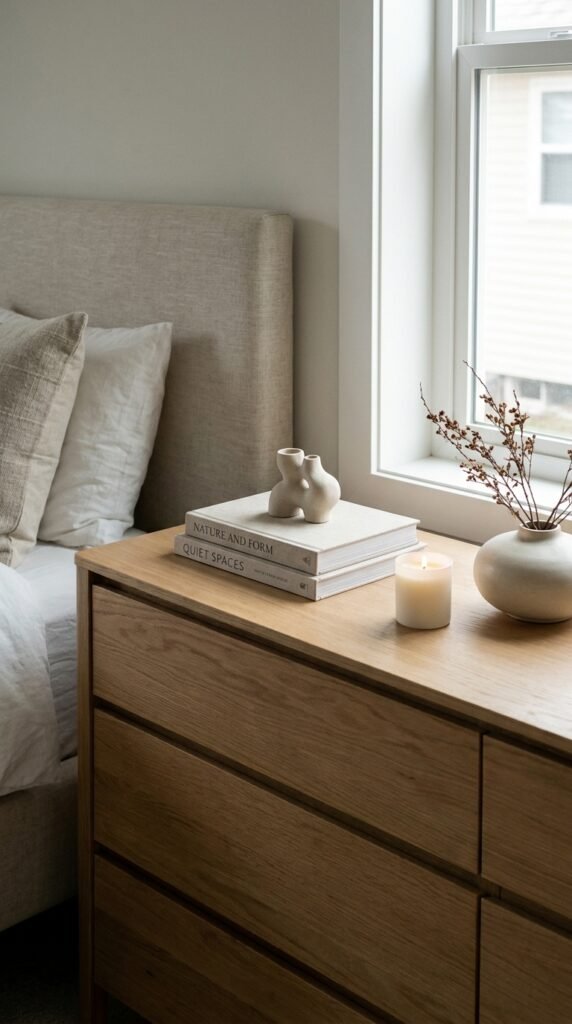
| Object on Its Own | Object on Books |
|---|---|
| can look too small for the surface | gains height and clearer presence |
| may blend into nearby clutter | becomes part of a defined display |
| keeps the arrangement flat | adds a useful middle height |
9. Use a Lidded Box to Hide Small Bedroom Clutter
Chargers, receipts, spare keys, glasses, and loose accessories often end up on the dresser because there is nowhere better to put them. A lidded box gives those items a proper home without making the surface look like storage.
Choose a box that opens easily and is large enough for the real clutter. Wood, woven fibre, lacquer, and ceramic can all work.
Place it near the side you use most, then keep the lid clear so opening it never feels like a chore. A storage piece only helps when it is easy enough to use every day.
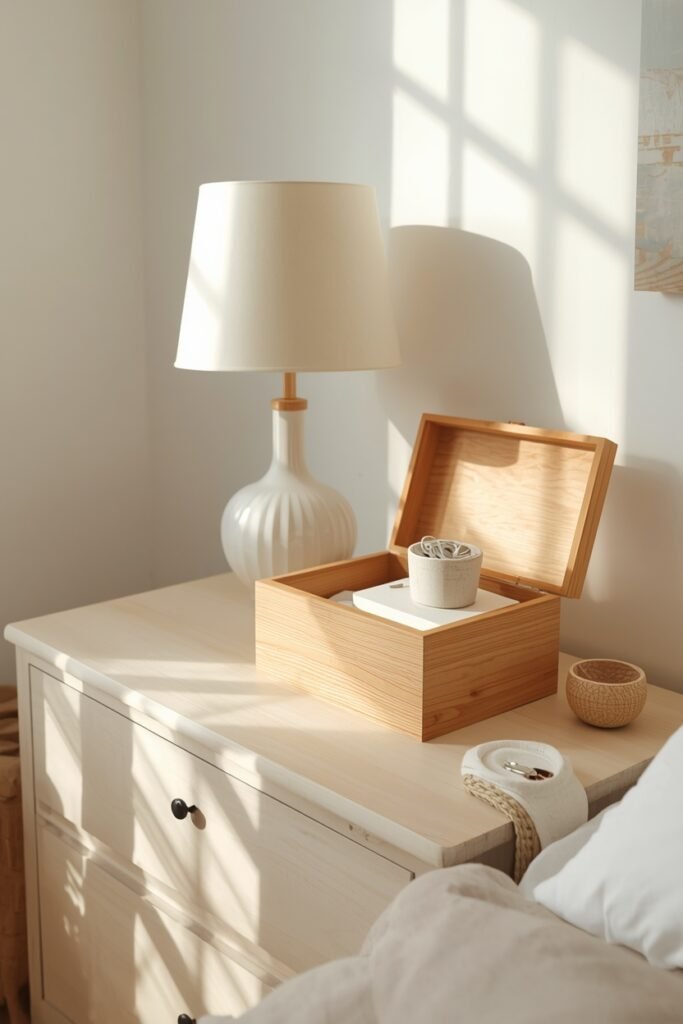
The best dresser storage is easy to reach, easy to open, and large enough for the items that actually collect there.
10. Add Warmth with a Framed Personal Photo and One Meaningful Object
Personal decor works best in small doses. One framed photo and one meaningful object can make the dresser feel lived in without turning it into a crowded memory shelf.
Pair pieces that differ in shape. A rectangular frame might sit beside a small round keepsake box, pottery piece, or object brought home from a trip.
Keep the setup simple:
- choose one photo that reads clearly from a distance
- use a frame that matches another finish in the room
- place one meaningful object nearby
- leave open space around both pieces
The result feels personal because the objects matter, not because there are many of them.
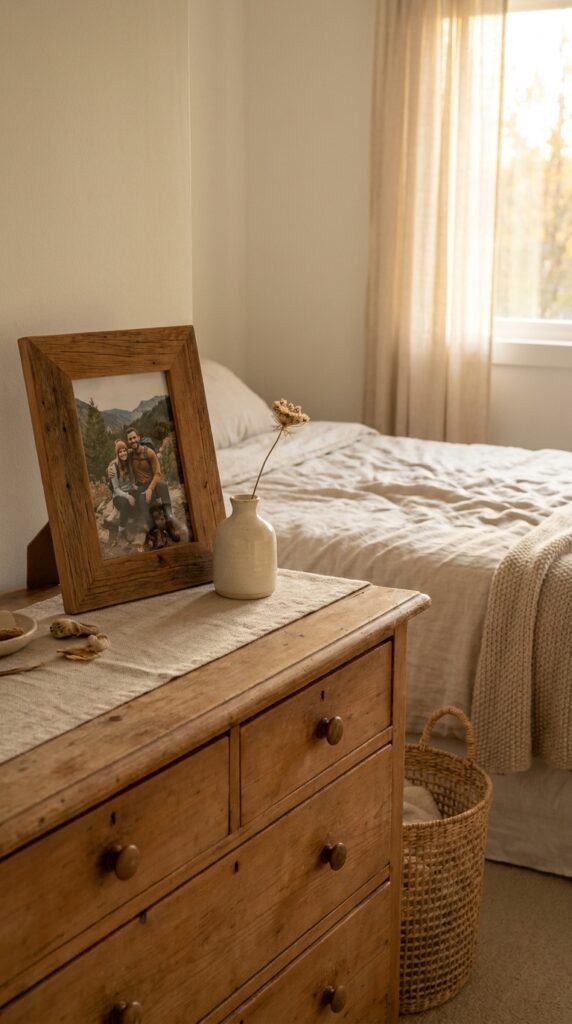
- ▸Choose one clear photo instead of several small frames
- ▸Add one object with a real story or memory
- ▸Repeat a frame or object finish already used nearby
- ▸Leave enough space for both pieces to stand out
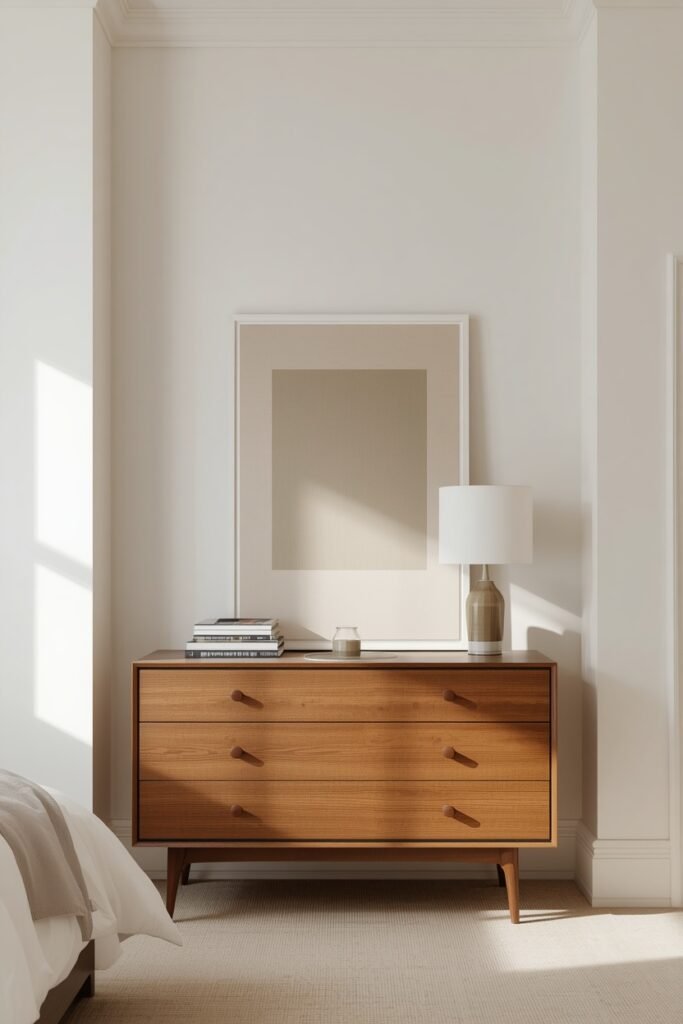
11. Style a Low Dresser with Art That Adds Visual Height
A low dresser can make the wall above it feel unfinished, especially when the ceiling is tall or the furniture around it has more height.
Use vertical artwork to pull the eye upward. One large portrait-oriented frame can work, or you can lean two frames with the taller one behind. Keep the art close enough to the dresser that both read as one arrangement.
Balance the height with lower pieces:
- a small lamp
- a shallow tray
- a short stack of books
Avoid tiny frames scattered across a wide wall. They tend to look disconnected. The artwork should give the dresser presence, not make the surface busier.
12. Leave One Clear Zone for Folding Clothes and Setting Things Down
Empty space is not wasted space. On a bedroom dresser, it gives you somewhere to fold a shirt, set down a laundry basket, or place your phone without moving three decorative objects first.
Group the styling toward one side or divide it into two compact clusters. Then protect one clear section as a working area.
Notice which part of the dresser you naturally reach first. That is the section worth leaving open. A polished setup should support the way the room is used, not make every small task feel inconvenient. The clear zone may become the most useful part of the whole arrangement.
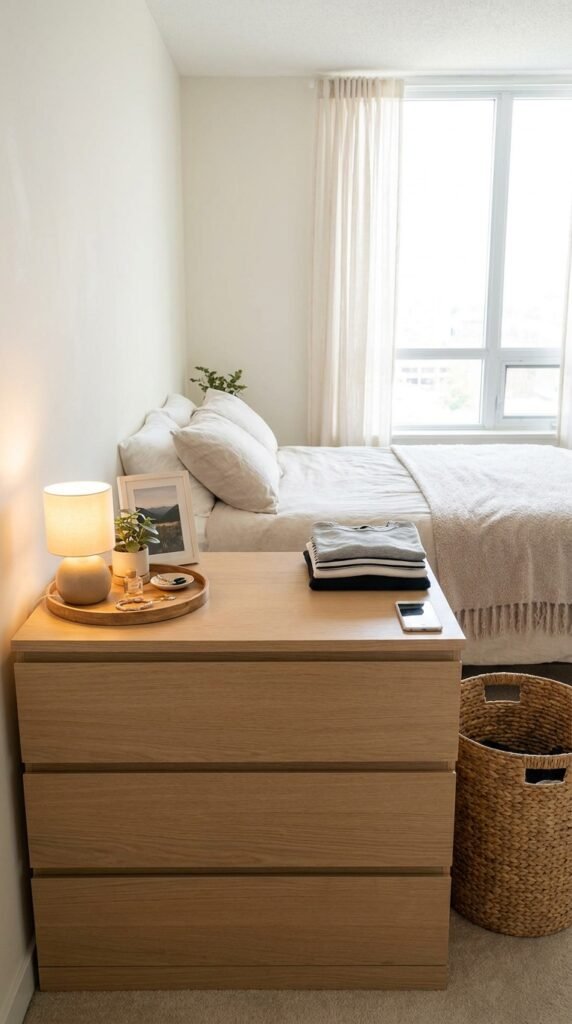
📌 Good To Know
Leave the easiest-to-reach part of the dresser open. That small decision makes the surface simpler to use and quicker to reset.
13. Bring in Soft Texture with a Fabric-Lined Tray or Small Runner
Wood, glass, metal, and ceramic can make a dresser display feel hard when every surface has a smooth finish. One soft textile layer breaks that up.
A fabric-lined tray works well for jewellery, perfume, or a watch. On a longer dresser, a narrow runner can create a quiet base beneath a lamp and a few smaller objects.
Keep the textile restrained:
- choose linen, cotton, or another low-pile fabric
- use a colour already found in the bedding
- leave plenty of the dresser surface visible
Avoid bulky fabric that bunches near drawer handles. The goal is softness without fuss.
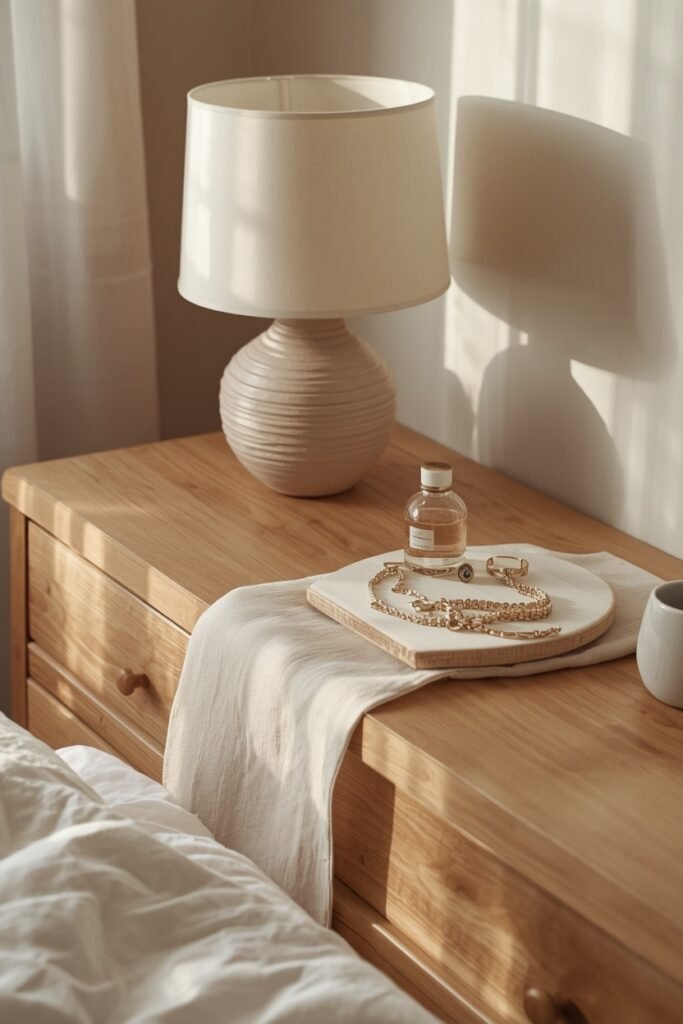
Hard finishes sit directly against the dresser, so the display can feel flat or slightly cold.
A small fabric layer softens the arrangement and connects it to the bedding and curtains.
14. Repeat Three Materials from the Rest of the Bedroom
The dresser will feel connected to the room when its styling repeats materials already used nearby. You do not need to match every colour or buy a full decor set.
Look around the bedroom first. Then choose three materials to echo on the dresser.
For example:
- wood from the bed frame
- metal from the lamp or curtain rod
- ceramic from a bedside vase
- glass from a light fixture
- fabric from the cushions or curtains
Use each material once and keep the shapes varied. Repetition creates connection, while different forms stop the display from looking overly matched.
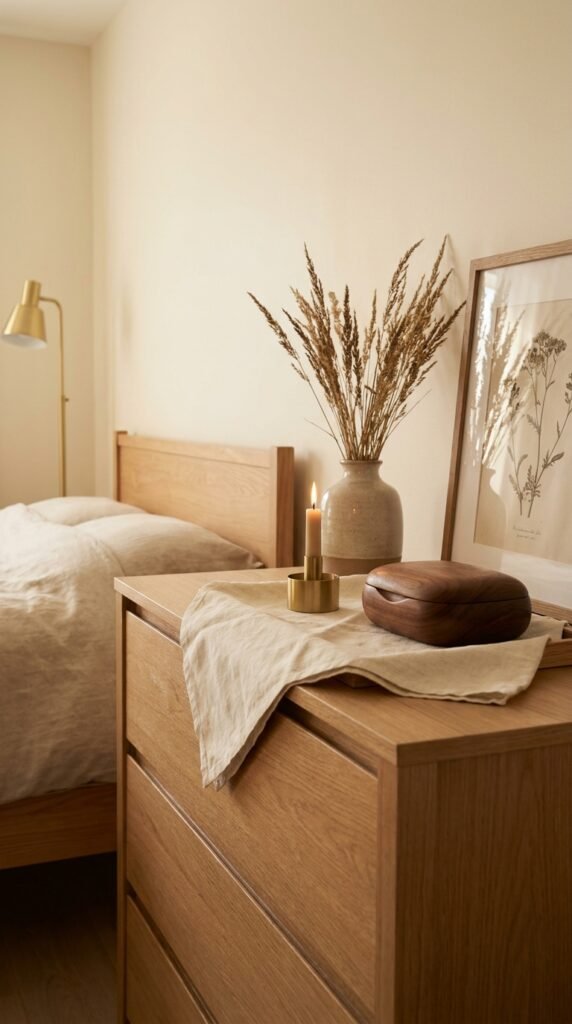
The three-material formula
Conclusion
A well-styled dresser should feel personal, useful, and easy to keep tidy. Start with one main anchor, such as a mirror, lamp, or artwork, then add a few smaller pieces with different heights and textures. Trays, lidded boxes, books, and catchall dishes help control everyday clutter without making the surface feel bare. Leave some open space for folding clothes or setting things down, and repeat materials already used around the bedroom so everything feels connected. Save these dresser styling ideas to Pinterest for the next time your bedroom needs a simple refresh.