17 Guest Bedroom Office Ideas That Serve Two Purposes Beautifully
A guest bedroom office can be one of the hardest rooms to get right. It needs to feel calm enough for overnight visitors, but useful enough for everyday work. Too often, one side wins. The room ends up looking like an office with a bed pushed into the corner, or a guest room where the desk barely functions.
The better approach is to choose furniture, storage, and layouts that support both uses without making the room feel crowded. These 17 guest bedroom office ideas that serve two purposes beautifully focus on smart pieces, clear zones, and simple ways to hide work clutter when guests arrive.
You will find options for small rooms, narrow layouts, spare bedrooms, and spaces that need more storage. Some ideas rely on flexible furniture, while others use visual tricks such as rugs, lighting, and matching finishes. The goal is not to make the room look heavily designed. It is to make each part feel intentional, so the space works well on a normal weekday and still feels welcoming when someone stays over.
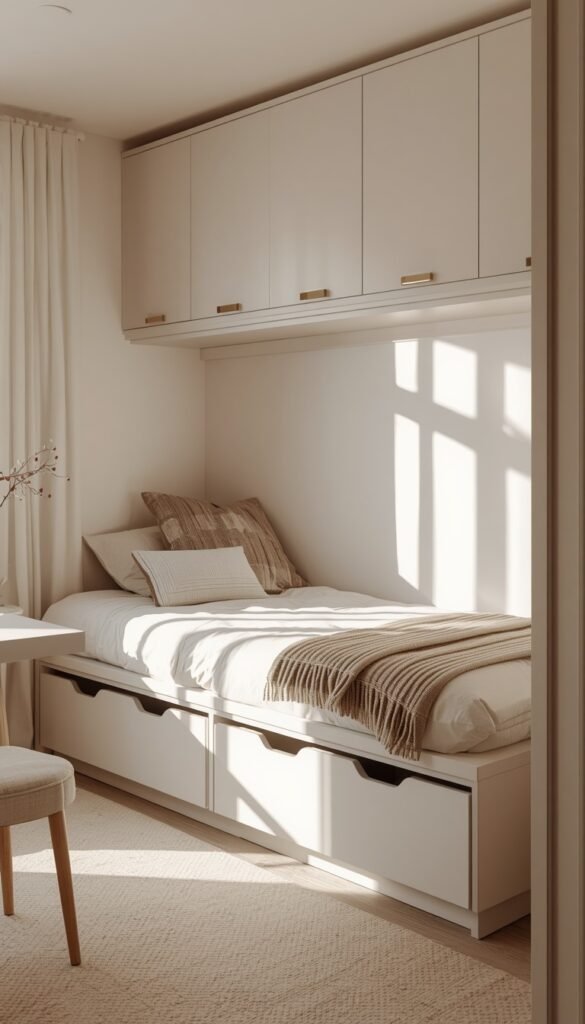
1. Choose a Daybed With Drawers for Seating, Sleeping, and Storage
A daybed handles several jobs without making the room feel packed. During the day, it can act like a sofa. At night, it becomes a proper guest bed.
The drawers underneath are what make the setup work harder. Use them for:
- spare sheets and pillows
- office supplies you do not need every day
- guest towels or blankets
Keep the bedding simple so the daybed reads more like seating when nobody is staying over. A few structured cushions and one folded throw are enough. This setup works especially well in small rooms where a full bed and separate lounge chair would take up too much space.
2. Install a Murphy Bed That Disappears After Guests Leave
A Murphy bed gives you the largest amount of usable floor space during the workweek. Once it folds away, the room can hold a wider desk, a comfortable chair, or even a small reading corner.
Before choosing one, check three things:
- where the bed will open
- whether the desk blocks its path
- how much walking space remains
Built-in versions can include shelves or cabinets around the bed, which helps the room look more complete. A freestanding wall bed can still work well, but the surrounding area should stay uncluttered. The whole setup depends on being easy to open and close.
💡 Quick Tip
Mark the full bed footprint on the floor with removable tape before buying. This shows whether drawers, chairs, or doors will get in the way.
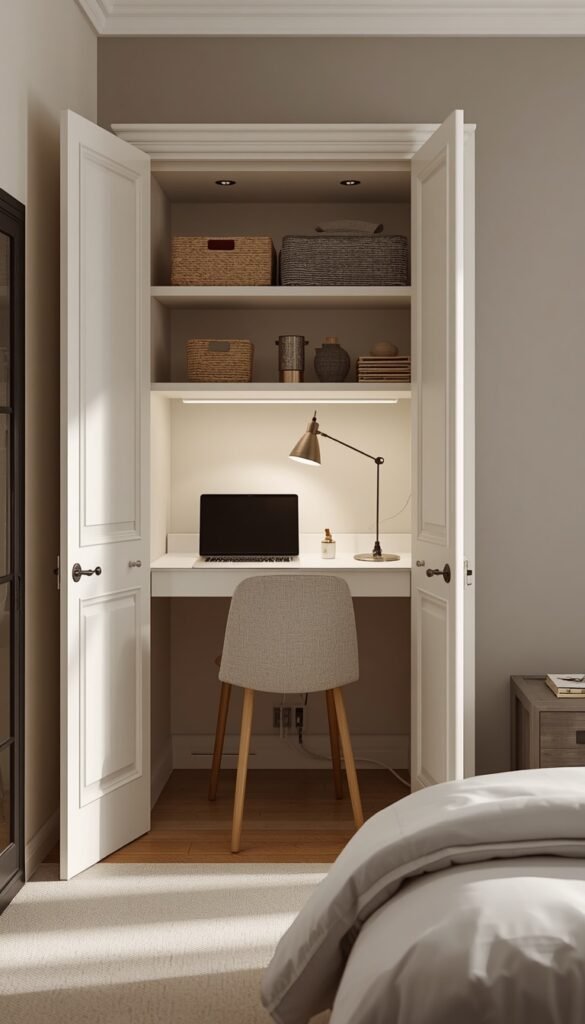
3. Turn an Underused Closet Into a Hidden Office Nook
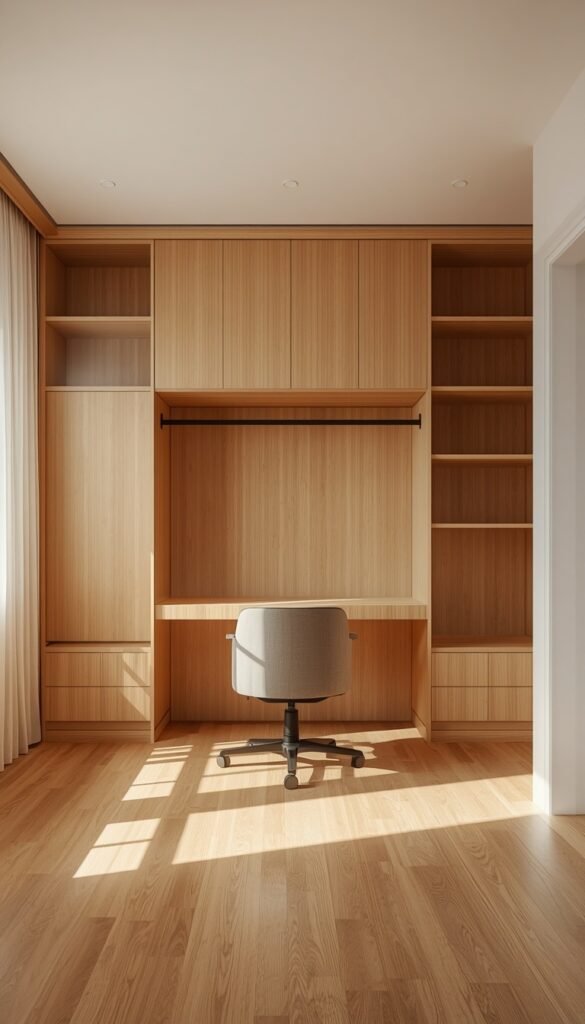
A shallow closet can become a compact office while keeping the main room focused on sleep. Remove the hanging rail, add a fitted desk surface, and use the upper shelf for files or baskets.
The key is keeping the setup tidy enough to close.
Useful additions include:
- a small task light
- cable clips along the back wall
- one drawer unit below the desk
- doors or a curtain to hide everything
This works best for laptop-based work that does not need a deep desktop. Once the workday ends, close the doors and the guest room feels calm again. No desk chair collecting clothes in the middle of the room.
An underused closet holds a few random boxes while the office furniture takes over the bedroom.
The closet becomes a contained work zone that disappears when the doors close.
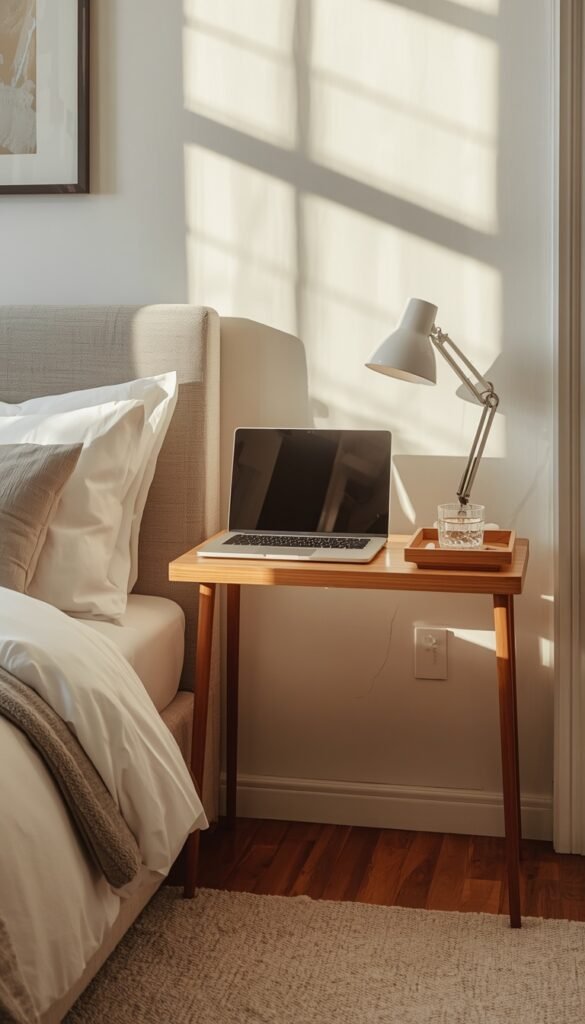
4. Place a Slim Desk Beside the Bed Instead of Adding Another Nightstand
A slim desk can replace one bedside table and serve both sides of the room. During the day, it holds a laptop and notebook. At night, it becomes a place for a lamp, phone, water glass, and guest essentials.
Choose a design with shallow depth so it does not crowd the bed. One or two drawers are useful, but bulky side cabinets can make the corner feel heavy.
Keep the top mostly clear. A desk that is buried under papers will not feel welcoming to a guest. Leave enough open surface for a visitor to charge a phone or set down a small bag.
What the desk should handle
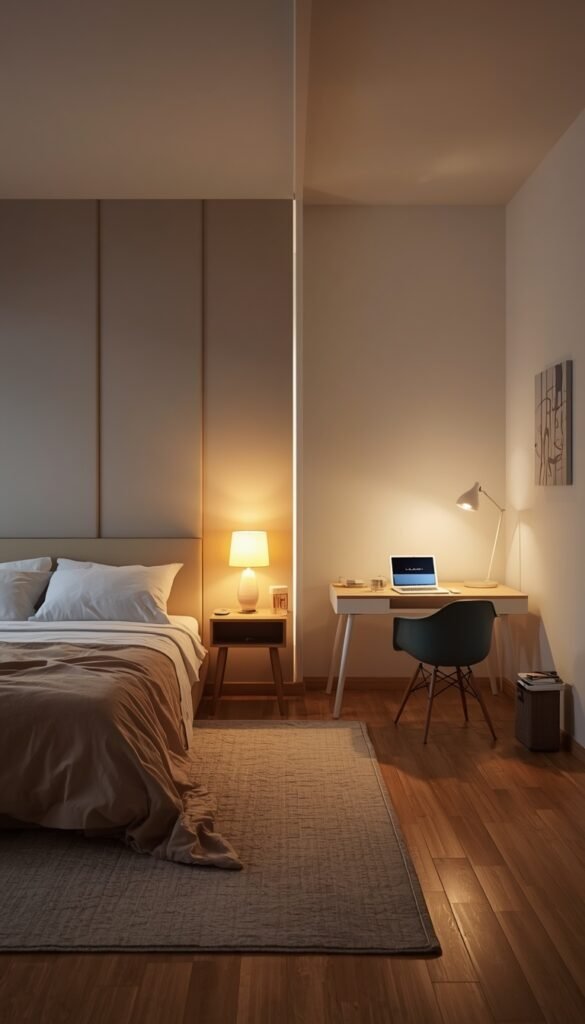
5. Use a Rug and Lighting to Create Two Clear Zones
A shared room feels more organised when the sleeping and working areas have clear visual boundaries. You do not need a divider to create them.
Place a rug under the bed or office area, but not awkwardly between both. Then use different lighting for each zone:
- a focused desk lamp for work
- a softer bedside lamp for evenings
- one ceiling light that connects the whole room
This helps the office corner feel purposeful without making it look separate from the bedroom. It also makes the room easier to switch off mentally at night. Once the task light is off, the work zone fades into the background.
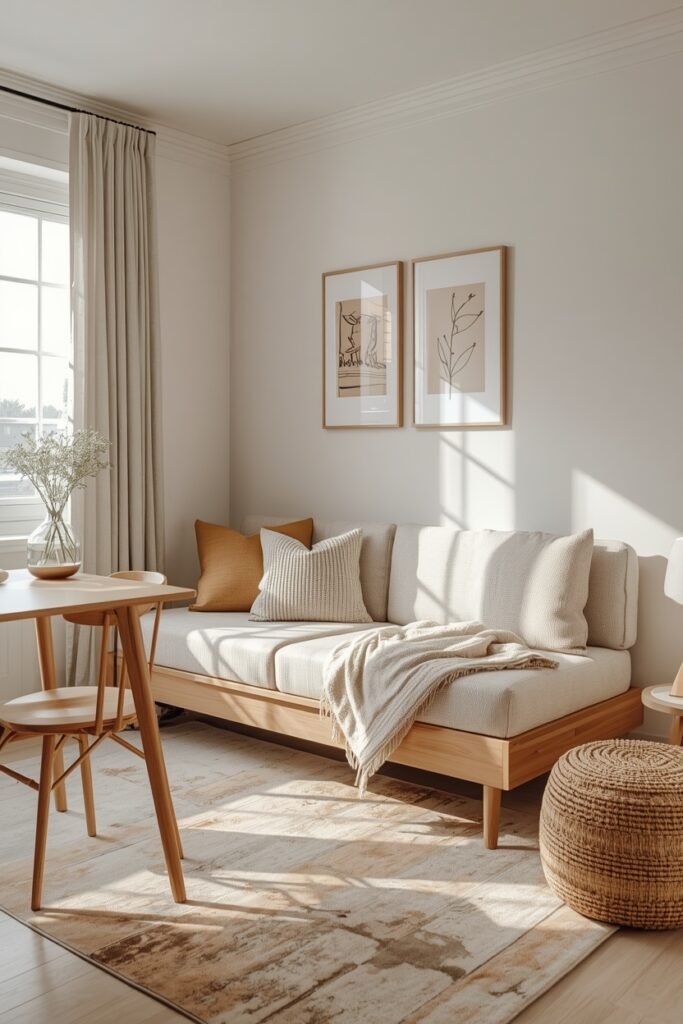
6. Pick a Daybed or Sleeper Sofa Based on How the Room Is Used Most
A daybed and a sleeper sofa can both solve the same problem, but they suit different routines.
Choose a daybed when the room is used mainly as an office and only occasionally hosts guests. It takes less effort to prepare and usually offers useful storage underneath.
A sleeper sofa makes more sense when you want comfortable daytime seating for calls, reading, or breaks. It can feel more natural in a room that functions as an office most of the week.
Before deciding, check the mattress size, opening clearance, and how easily one person can convert it. Furniture that is difficult to use often stays folded.
| Daybed | Sleeper Sofa |
|---|---|
| Quicker to prepare for overnight guests. | Offers more comfortable daytime seating. |
| Often includes drawers or space underneath. | Needs clear floor space when opened. |
| Works well in compact and narrow rooms. | Suits rooms used for reading, calls, or breaks. |
7. Keep Office Storage Closed So Guests Do Not See Work Clutter
Visible files, cables, printer paper, and half-finished notes can make a guest room feel borrowed rather than prepared. Closed storage lets the office stay functional without putting work in the centre of the room.
Use drawers, cabinets, lidded boxes, or matching baskets for the items you reach for often. A printer can sit inside a ventilated cabinet or on a pull-out shelf if the setup allows it.
Leave one drawer or shelf empty for guests. That small detail matters more than decorative styling because it gives them somewhere to unpack. The goal is simple: your work supplies should be easy for you to reach and easy for visitors to ignore.
Files inside drawers or labelled boxes.
Cables clipped behind the desk.
Printer supplies inside a closed cabinet.
Loose paperwork across the guest surface.
Open bins filled with mixed supplies.
Personal documents within easy view.
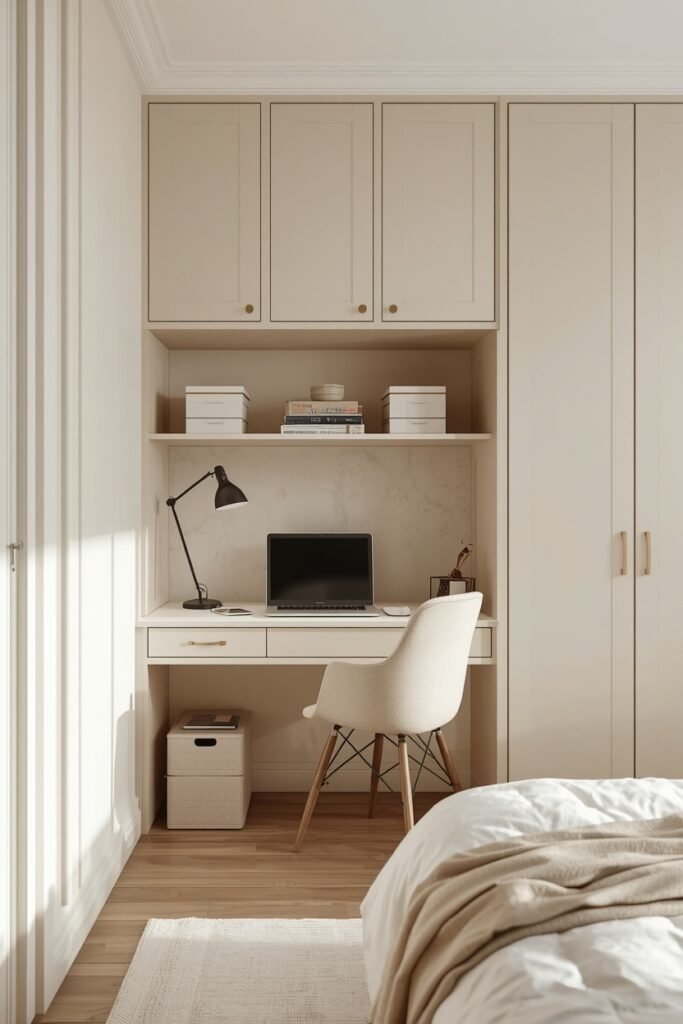
8. Mount a Floating Desk to Free Up Valuable Floor Space
A floating desk keeps the floor visible, which can make a small guest bedroom office feel less crowded. It also leaves room underneath for a chair, wastebasket, or compact drawer unit.
Set it up in a practical order:
- Choose a wall that does not interrupt the bed or doorway.
- Fix the desktop at a comfortable working height.
- Add shallow storage above rather than deep cabinets beside it.
A wall-mounted design works best for laptop use, writing, or light paperwork. Heavy equipment may need stronger support than a basic floating shelf can provide. Pair it with a chair that slides fully underneath so the walkway stays clear when work is finished.
Choose a wall with nearby power and enough chair clearance.
Mount the surface securely at a height that suits your chair.
Add one shallow shelf or cabinet while keeping the floor open.
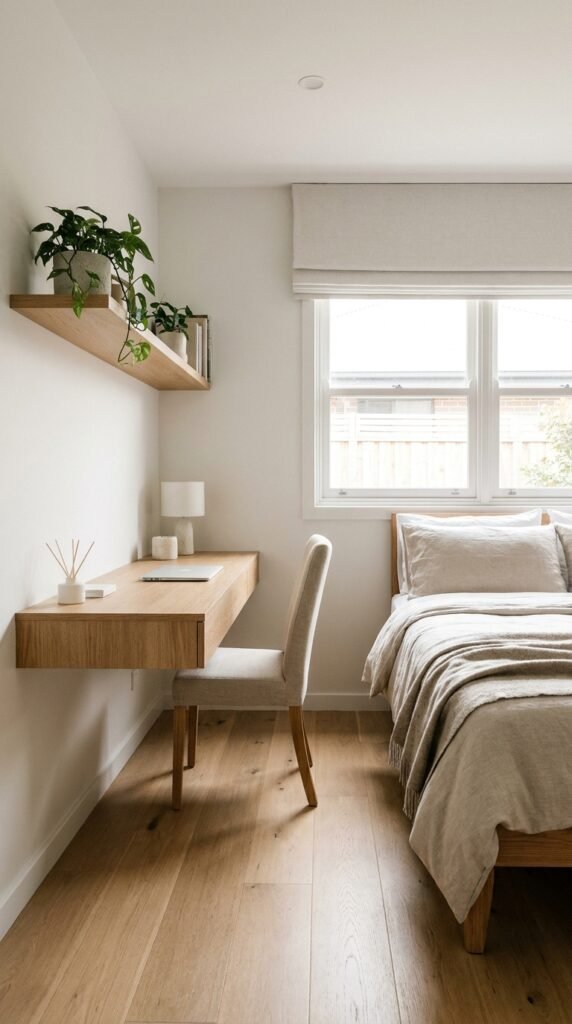
9. Use a Storage Armoire as a Complete Office That Closes at Night
An armoire can hold an entire workstation in one contained piece of furniture. Open the doors for work, then close them when the room needs to feel like a bedroom again.
Inside, you can organise:
- a laptop or monitor
- notebooks and files
- a compact printer
- chargers and office supplies
Look for adjustable shelves and a pull-out work surface if you need more depth. Drilling a discreet opening at the back can help with cable management, but electrical equipment still needs safe airflow.
This setup suits people who dislike looking at work after hours. Once the doors close, the room feels settled and ready for rest or guests.
The best hidden office is one you can close without first moving papers, cables, or equipment around.
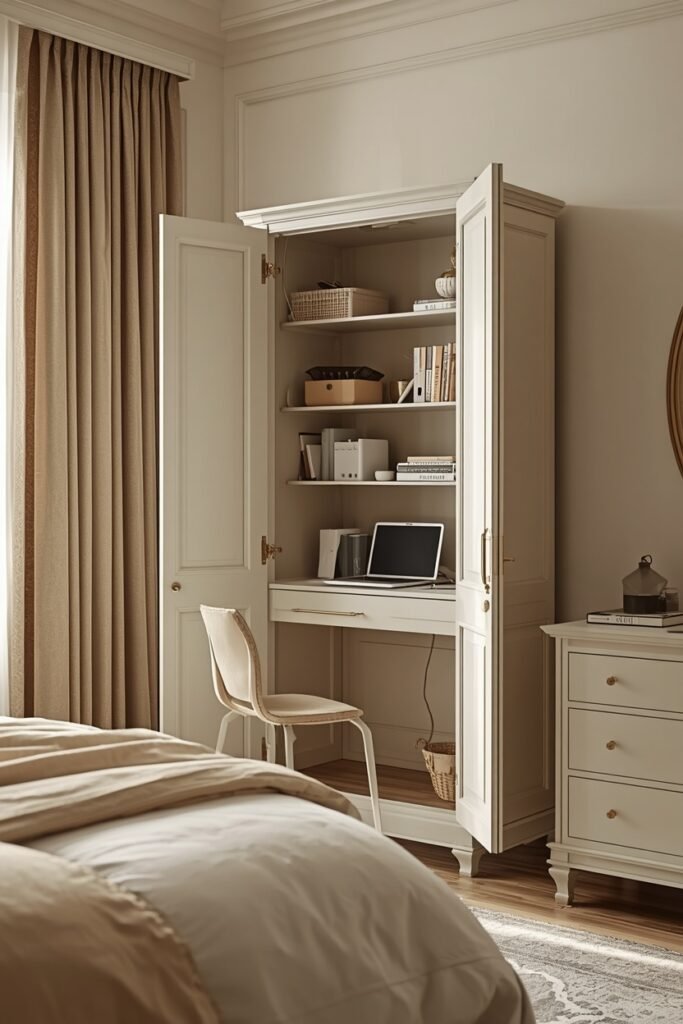
10. Fit a Corner Desk Into the Part of the Room That Usually Goes Unused
Bedroom corners often sit empty because standard desks are too wide or deep. A compact corner desk uses that awkward area while leaving the centre of the room open.
Check these details before buying:
- the chair should pull out without touching the bed
- drawers should open fully
- nearby curtains should not drag across the work surface
- power outlets should remain accessible
Vertical storage can help, but keep it narrow. A tall stack of heavy shelves may make the corner feel cramped. One floating shelf, a small noticeboard, or a wall lamp is usually enough.
This layout works best when the desk follows the corner rather than fighting against it.
- ▸Choose rounded or narrow edges near the main walkway.
- ▸Keep the desk depth suited to a laptop rather than bulky equipment.
- ▸Use the wall above for one light storage feature.
- ▸Leave enough room for the chair to tuck away completely.
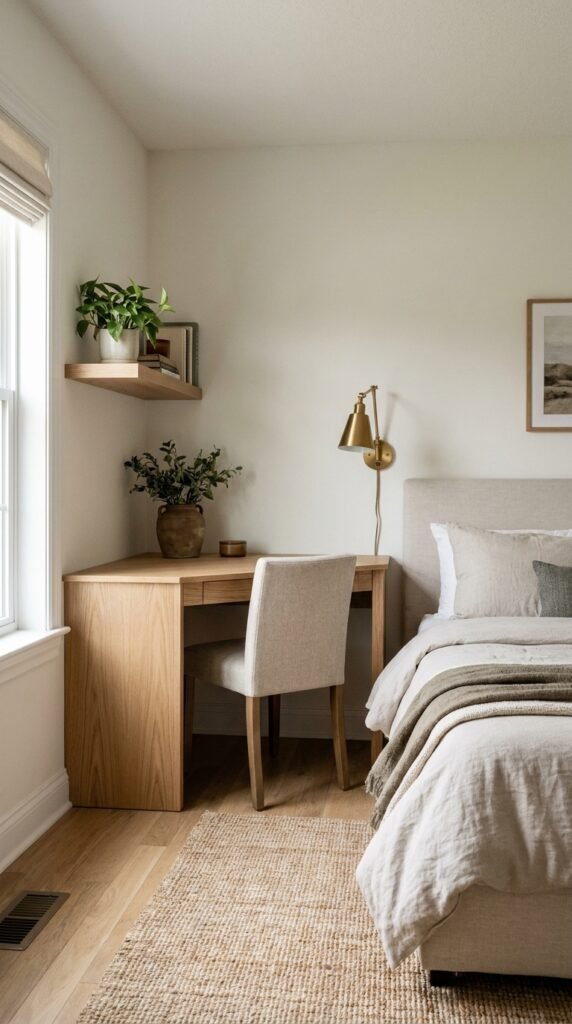
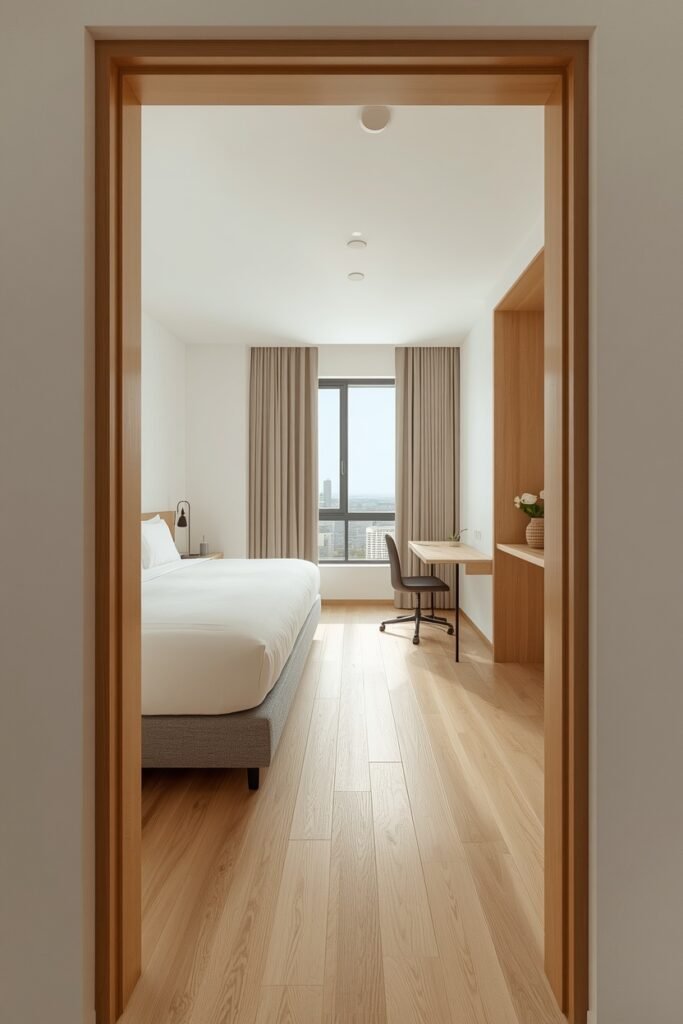
11. Place the Bed and Desk on Opposite Walls in a Long Narrow Room
A long guest bedroom office can feel awkward when every piece is pushed against the same side. Splitting the room gives each function more breathing space.
Place the bed along one wall and the desk directly opposite it. Then keep the middle open as the main walkway.
This layout works best when:
- the desk is shallow
- the bed frame is not overly bulky
- storage stays vertical
- chair movement does not block the path
Use matching colours or wood tones on both sides so the room still feels connected. The open strip through the centre stops the space from feeling like two unrelated zones squeezed together.
12. Hang a Curtain to Hide the Workspace Before Guests Arrive
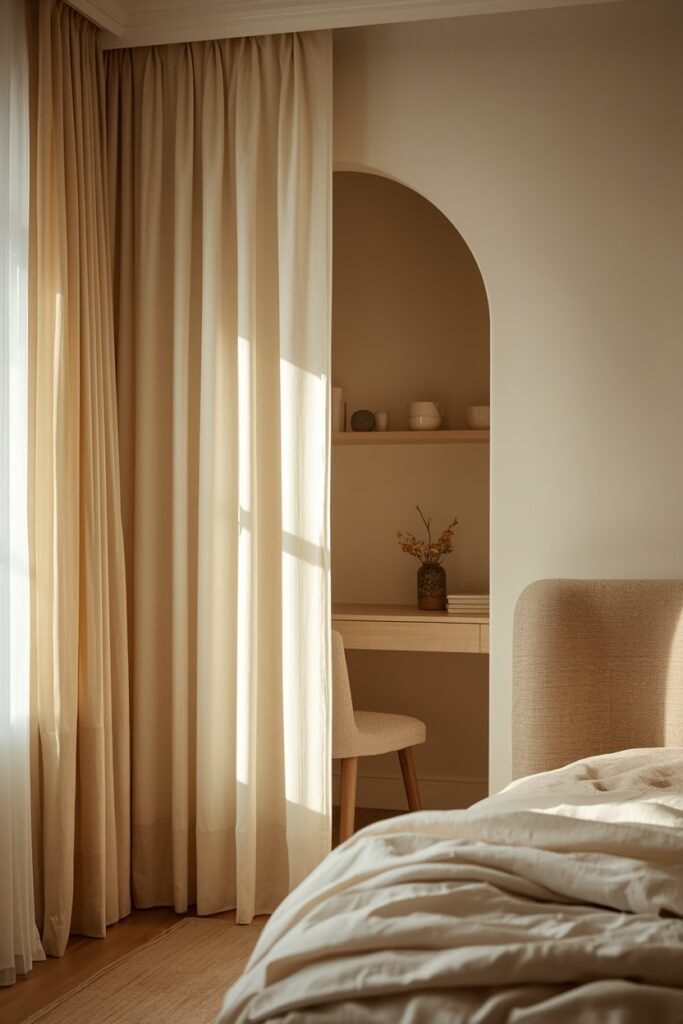
A curtain can soften an office corner without the cost or visual weight of a solid divider. It is useful when the desk sits inside an alcove, along one wall, or beside a closet.
Choose a fabric that matches the room rather than looking like a temporary screen. Light linen-look panels keep the space relaxed, while a thicker curtain hides monitors, shelves, and paperwork more completely.
You can use:
- a ceiling-mounted track
- a tension rod inside an alcove
- a simple wall-mounted curtain rod
Pull it closed before guests arrive, and the room instantly feels less work-focused.
📌 Good To Know
Let the curtain fall close to the floor and extend slightly beyond the desk width. A panel that is too short or narrow can make the office look more noticeable.
13. Match the Desk Finish to the Bedroom Furniture for a Calmer Look
A desk often looks out of place because it was chosen only for function. Matching its finish to the bed, nightstand, or dresser helps the work area blend into the room.
You do not need an exact furniture set. Repeat one clear detail instead:
- warm wood tones
- black metal legs
- white painted surfaces
- rounded shapes
- similar hardware
Keep the office chair in the same colour family too. A bright black desk chair beside soft oak furniture can make the workspace feel separate, even when the layout is good. Repeating finishes gives the room a quieter, more settled look.
An office-style desk and chair look separate from the softer bedroom furniture.
Repeated wood tones, shapes, or hardware make the workspace feel like part of the bedroom.
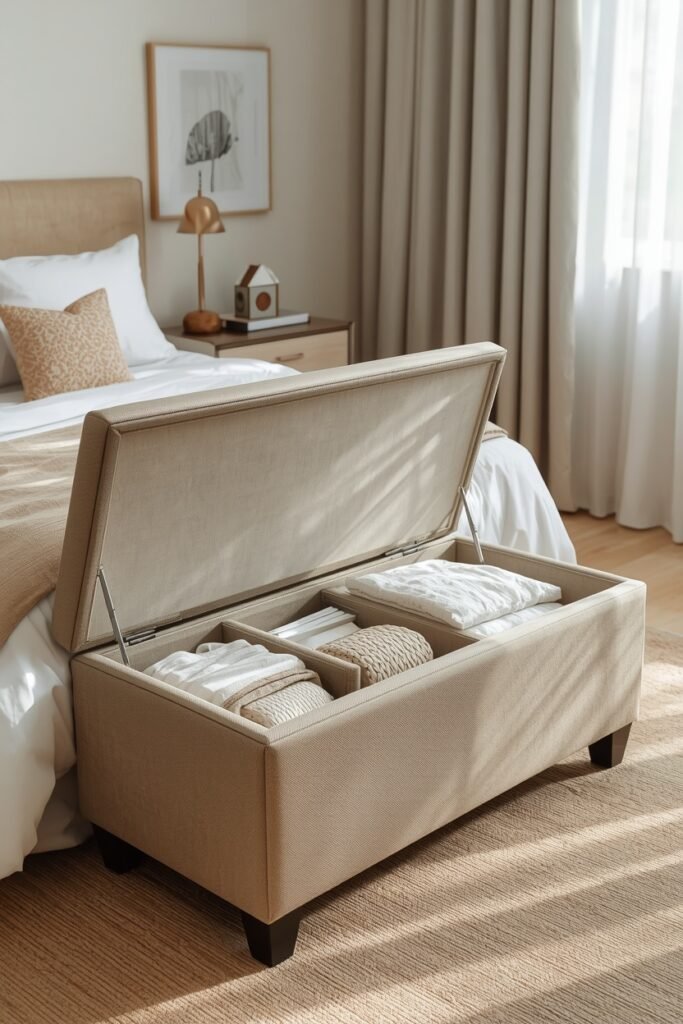
14. Add a Storage Bench for Guest Luggage and Office Supplies
A storage bench gives guests a place to set down a suitcase while hiding the office items you do not want left out. It can sit at the foot of the bed, below a window, or along an empty wall.
Use the inside for items that are useful but visually messy:
- spare printer paper
- notebooks and cables
- guest towels
- extra bedding
Keep the top mostly clear. One cushion or folded throw is enough, but piles of decor will make it less useful.
A lift-up lid works well for occasional access. Drawers are better when you need to reach office supplies during the week.
Make the bench work for both uses
15. Build Vertical Storage Above the Desk Instead of Filling the Floor
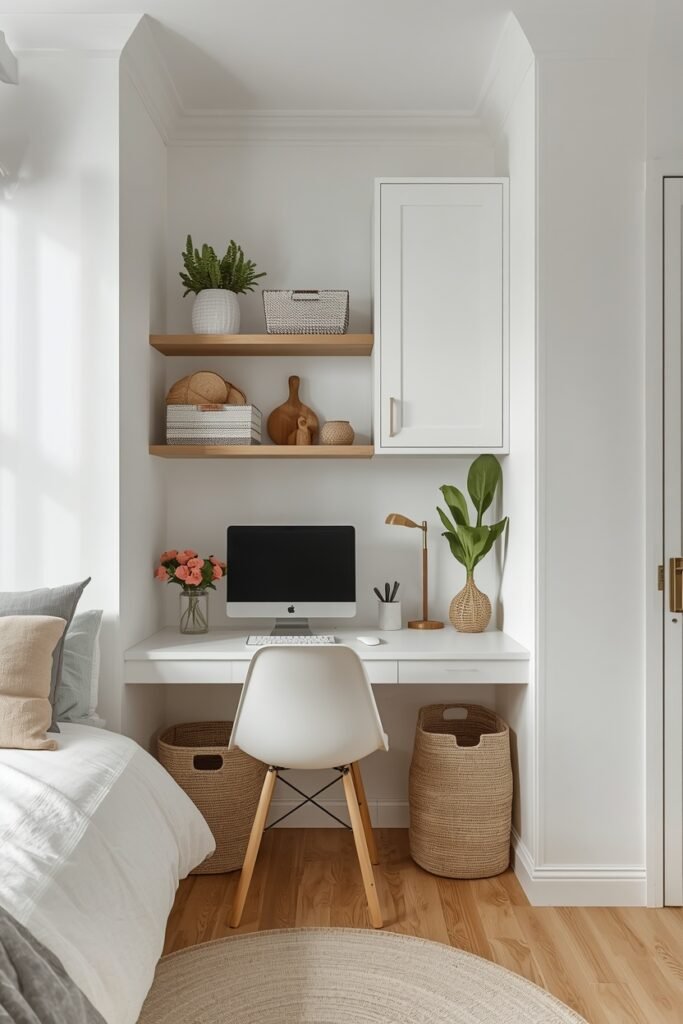
Small guest bedroom offices often lose valuable space to filing cabinets, carts, and freestanding shelves. Moving storage above the desk keeps the floor open and makes the room easier to walk through.
Pick the storage type based on what you need to hide.
Open shelves suit books, small baskets, and decorative items. Wall cabinets are better for files, equipment, and anything that makes the room look busy. A pegboard works well for tools and supplies that change often.
Do not fill the entire wall. Leaving some blank space around the storage helps the desk feel lighter and keeps the office corner from looming over the bed.
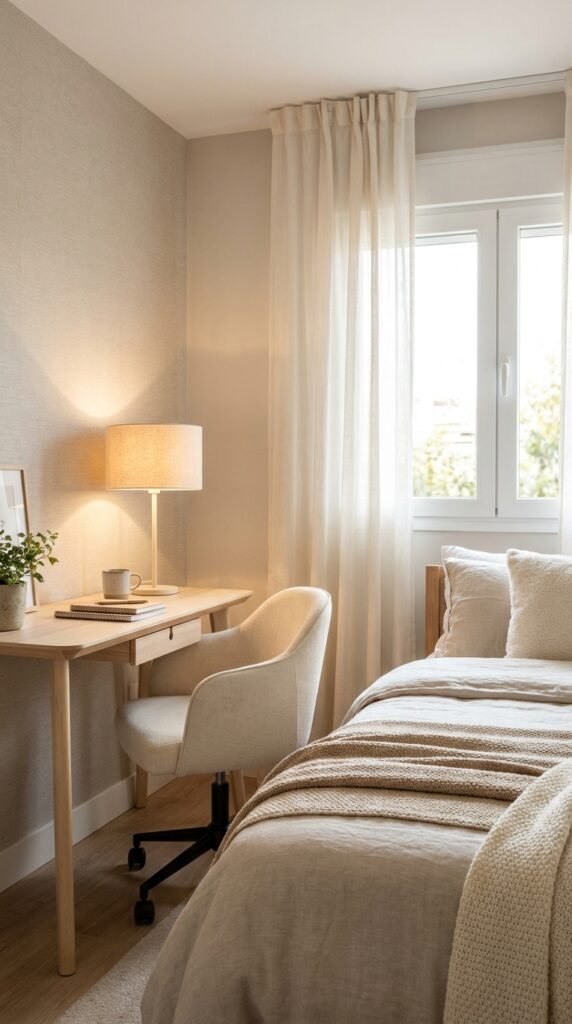
16. Choose an Office Chair That Can Pass as Bedroom Furniture
A standard office chair may support long work sessions, but it can make the guest room feel like a spare workspace. A softer task chair or upholstered dining chair blends in more easily.
Choose based on how long you sit each day.
A proper ergonomic chair is the better choice for full-time work. Look for a simple shape, neutral fabric, and fewer bulky controls. For shorter work sessions, an upholstered chair can feel more natural beside a bed or dresser.
Whatever you choose, make sure it slides under the desk. A chair left in the walkway will quickly become the piece that makes the whole room feel crowded.
| Office Chair | Upholstered Task Chair |
|---|---|
| Better for long daily work sessions. | Better for occasional or shorter work periods. |
| Offers more back and height adjustment. | Blends more easily with bedroom furniture. |
| May need a simpler colour and profile. | Needs enough support for comfortable sitting. |
17. Create a Guest-Ready Reset Routine With Only a Few Steps
Even a well-designed guest bedroom office needs a quick reset before someone stays over. The easiest system is one you can finish without moving half the room.
Start by clearing the desk and packing active work into one drawer, cabinet, or portable box. Put away cables, empty the wastebasket, and remove personal paperwork.
Then prepare the guest side:
- fresh bedding and towels
- one empty drawer or shelf
- an accessible outlet
- a small surface for personal items
Do not use the bed as temporary office storage during the week. That habit makes every guest visit feel like a major clean-up instead of a simple room reset.
Clear the desk and pack away current work.
Leave one drawer, shelf, or hook available.
Check the bedding, lighting, and charging access.
Stacking office supplies on the guest bed.
Leaving private paperwork on open shelves.
Filling every drawer with permanent office storage.
Conclusion
A guest room and home office can share the same space without either one feeling like an afterthought. The best setups rely on furniture that serves more than one purpose, storage that hides work clutter, and a layout that protects the room’s main walkway.
Start with the idea that solves your biggest problem first, whether that is adding a daybed, mounting a floating desk, or creating closed storage. These guest bedroom office ideas can help the room stay practical during the week and welcoming when visitors arrive.
Save this list to Pinterest so you can return to your favourite layouts when you are ready to plan the room.