21 Breakfast Nook Ideas for a Cozy Kitchen Corner
A breakfast nook does not need a huge kitchen or a custom renovation to feel useful. Often, the best ones come from a corner that was already there but never had a clear purpose.
The tricky part is making that little area comfortable without crowding the room. A table that is slightly too wide can block the walkway. Deep benches can eat up floor space. Too many pillows or decorative pieces can make a small nook feel busier than the rest of the kitchen.
These 21 breakfast nook ideas for a cozy kitchen corner focus on layouts and details that work in real homes. Some use built in seating, while others can be created with furniture you can move later. You will also find ideas for narrow kitchens, sunny windows, awkward corners, storage, lighting, and compact two person setups.
The goal is simple: make the nook feel like it belongs there, not like a table was squeezed into leftover space.
1. Turn an Empty Kitchen Corner Into an L Shaped Breakfast Nook
A bare kitchen corner can often hold more seating than it seems.
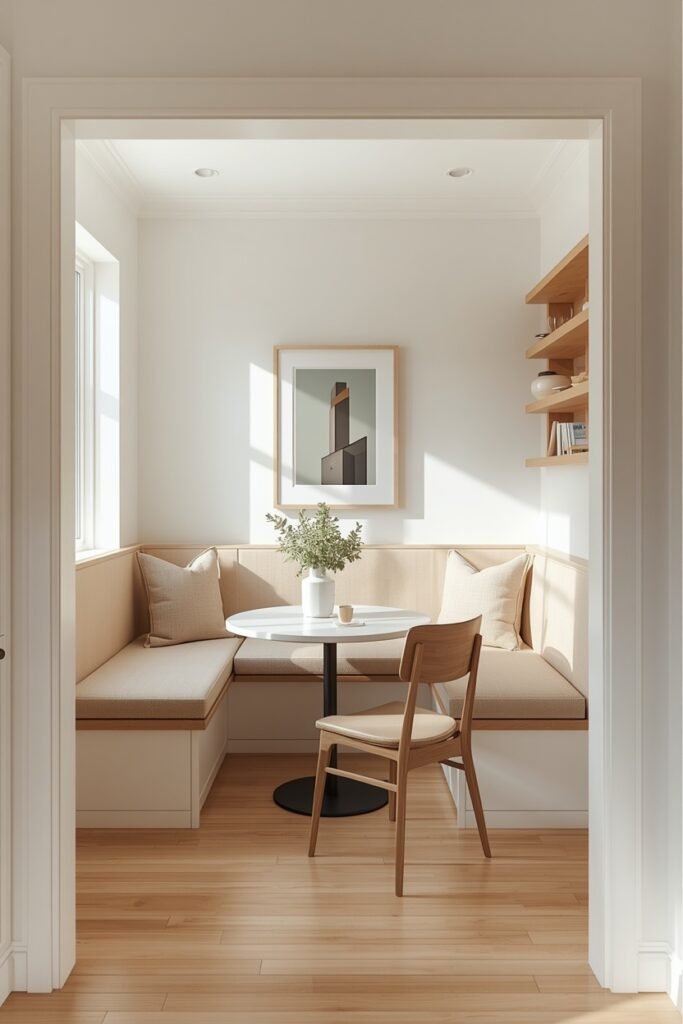
An L shaped bench uses two walls at once, which means you can seat several people without surrounding the table with chairs. It also keeps the center of the kitchen more open.
For a cleaner setup:
- Keep the bench depth comfortable rather than oversized.
- Choose a table that is easy to slide into from the open side.
- Leave one side of the table chair free if the walkway is narrow.
A round or softly rounded table works especially well here because sharp corners are less likely to catch your hip when you walk past.
The biggest improvement is usually not extra seating. It is giving an awkward corner a clear job.
An empty corner collects a spare chair, recycling bags, or things that never found a better home.
Two connected benches, one compact table, and an open side create useful seating without filling the walkway.
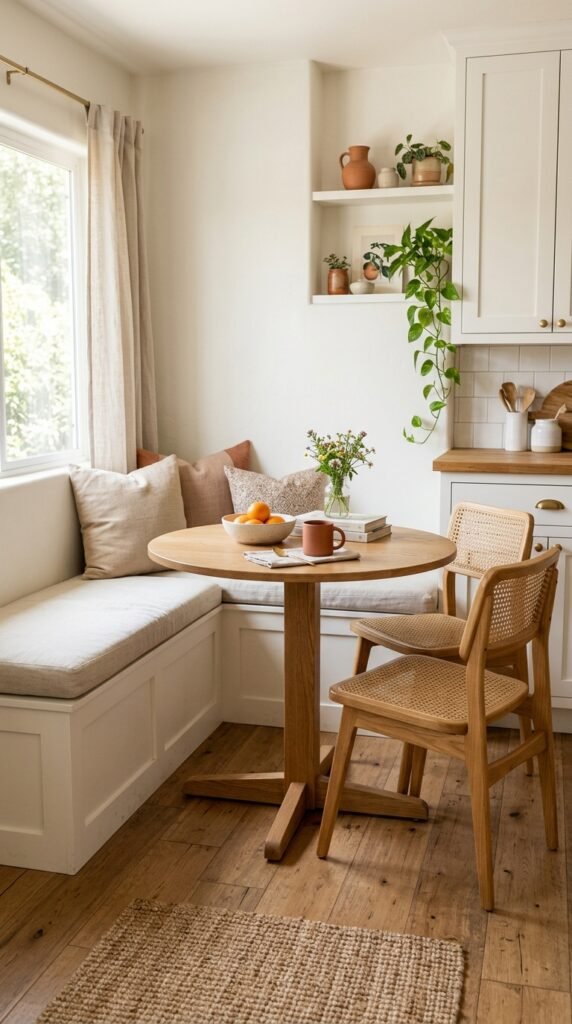
2. Use a Round Pedestal Table to Free Up Legroom
Four table legs can become surprisingly annoying in a small breakfast nook.
A pedestal base leaves the outer edge open, so knees, feet, and chairs have fewer obstacles. That matters most when people need to slide sideways along a bench rather than pull a chair straight out.
Look for a table that feels visually light as well as physically compact. A thick base or oversized tabletop can still make the nook feel cramped.
Round tables are especially handy with corner benches because nobody gets stuck sitting beside a sharp table corner.
For a very tight nook, keep decorative pieces small too. A fruit bowl or little vase is enough. You still need room for breakfast plates and coffee mugs.
| Pedestal Table | Four Leg Table |
|---|---|
| More open space for knees and feet. | Legs can interfere with bench seating. |
| Works well with round or oval tops. | Often suits larger, more open dining areas. |
| Easier to slide around in a tight corner. | Can feel crowded when pushed close to walls. |
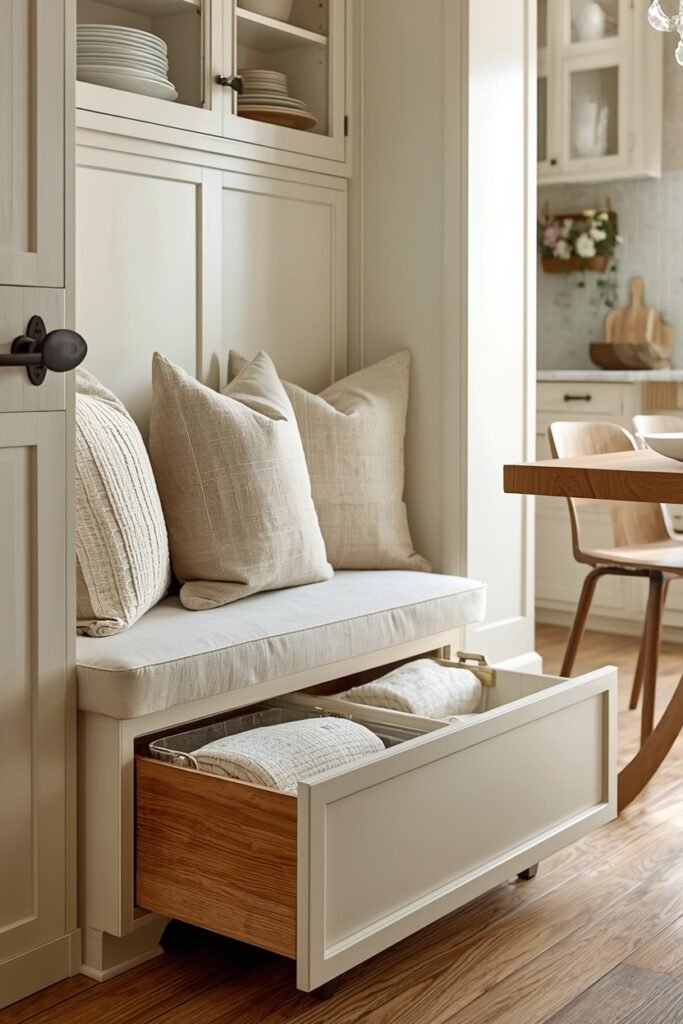
3. Build Storage Drawers Into the Bench Seating
Bench seating can do more than provide somewhere to sit.
If you are building a banquette, drawers underneath are usually easier to live with than deep lift up lids. You can pull one open without moving cushions, clearing the tabletop, or asking someone to stand up.
Use the storage for things that belong near the kitchen but do not need to stay in your main cabinets.
Good candidates include:
- Table linens and cloth napkins
- Extra serving bowls
- Seasonal placemats
- Kids’ craft or coloring supplies
Avoid filling the space with random clutter just because it is hidden. A drawer that becomes a junk drawer at floor level is not much of an upgrade.
4. Place the Breakfast Nook Right Beside a Sunny Window
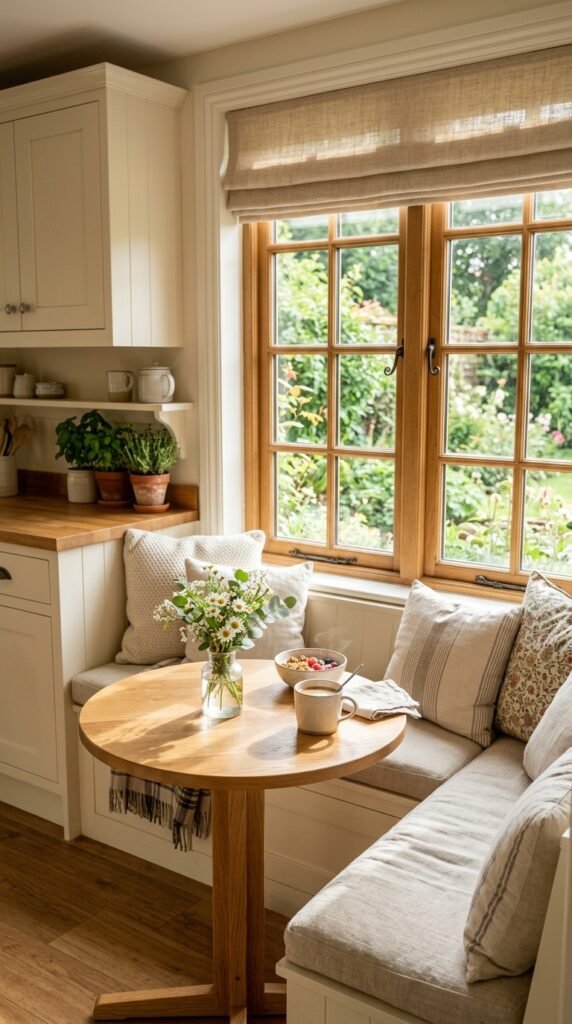
Morning light can make a small breakfast nook feel more inviting than extra decor ever will.
If your kitchen has a window with open floor space underneath or beside it, build the seating around that natural feature. Keep the table low enough that it does not block too much of the view, and avoid tall decorative objects on the sill.
A soft Roman shade or simple cafe curtain can help when direct sunlight hits the table too strongly.
One small detail matters here: make sure the window can still open easily.
A deep bench, tall back cushion, or badly placed pendant can turn a pretty window nook into something awkward to use.
💡 Quick Tip
Before positioning the bench, open the window fully and check the handle, sill, curtain, and cleaning access. A few extra inches can prevent an annoying daily problem.
5. Create a Window Seat That Doubles as Dining Seating
A window seat becomes much more useful when it is pulled into the dining layout instead of sitting on its own.
Place a compact table close enough that the seat works as one full side of the breakfast nook. Then add one or two dining chairs opposite it. You get a comfortable place for coffee during the week and proper seating when someone joins you.
Keep the seat cushion fairly firm. A very soft cushion can sink too low for comfortable eating.
It also helps to keep throw pillows mostly at the ends rather than lining the whole seat. That leaves enough back space for people to sit normally instead of moving a pile of cushions before every meal.
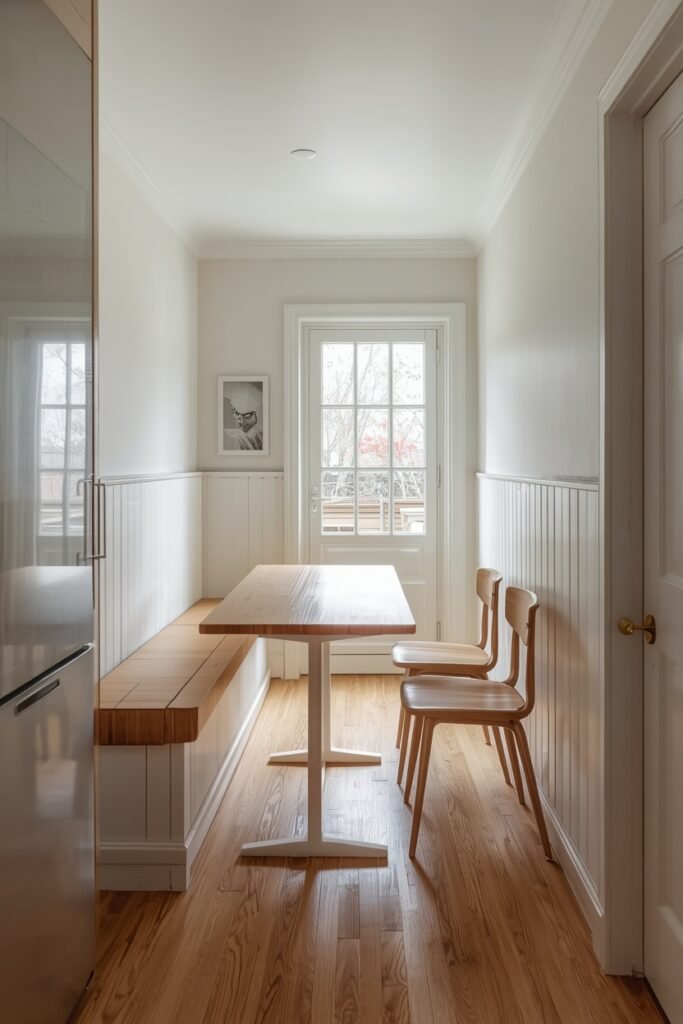
6. Use a Slim Rectangular Table Along a Narrow Wall
A narrow kitchen does not always need a round table.
Sometimes a slim rectangular table fits the room better because it follows the wall instead of pushing into the walkway. This works especially well when the nook sits at the end of a galley kitchen or beside a long run of cabinets.
Start with the table size, then check how people will actually move around it.
- Measure the wall and nearby walkway.
- Leave enough room for chairs to pull out.
- Check that cabinet doors and drawers still open comfortably.
A bench on the wall side can save even more room because it does not need the same pullout space as a chair.
Measure the full wall and note nearby cabinet doors, appliances, and walkways.
Mark the proposed tabletop with painter’s tape so you can see how far it reaches into the room.
Pull a chair into place and test the route around it before buying anything.
7. Mix a Built In Bench With Two Movable Chairs
A nook does not need matching seating on every side.
A built in bench paired with two movable chairs gives you a nice balance between structure and flexibility. The bench keeps the layout compact, while the chairs can be moved when someone needs more room or when you are cleaning underneath the table.
This setup also feels less heavy than wrapping benches around every wall.
Keep the chair backs fairly open or slim if the nook is small. Thick upholstered dining chairs can make the area feel tighter than it really is.
For everyday use, put the bench on the least accessible side and keep the chairs on the open side where people can sit down quickly.
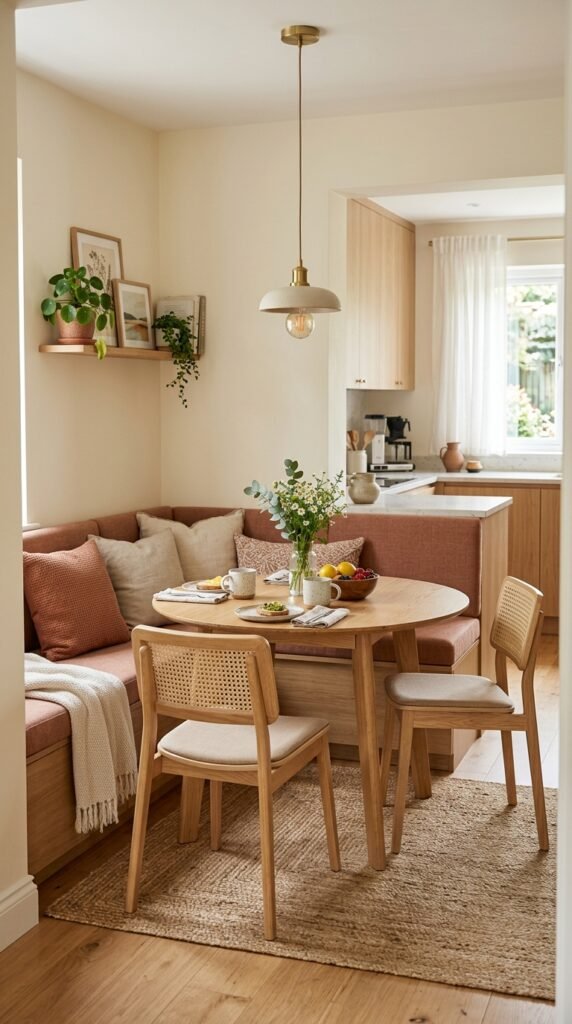
Place the fixed bench against the wall or in the least accessible corner.
Use slim chairs on the open side so the nook stays easy to enter.
Avoid bulky armchairs that need lots of clearance to pull out.
Do not force seating onto every side if the walkway already feels tight.
8. Add a Small Pendant Light to Define the Nook
Lighting can make a breakfast nook feel separate even when it sits inside an open kitchen.
A small pendant centered over the table creates a visual anchor without needing a rug, divider, or extra furniture. This is especially useful when the nook is tucked into a corner that otherwise blends into the room.
The fixture should suit the scale of the table. A huge shade over a tiny two person table can feel top heavy.
Before choosing one, check:
- The width of the tabletop
- The ceiling height
- The view across the room
- The bulb warmth and brightness
You want enough light for breakfast and homework, but not a harsh beam directly at eye level.
Pendant light checklist
9. Wrap a Banquette Around an Awkward Bay Window
Bay windows often look useful but can be frustrating to furnish.
Straight chairs leave odd gaps around the angles, while a normal bench may not follow the shape of the wall. A fitted banquette solves both problems by turning those awkward edges into seating.
Keep the upholstery simple so the window remains the main feature. A solid cushion and a few smaller pillows usually look better than filling every inch with fabric.
If the bay window has a deep sill, leave enough space to reach it for cleaning and opening the windows.
The result should feel built around the architecture rather than placed in front of it.
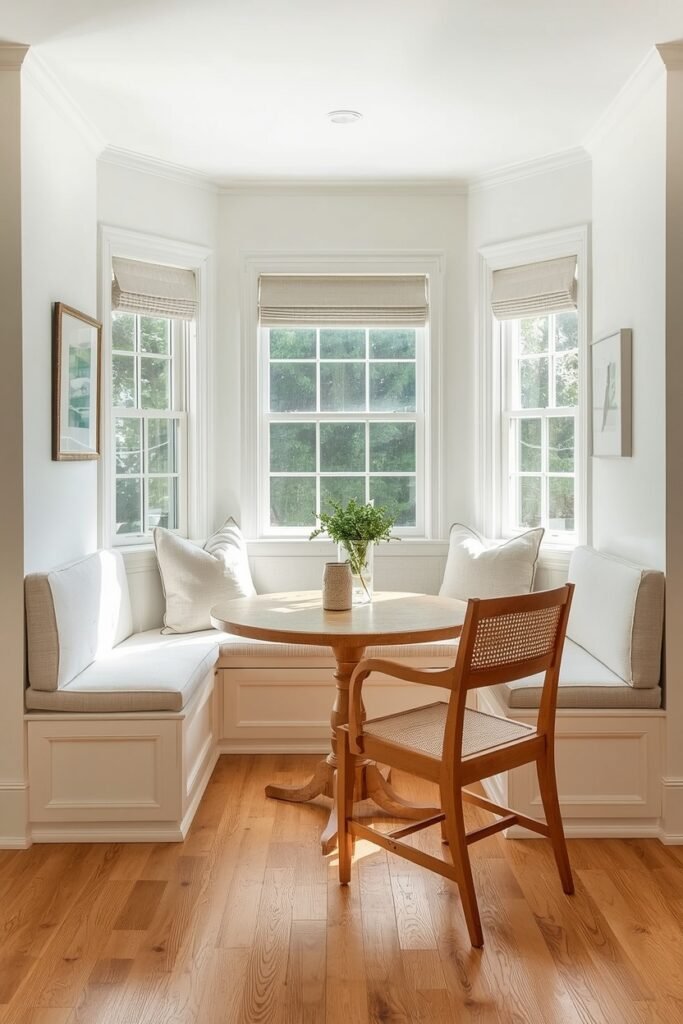
Loose chairs leave dead space around the angled walls and can block the best part of the window.
A fitted banquette follows the window line, uses the full corner, and keeps the view open above the seat.
10. Make a Tiny Two Person Breakfast Nook for Small Kitchens
A breakfast nook can be useful even if it only seats two.
In a small apartment or compact kitchen, a little table and two seats may be all you need. The key is resisting the urge to make it look like a full dining room.
Choose one compact table, two comfortable seats, and very little else.
A small round table works well in corners, while a narrow square table can sit neatly against a wall. If one person usually sits there alone, a bench plus one chair keeps the footprint even smaller.
Keep the tabletop mostly clear. The coffee maker, mail pile, and extra decor can quickly turn a tiny nook into another clutter spot.
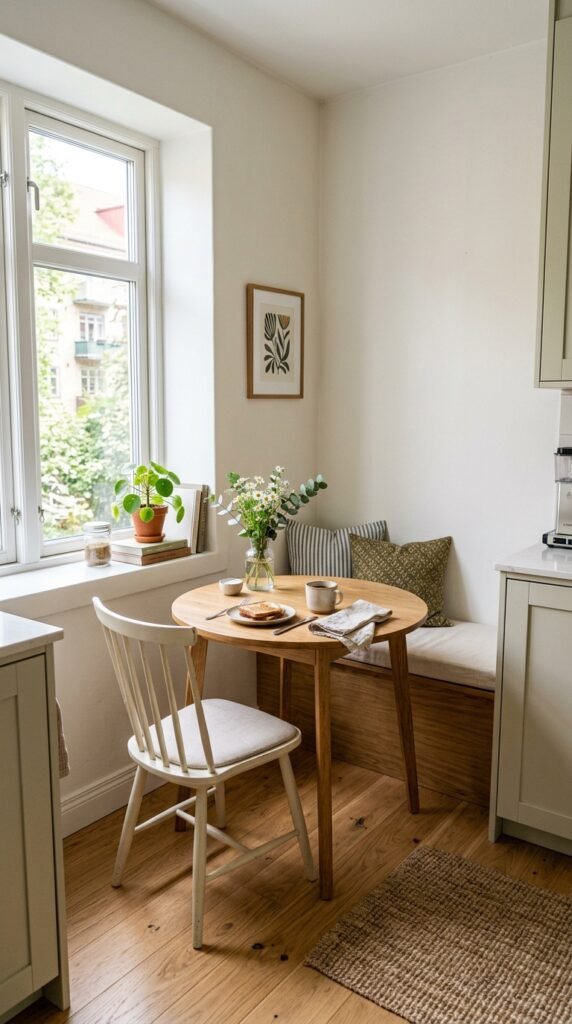
- ▸Choose a round, square, or drop leaf table with a compact footprint.
- ▸Use only two seats instead of squeezing in chairs for occasional guests.
- ▸Keep the tabletop mostly empty so breakfast still has somewhere to land.
- ▸Mount a small wall light or artwork instead of using floor space for extra decor.
11. Use Vertical Wall Paneling to Give the Nook Its Own Zone
A breakfast nook can feel separate from the kitchen without adding a divider.
Vertical wall paneling, narrow slats, or simple tongue and groove boards can mark the nook as its own little area while keeping the floor plan open. This works especially well when the seating sits against one plain wall and needs a little more definition.
Keep the treatment focused on the nook rather than carrying it across the whole kitchen.
A painted finish close to your cabinet or wall color will feel quieter. A slightly deeper shade makes the corner more noticeable without needing extra decor.
The wall itself becomes the feature, which means you can keep everything else simpler.
Use the wall treatment to define the nook, then keep the table, seating, and decor restrained so the corner does not feel overdesigned.
12. Choose a Bench With a High Back for a Cozier Feel
A high backed bench changes the whole feel of a breakfast nook.
Instead of looking like loose seating pushed against a wall, it creates more of an enclosed booth effect. It can also be more comfortable if you spend time there reading, working on a laptop, or lingering over coffee.
There is one tradeoff. A tall back carries more visual weight, especially in a tiny kitchen.
Use a high back when the nook has enough wall space to support it. For a very compact corner, a lower bench with a few back cushions may feel lighter.
It also helps protect the wall from scuffs when the nook gets used every day.
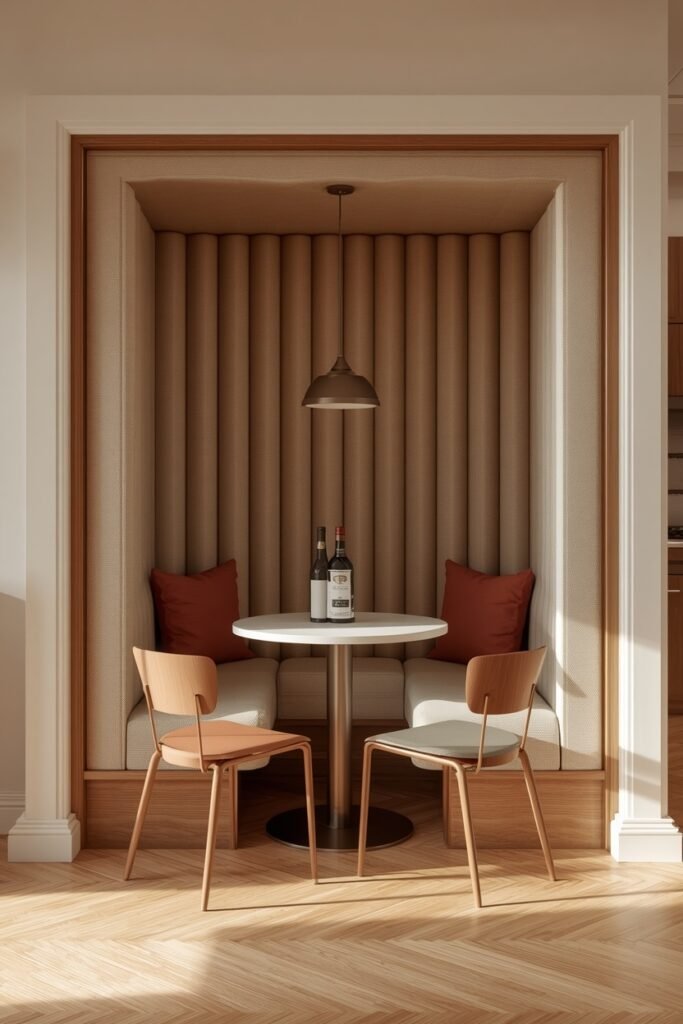
| High Back Bench | Low Back Bench |
|---|---|
| Feels more enclosed and booth like. | Keeps a small nook looking visually lighter. |
| Offers built in back support. | Works well with removable cushions. |
| Helps protect the wall behind the seat. | Shows more of the wall or window behind it. |
13. Add Open Shelves Above the Nook Without Making It Feel Busy
Open shelves can finish a breakfast nook, but they are easy to overfill.
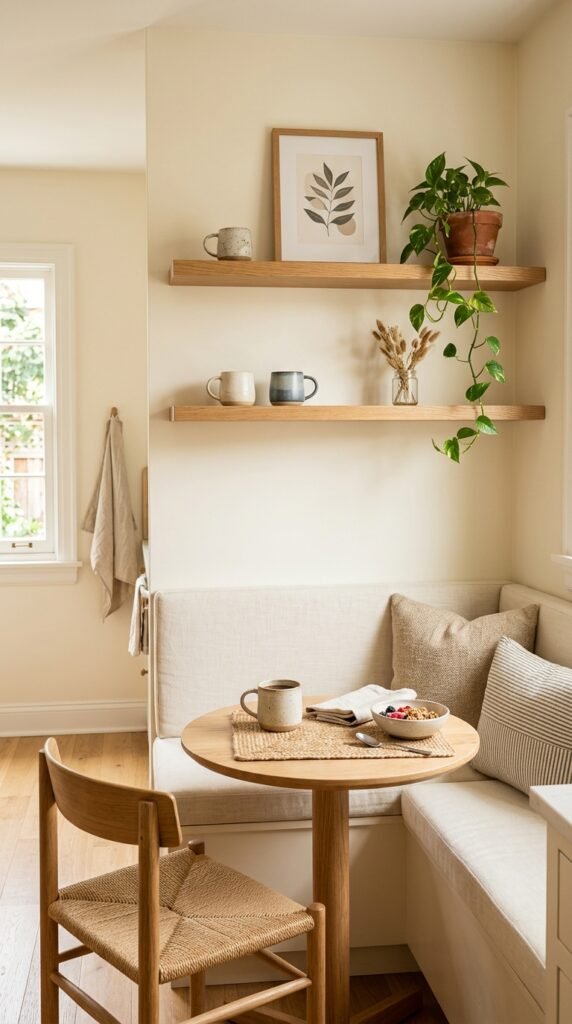
The safest approach is to use them for a few things you actually want to see every day. A small stack of mugs, one trailing plant, and a framed print can be enough.
Avoid turning the shelves into overflow kitchen storage. Rows of mismatched appliances, unopened packages, and spare containers will make the corner feel more like a pantry.
Leave visible gaps between objects.
That empty space matters because the nook already contains a table, seating, cushions, and lighting. The shelves should add a little height and personality, not another layer of visual noise.
14. Use a Freestanding Bench for a Renter Friendly Breakfast Nook
You do not need built in cabinetry to get the look of a breakfast nook.
A freestanding bench pushed neatly against the wall can create almost the same layout, and you can take it with you later. Look for a bench with a straight back, a simple base, and enough depth to sit comfortably through a meal.
To make it feel intentional:
- Match the bench finish to nearby furniture.
- Add one fitted seat cushion instead of several loose pads.
- Keep the table close enough that the bench actually functions as dining seating.
If the bench tends to slide, use non slip pads underneath rather than fixing it permanently to the wall.
📌 Good To Know
A freestanding bench can still look built in when its width closely matches the wall, the cushion fits neatly, and the table is centered with the seating.
15. Tuck a Breakfast Nook Into the End of a Galley Kitchen
The far end of a galley kitchen is often overlooked because it sits beyond the main work zone.
If there is enough clearance, that spot can become one of the most practical breakfast nook ideas for a cozy kitchen corner. A compact table against the end wall gives the kitchen a natural stopping point and keeps dining away from the busiest prep area.
Use furniture that follows the narrow shape of the room.
A slim rectangular table or small oval table usually fits better than a wide round one. Bench seating against the wall can also keep chair legs out of the main walkway.
Just make sure the nook does not block a pantry door, back door, or frequently used appliance.
16. Layer Seat Cushions and Back Pillows Without Overcrowding the Bench
Soft seating makes a breakfast nook more comfortable, but too many cushions can turn the bench into a place where you constantly move things before sitting down.
Start with one fitted seat cushion, then add only enough back support to make the bench pleasant to use.
A simple setup usually works best:
- One full length seat cushion
- Two or three back pillows
- Washable or removable covers
- Fabrics that can handle crumbs and coffee spills
Keep the deepest pillows at the ends if the bench wraps around a corner. That leaves the middle open for everyday seating.
The goal is comfort without creating another pile of things that needs rearranging every morning.
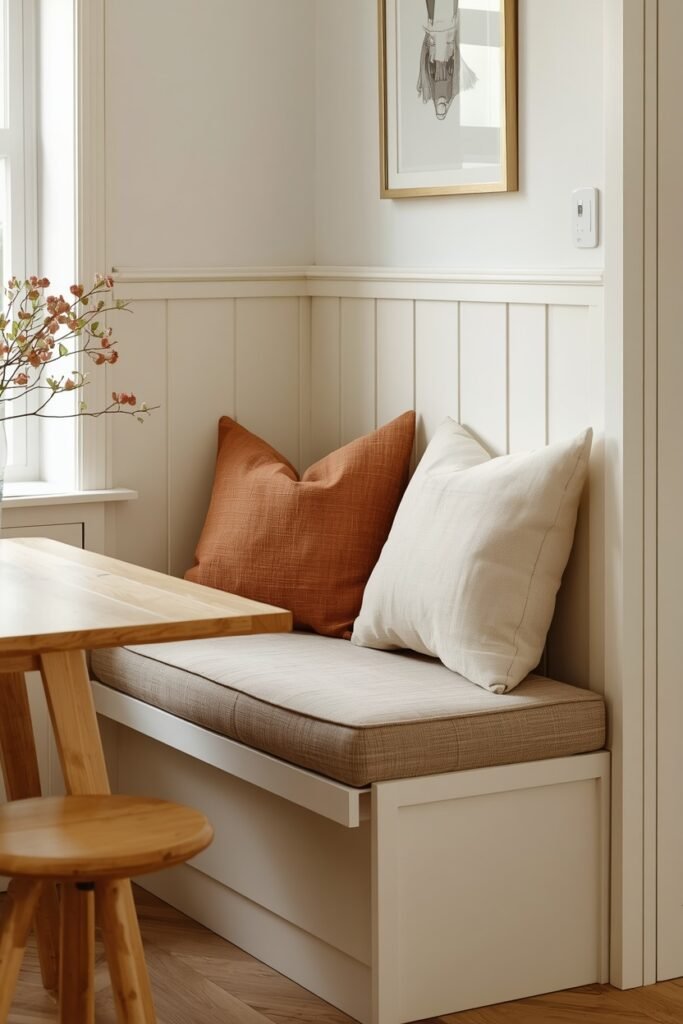
Keep the cushion mix simple
17. Use a Corner Bench With a Floating Table for Extra Floor Space
A table without legs around the outer edge can make a small nook feel much easier to move through.
A wall mounted or floating table works best when the nook has a strong wall behind it and does not need to be rearranged often. Pair it with a corner bench, and you can keep the floor underneath visually open.
That extra openness is especially useful in tight kitchens where chair legs and table bases start to overlap.
There is a limit, though. A floating table needs proper support and secure installation. If the wall cannot handle it, a slim pedestal base is the safer and more flexible choice.
Use the floating option for a fixed nook, not a layout you expect to change often.
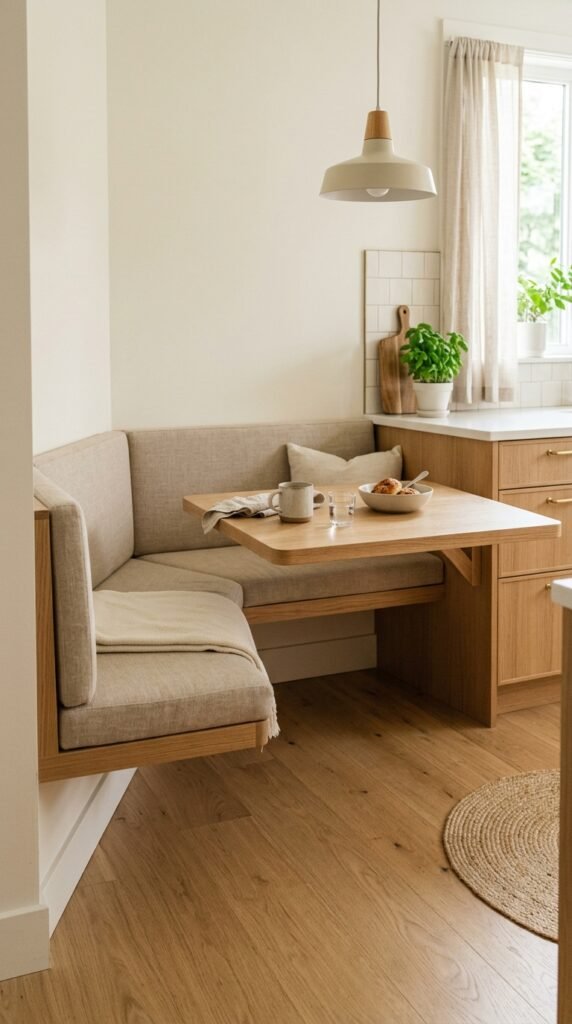
Use a floating table when the nook is fixed and the wall can support it properly.
Keep the underside clear so feet and knees have more room.
Do not use a floating setup if the wall construction is uncertain.
Avoid it if you like moving the table for guests or cleaning.
18. Paint the Nook a Slightly Deeper Color Than the Kitchen
A small color shift can make the breakfast nook feel intentional without turning it into a feature wall that fights with the rest of the kitchen.
Choose a shade that relates to the room, then go slightly deeper or warmer. For example, a cream kitchen can handle a soft clay tone, while a pale green kitchen might suit a muted olive nook.
Test the color where you will actually see it.
Morning light can make one shade look completely different from how it appears under evening bulbs.
Keep the paint boundary clean. Stopping at a corner, panel edge, or wall break looks more deliberate than ending the color in the middle of an open wall.
Pick a shade related to your kitchen cabinets, walls, or nearby textiles.
Test a generous sample and check it in morning and evening light.
End the color at a natural wall break, corner, or panel edge for a cleaner finish.
19. Bring in Cafe Style Seating for a Casual Morning Spot
A breakfast nook does not have to look heavily built in.
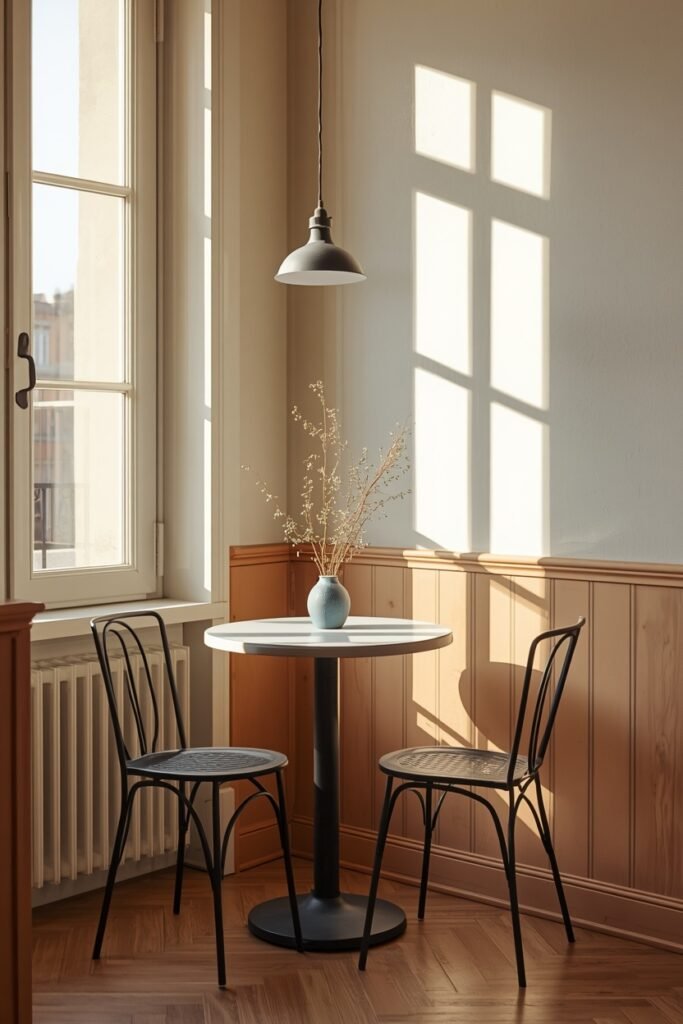
Cafe style seating keeps the area light and relaxed, especially in kitchens where permanent benches would feel too bulky. A small round table with two or three slim chairs can create the same sense of a dedicated morning spot without taking over the room.
Look for chairs with open backs and simple frames.
A small pendant or wall light above the table can give the nook more presence, while a little vase or sugar bowl adds enough detail without cluttering the surface.
This setup works particularly well near a window, beside a pantry wall, or in an apartment where flexibility matters more than built in storage.
20. Turn One Side of a Kitchen Island Into a Breakfast Nook
Island seating is useful, but standard bar stools are not always comfortable enough for longer meals.
If you have the room, one side of the island can be designed more like a breakfast nook. Lowering the eating surface or extending a table height section gives you proper chairs and a more relaxed seated position.
That works well for families who use the kitchen for breakfast, homework, coffee, and quick dinners.
Keep the dining side visually separate from the prep side. A different countertop height, a small pendant arrangement, or a bench at the end can help.
The main advantage is getting everyday dining space without adding another freestanding table elsewhere in the kitchen.
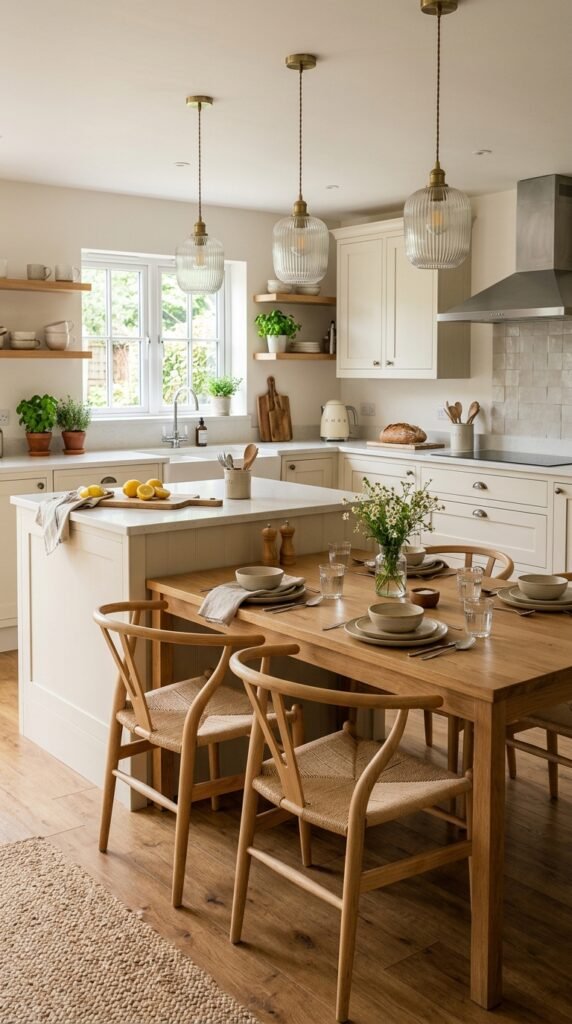
| Standard Island Stools | Nook Style Island Seating |
|---|---|
| Best for quick meals and short seating periods. | More comfortable for breakfast, homework, and longer meals. |
| Uses counter height stools. | Can use standard dining height chairs or a bench. |
| Feels connected to the prep surface. | Creates a clearer distinction between cooking and dining. |
21. Finish the Breakfast Nook With One Strong Focal Point
A small nook usually looks better with one clear feature than five competing ones.
Choose the part you want the eye to land on first. It could be a framed print, a sculptural pendant, a painted wall, a window view, or one piece of oversized artwork above the bench.
Then let the rest stay quieter.
If the pendant is the focal point, keep the wall decor simple. If the wall color is strong, use restrained cushions and a plain table. Too many statement details can make a tiny corner feel restless.
This final layer is less about adding more and more about deciding what deserves attention. One good focal point can make the whole breakfast nook feel finished.
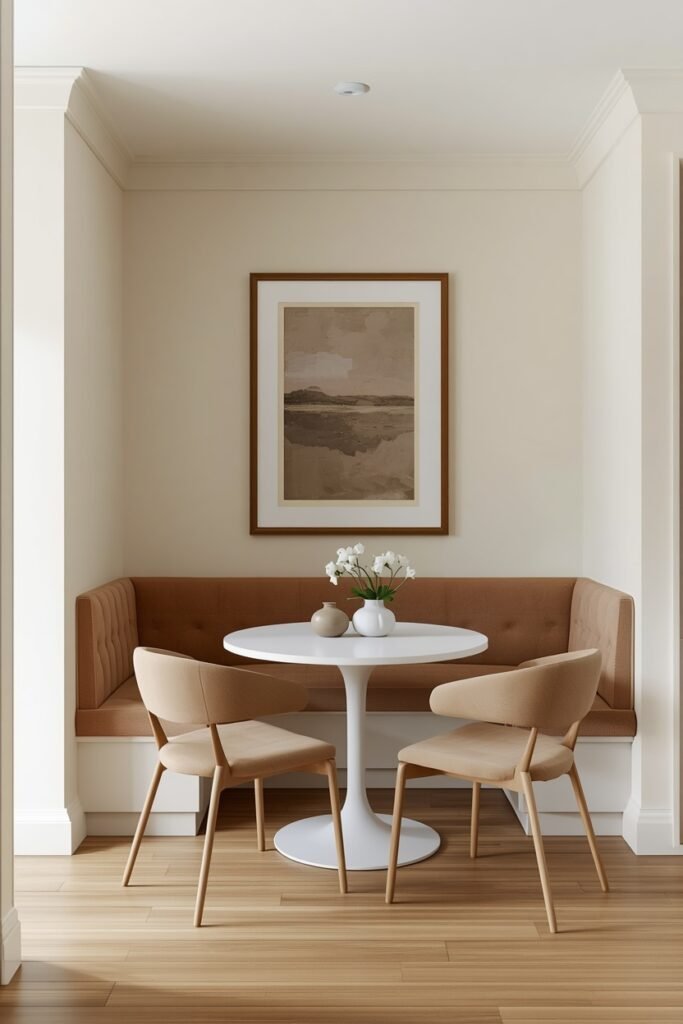
Pick one visual feature to lead the nook, then let the seating, table, lighting, and accessories support it instead of competing with it.
Conclusion
A good breakfast nook should make your kitchen easier to use, not more crowded. The best layouts work with the space you already have, whether that means using an empty corner, building seating under a window, adding a compact table, or creating a simple renter friendly setup.
These breakfast nook ideas can also be adapted to different kitchen sizes and styles. Start with the layout first, then add comfort, lighting, storage, and a few details that make the corner feel finished.
You do not need to use every idea. Pick the one that solves the biggest problem in your kitchen and build from there.
Save this list on Pinterest for when you are ready to create or refresh your own cozy breakfast nook.