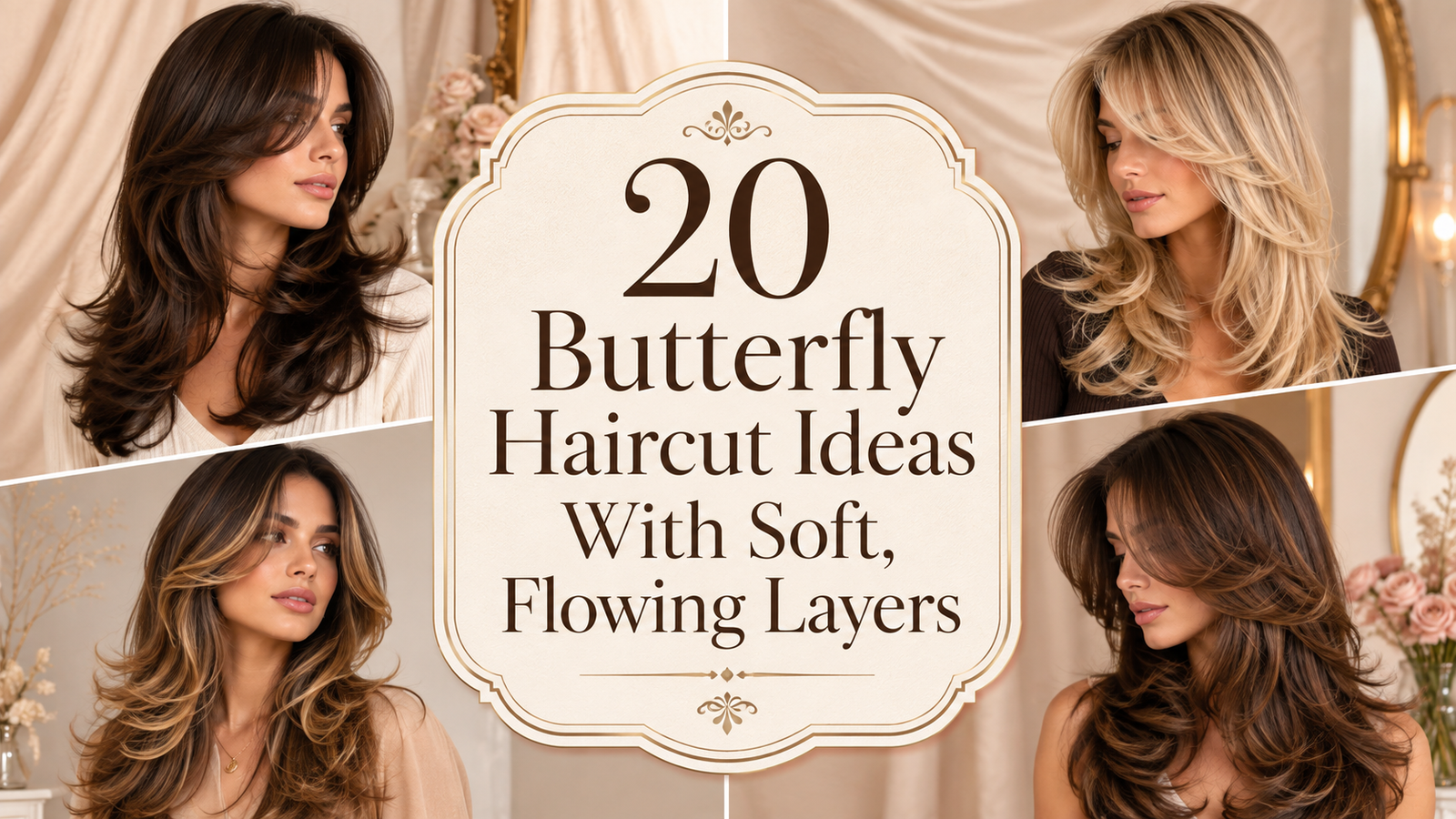
20 Butterfly Haircut Ideas With Soft, Flowing Layers
A butterfly haircut gives you the movement of shorter layers without asking you to give up the length you spent months or years growing. That balance is exactly why the cut works so well on longer hair that has started to feel heavy, flat, or shapeless.
The best versions are not all cut the same way. Some have dramatic face framing pieces around the cheekbones, while others keep the shortest layers closer to the chin. You can add curtain bangs, build more volume through the crown, soften thick hair, or keep the ends fuller when your hair is fine.
These 20 butterfly haircut ideas with soft, flowing layers show how much the shape can change depending on your hair length, texture, density, and the way you normally style it.
Instead of choosing a cut from one polished photo, pay attention to where each layer begins and how the front connects to the rest of the hair. Those small details are what make a butterfly cut feel flattering and easy to live with.
1. Classic Butterfly Haircut With Long, Sweeping Layers
This is the butterfly cut most people recognize right away.
The front pieces begin shorter around the face, then gradually flow into longer layers through the sides and back. That creates visible movement without making the bottom of the hair look thin or overly chopped.
It works especially well when your hair already has some length and you want it to feel lighter around your face.
Ask for connected layers rather than several obvious shelves. The transition should look soft when your hair falls naturally, not only after a full blowout.
The front can be turned away from the face with a round brush, while the longest sections stay loose and full.
2. Butterfly Cut With Face Framing Layers Starting at the Cheekbones
Starting the shortest layers around the cheekbones makes the front of the haircut much more noticeable.
Those pieces can curve away from the face and create a softer outline around the eyes and cheeks. Behind them, each layer should become slightly longer so the haircut blends naturally into the rest of your hair.
This version works well if very long front layers tend to disappear once your hair is styled.
The cheekbone layer should still be long enough to tuck or sweep back. Going too short can make the front feel more like disconnected bangs than part of a butterfly cut.
Keep the ends of the longer sections fuller to balance the shorter framing.
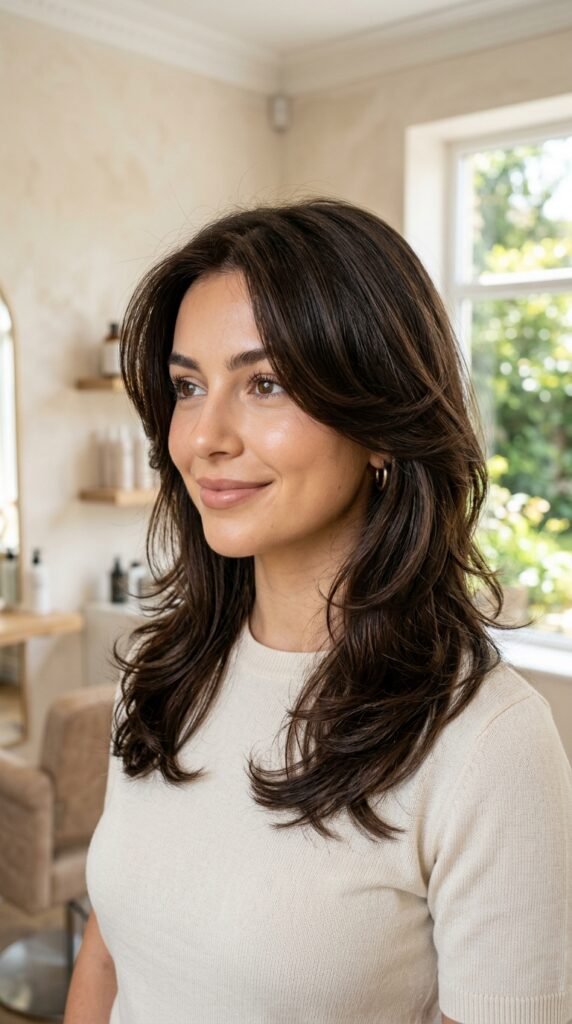
Begin the shortest face framing piece around the cheekbone area.
Let the next layers fall around the jaw and collarbone instead of cutting one sharp step.
Blend the final layer into the main length so the front and back still feel connected.
3. Long Butterfly Haircut That Keeps Most of Your Length
You do not need to sacrifice several inches to make long hair feel lighter.
With this version, the overall length stays nearly untouched while most of the shaping happens through the front, upper sides, and middle sections. Hair that used to fall as one heavy curtain starts separating into softer pieces when it moves.
The key is leaving enough density through the lower third of the haircut.
Think movement above, fullness below. That balance keeps very long hair from looking stringy after layering.
This approach is useful if you like wearing your hair down but still want ponytails, braids, and loose waves to retain plenty of thickness through the ends.

Long hair hangs in one dense shape with little separation through the front or sides.
The longest line stays intact while upper layers create movement and a lighter outline around the face.
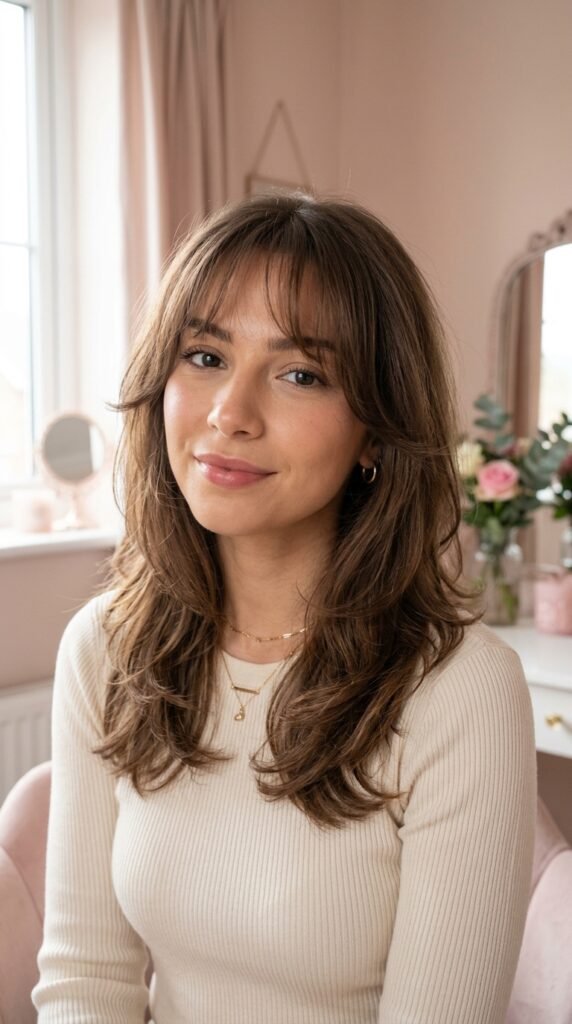
4. Butterfly Haircut With Wispy Curtain Bangs
Wispy curtain bangs make a butterfly haircut feel softer through the forehead without creating the weight of a full fringe.
Keep the center slightly shorter, then let the sides lengthen until they meet the first face framing layer. The blend matters more than having a dramatic bang shape. Once styled, the fringe should separate naturally and move into the rest of the haircut rather than sitting on top of it.
A light fringe can also help when your front layers feel too long to create much shape.
Leave enough length at the sides to sweep them back. This makes growing them out far easier and keeps the haircut flexible on days when you do not want bangs across your forehead.
💡 Quick Tip
Ask for a soft connection between the outer edge of the curtain bangs and the first face framing layer. A visible gap can make the fringe look separate from the rest of the cut.
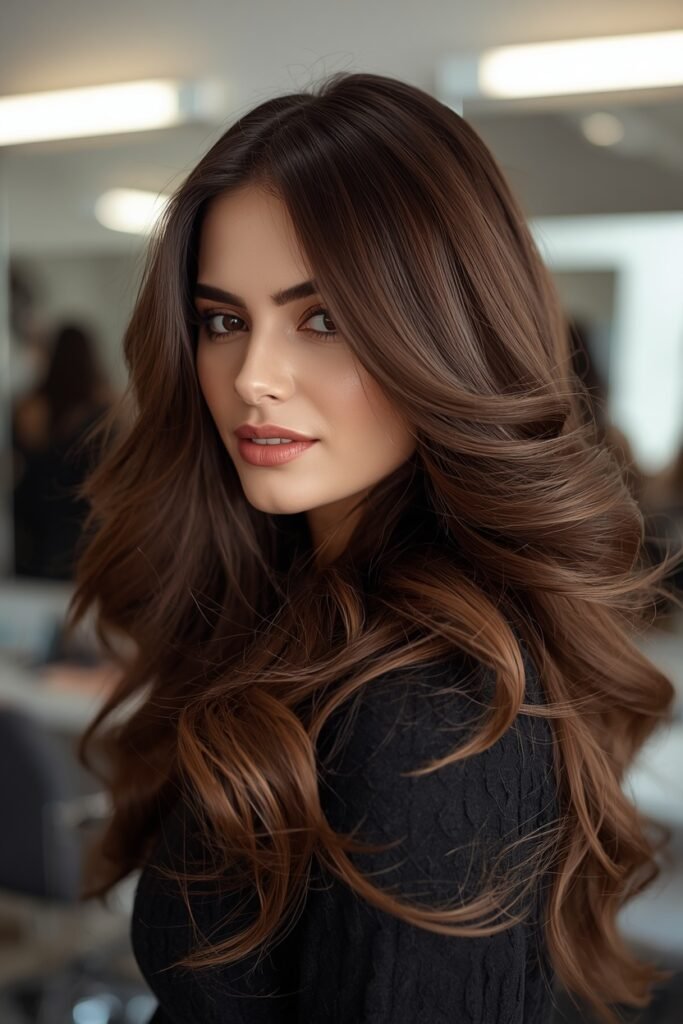
5. Voluminous Butterfly Layers Inspired by a Salon Blowout
Big movement is usually less about adding dozens of layers and more about putting the right layers in the right places.
For a fuller butterfly shape, shorter pieces through the crown and upper sides help the hair lift away from the scalp. Longer face framing sections can then be directed backward to create that wide, airy shape around the shoulders.
A round brush or large rollers make the separation between layers easier to see.
Avoid removing too much weight from the bottom. The fuller ends are what keep all that movement from turning into a thin, feathery shape.
This version suits someone who enjoys a more styled finish and does not mind spending a little extra time shaping the layers.
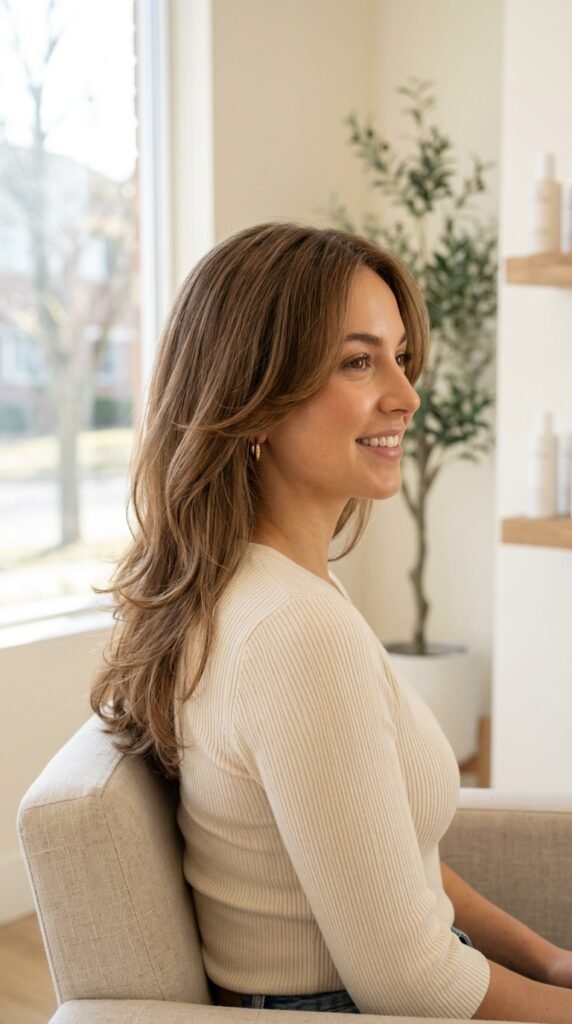
6. Soft Butterfly Cut for Medium Length Hair
Medium length hair can still carry a butterfly shape, but the layers need to be placed more carefully.
If the shortest pieces start too high, the cut can lose its soft flow and begin to look choppy. A safer approach is to keep the face framing around the jaw or cheek area, then let the remaining layers fall through the shoulders.
For this length, focus on three things:
- Keep the ends reasonably full.
- Blend the front layers into the sides.
- Avoid too many short pieces through the back.
The goal is movement without shrinking the overall shape. This version works especially well if your hair sits around the shoulders or slightly below.
What to ask for at the salon
7. Butterfly Haircut for Thick Hair With Weight Removing Layers
Thick hair often benefits from the butterfly shape because the cut can remove bulk without making the whole style feel short.
The mistake is taking out too much weight near the ends. That can leave the upper sections full while the bottom looks thin and uneven.
A better approach is to remove heaviness through the middle layers and around the face, then protect the density at the perimeter.
Think controlled lightness, not aggressive thinning.
This helps thick hair move more freely when it is worn down, while still keeping enough body for ponytails and loose waves. It can also stop the sides from puffing outward when the hair dries naturally.

Remove bulk through the middle of the haircut.
Keep enough weight through the bottom edge.
Over thinning the last few inches.
Cutting too many short layers around the crown.
8. Butterfly Layers for Fine Hair Without Losing Fullness
Fine hair needs a lighter hand with layering.
Too many short pieces can make the ends look sparse, especially once the haircut grows out. Instead, keep most of the density through the lower section and use fewer, longer layers to create movement around the face.
The shortest framing pieces can sit around the chin or slightly higher, depending on your length.
A good rule is to create shape where people can see it without removing bulk where you need it most.
For fine hair, the difference between soft layering and over layering is usually visible at the bottom. Fuller ends tend to make the whole haircut look denser.
| Better for Fine Hair | Can Make It Look Thinner |
|---|---|
| Longer face framing layers | Many short layers through the crown |
| Fuller ends and fewer layers | Heavy thinning near the bottom |
| Soft movement around the face | Strong separation between every layer |
9. Butterfly Haircut on Naturally Wavy Hair
Wavy hair gives butterfly layers built in movement, so the cut does not need to rely on a blowout to show its shape.
The layers can follow the natural bend of the hair, with shorter sections around the face and longer pieces falling through the sides. Once dry, the waves help separate those layers without making them look too sharp.
The biggest thing to watch is shrinkage.
A section that looks long while wet may sit much higher once the wave pattern returns. For that reason, leave a little extra length in the shortest layers until you know how the hair settles.
This version often looks best when the texture is allowed to stay slightly undone rather than brushed completely smooth.
10. Butterfly Cut With Shorter Crown Layers for Extra Lift
Flat roots can make long layered hair look heavier than it really is.
Adding a few shorter pieces through the crown can create more lift, especially when the hair is blow dried upward or set with rollers. The trick is keeping those layers long enough to blend into the rest of the haircut.
Too short, and the crown can look disconnected or overly rounded.
Use this version when you want more height through the top without creating a full shag shape.
Keep the crown layers selective. A small amount of lift usually looks softer than stacking several short layers in the same area.
That balance lets the top move while the lower sections still keep the flowing butterfly shape.

📌 Good To Know
Crown layers create the most natural lift when they still reach the surrounding layers. If they are much shorter than everything around them, the top can start to look separate from the rest of the haircut.
11. Butterfly Haircut With Long Curtain Bangs That Blend Into the Sides
Long curtain bangs are a good middle ground if you want more shape around the face but do not want a short fringe.
The center pieces can begin around the cheekbones or lips, then lengthen toward the jaw before melting into the first side layers. That gradual blend matters because it keeps the front from looking like a separate haircut sitting on top of the rest.
A soft bend away from the face helps the layers open up.
The transition should be almost invisible when the hair falls straight. If you can clearly see where the bangs stop and the side layers begin, the blend is probably too abrupt.
This works especially well if you like wearing your hair with a center part.
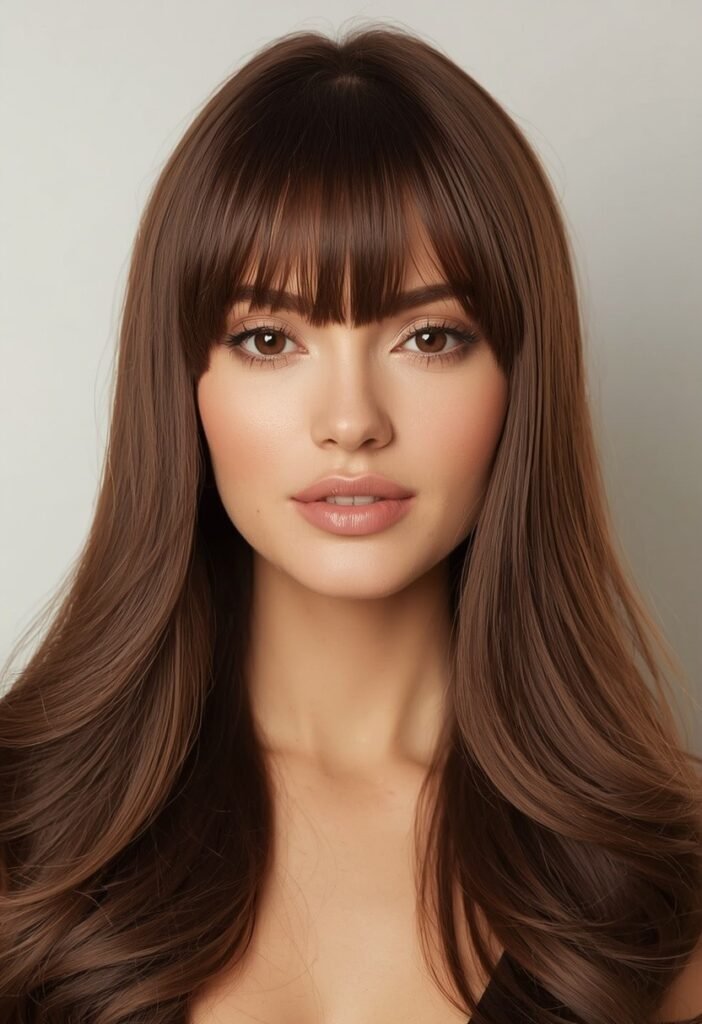
The curtain bangs end suddenly, leaving a visible gap before the longer side layers begin.
The fringe lengthens gradually into the cheek, jaw, and shoulder layers for one continuous shape.
12. Butterfly Layers With Flipped Ends for a Retro Finish
A flipped finish makes the separation between butterfly layers much easier to see.
Instead of curling every section inward, direct the ends away from the face and let the upper layers kick outward slightly. The result feels fuller through the sides without needing tight curls.
You do not need to style every piece exactly the same.
For a softer result:
- Smooth the roots and mid lengths first.
- Turn the face framing pieces outward.
- Give only the visible layer ends a small flip.
Keep the bend loose. A sharp curl can make the haircut feel stiff, while a gentle turn keeps the layers light and movable.
Smooth the roots and middle sections so the finished shape stays soft rather than puffy.
Turn the front and upper layers away from the face with a round brush or large barrel tool.
Loosen the shape with your fingers so the ends look airy instead of tightly curled.
13. Center Part Butterfly Haircut With Balanced Face Framing
A center part puts the face framing on full display.
Because both sides are visible at once, the layers usually look best when they feel balanced in length and weight. The shortest pieces can sit around the cheekbones, jaw, or chin, then fall into longer sections around the shoulders.
This does not mean both sides need to look perfectly identical.
Natural density, cowlicks, and the way your hair dries can make one side sit differently. The important part is that the overall outline feels even.
Use the part as the starting point for the haircut, not as an afterthought. If you wear your hair in the middle most days, let your stylist know before the face framing begins.

If you wear a center part most days, cut the face framing around that part so both sides fall into a balanced shape naturally.
14. Side Part Butterfly Haircut for More Lift Around the Front
Moving the part to one side changes the butterfly shape more than people expect.
The heavier side gains extra sweep and volume, while the lighter side can sit closer to the face. That uneven distribution can make the front feel fuller without adding more layers.
This version is useful if your center part tends to sit flat.
A side part also gives longer curtain pieces somewhere to fall, which can make the face framing look softer and less symmetrical.
Choose the part based on how your hair naturally wants to move. Fighting a strong cowlick every morning usually creates more work than the haircut is worth.
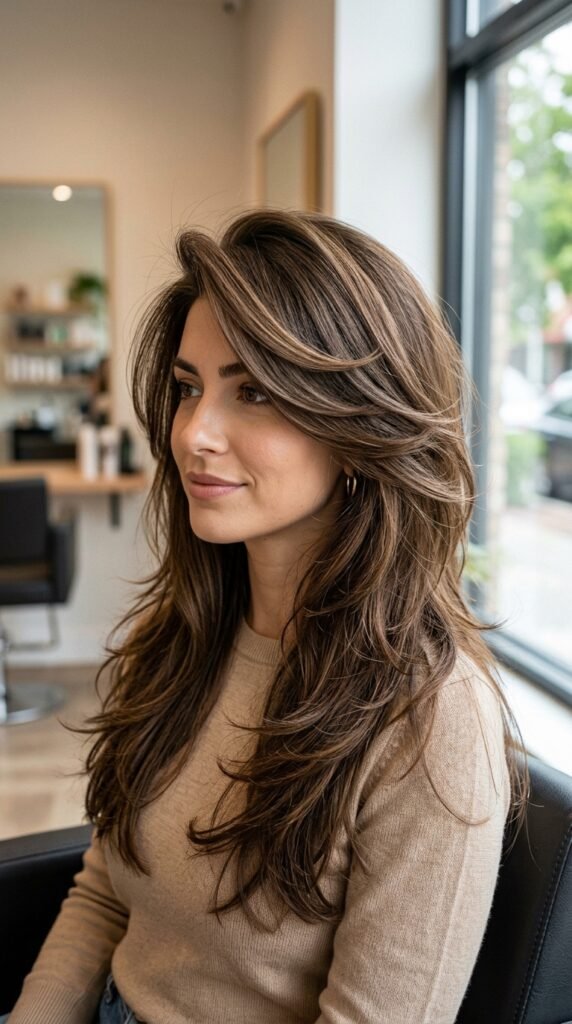
| Center Part | Side Part |
|---|---|
| Creates a balanced look on both sides. | Creates more sweep and lift on one side. |
| Shows symmetrical face framing clearly. | Can soften a flatter front section. |
| Works well with even curtain pieces. | Works well with longer sweeping pieces. |
15. Butterfly Haircut With Soft Layers Starting Below the Chin
Not every butterfly cut needs dramatic layers around the cheeks.
Starting the shortest pieces below the chin creates a quieter version that still adds movement through the front and sides. It works especially well if you want to keep your hair easy to tie back or you do not like shorter pieces falling around your face.
The difference is subtle when the hair is straight, but more visible once the ends are bent or waved.
Longer spacing between layers also makes the haircut easier to grow out.
This is a useful choice for someone trying a layered haircut for the first time and wanting a softer change rather than a major shift in shape.

16. Butterfly Cut With Rounded Layers for a Softer Silhouette
Some butterfly cuts look very separated, with each layer clearly visible. A rounded version feels softer because the sections curve into one another instead of creating sharp steps.
The shape usually starts with face framing pieces, then gradually widens through the sides before falling into the longest length.
This works especially well if you want movement without a heavily feathered finish.
Look for:
- A smooth curve around the face
- Longer transitions between layers
- Full ends rather than wispy tips
The haircut should still look connected when it is not styled. A blowout can make the rounded shape more obvious, but the cut should not depend on one to hold together.

Details that create a rounded finish
17. Butterfly Haircut With Feathered Ends for Airy Movement
Feathered ends can make long layers look lighter without removing the overall butterfly shape.
Instead of leaving every section blunt, the ends are softened so they separate more easily when the hair moves. That gives the haircut an airy finish around the shoulders and face.
The key is keeping the feathering mostly at the edges.
Too much thinning through the middle can take away the fullness that makes this cut work.
A small amount of softness is often enough, especially if your hair naturally holds a bend. This finish also pairs well with a round brush because the lighter ends can turn outward without needing a strong curl.

Soften the last part of the visible layers.
Keep enough density through the middle and bottom.
Thinning every layer from roots to ends.
Removing so much weight that the bottom turns stringy.
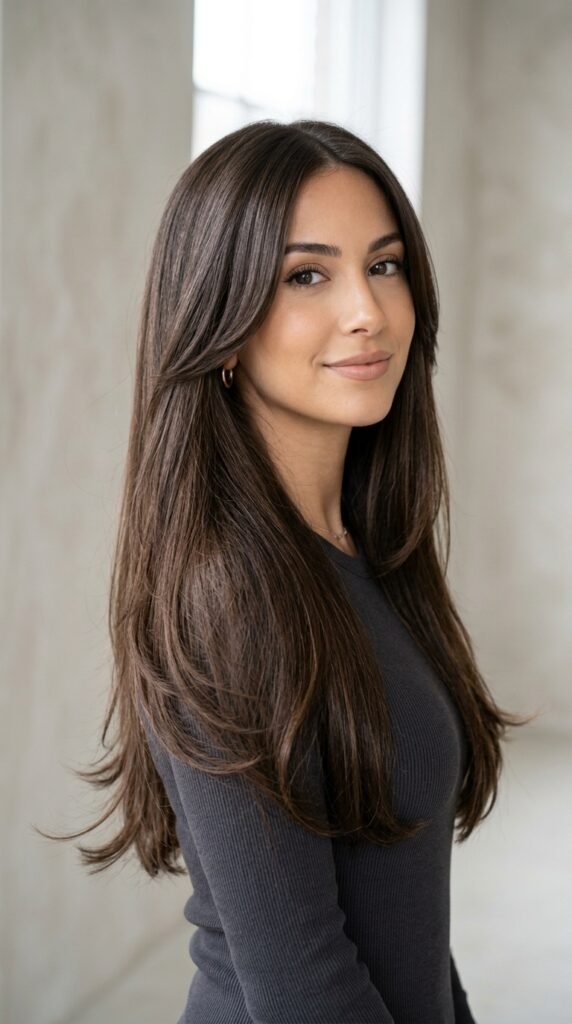
18. Butterfly Layers Styled Smooth and Straight
Butterfly layers do not have to be curled to look good.
A smooth, straight finish gives the cut a cleaner look and makes the actual layer placement easier to see. Instead of creating big bends, keep the roots sleek and give the ends only a slight turn so the different lengths remain visible.
This styling also exposes problems that a blowout can hide.
If the layers are well blended, they should fall softly into each other even when the hair is straight.
Avoid pressing every end completely flat. A tiny bend around the face keeps the haircut from looking heavy while still maintaining the straight finish.
💡 Quick Tip
Keep the mid lengths smooth, then turn the front pieces slightly away from the face. That small bend is enough to separate the layers without turning the style into a full blowout.
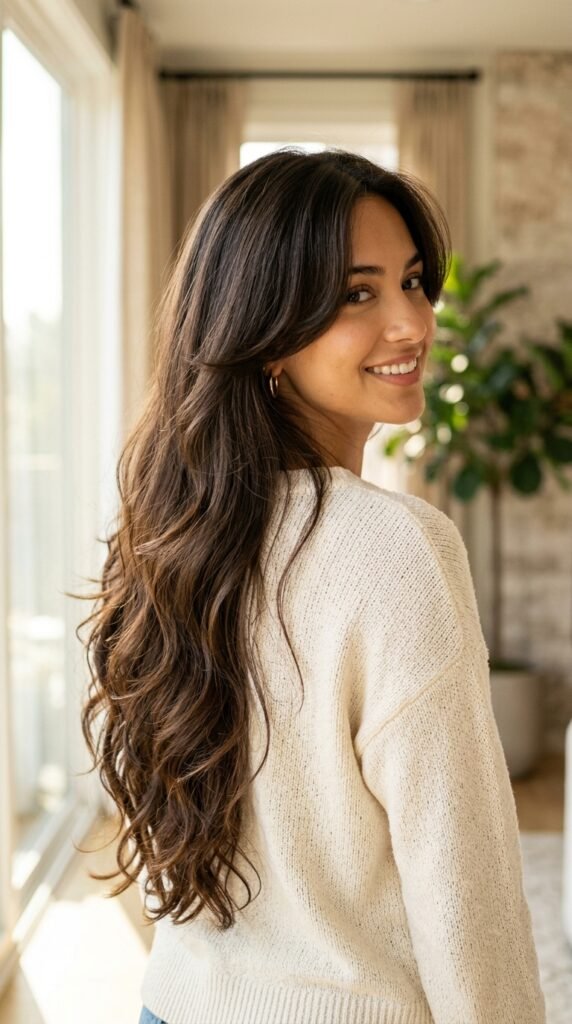
19. Extra Long Butterfly Haircut With Cascading Layers
Very long hair gives you more room to spread the layers out.
Instead of placing several cuts close together, the shortest pieces can begin around the face and gradually fall through the chest, waist, and longest sections. That spacing creates a cascading effect without making the haircut feel busy.
It is particularly useful when extra long hair starts to look like one solid block.
Keep the lower layers long enough to protect the overall length. The goal is to create visible movement through the upper and middle sections while leaving the bottom substantial.
This shape becomes especially noticeable when the hair moves or when the ends are styled with a gentle outward bend.
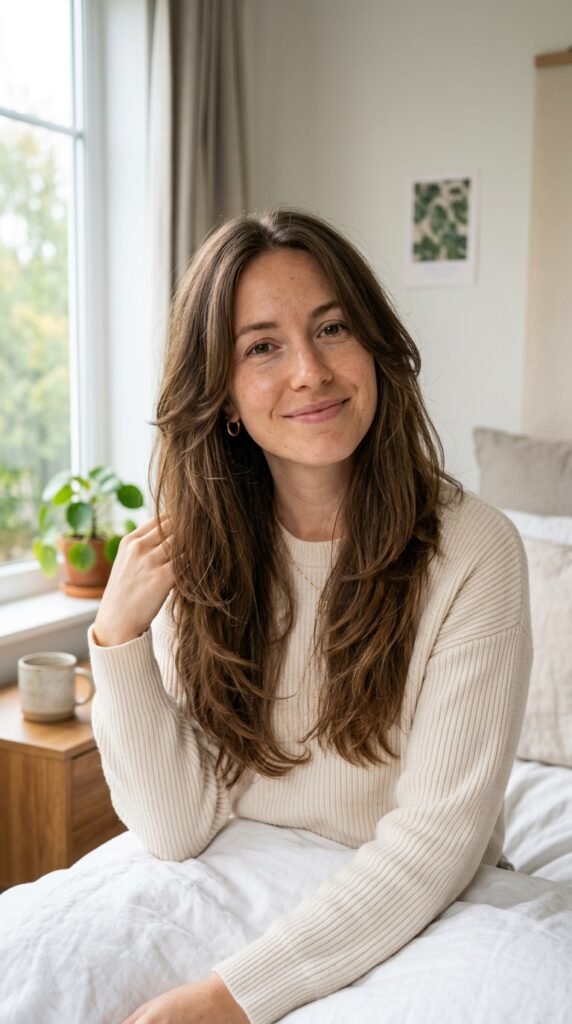
20. Low Maintenance Butterfly Haircut With Longer Layer Spacing
A butterfly cut can be lower maintenance when the layers are kept longer and farther apart.
Instead of relying on short crown pieces or dramatic face framing, this version uses a few well placed layers to create shape. The shortest section might begin around the chin, then blend into longer pieces through the shoulders and main length.
That makes the haircut easier to air dry, tie back, and grow out.
It also means the shape changes more gradually between trims.
Choose this version if you like the butterfly look but do not want to style your hair every morning. You still get movement, but the cut works with a simpler routine.
Keep it lower maintenance
Find the Butterfly Haircut That Fits Your Hair
The best butterfly haircut is not always the one with the most dramatic layers. It is the version that works with your length, texture, density, and how much styling you actually want to do.
You can keep the layers long and subtle, add stronger face framing, bring in curtain bangs, or create more lift through the crown. Even a few carefully placed layers can make long hair feel lighter and give it more movement without losing the fullness at the ends.
Use these butterfly haircut ideas as a reference before your next salon visit, and save the styles that feel closest to your own hair. Having a few clear examples makes it much easier to explain the shape and layer placement you want.