18 Narrow Living Room Ideas With Better Flow and Seating
Introduction
A narrow living room can feel awkward even when the furniture technically fits. The real problem is usually flow. One bulky sofa, an oversized coffee table, or a poorly placed media unit can make the room feel more like a passageway than a place to relax.
These 18 narrow living room ideas with better flow and seating focus on layouts that use the room’s long shape instead of fighting it. You will find ways to keep a clear walkway, fit in extra seating, reduce visual clutter, and make the brightest end of the room work harder.
Some ideas involve larger choices, such as a compact sectional, built-in window bench, or floating media wall. Others are easy updates, including a round coffee table, wall sconces, a larger rug, or slim nesting tables.
The goal is not to fill every empty spot. It is to create a comfortable seating zone while leaving enough open space for people to move through the room without squeezing around furniture.
1. Run the Sofa Along One Wall and Keep the Opposite Side Light
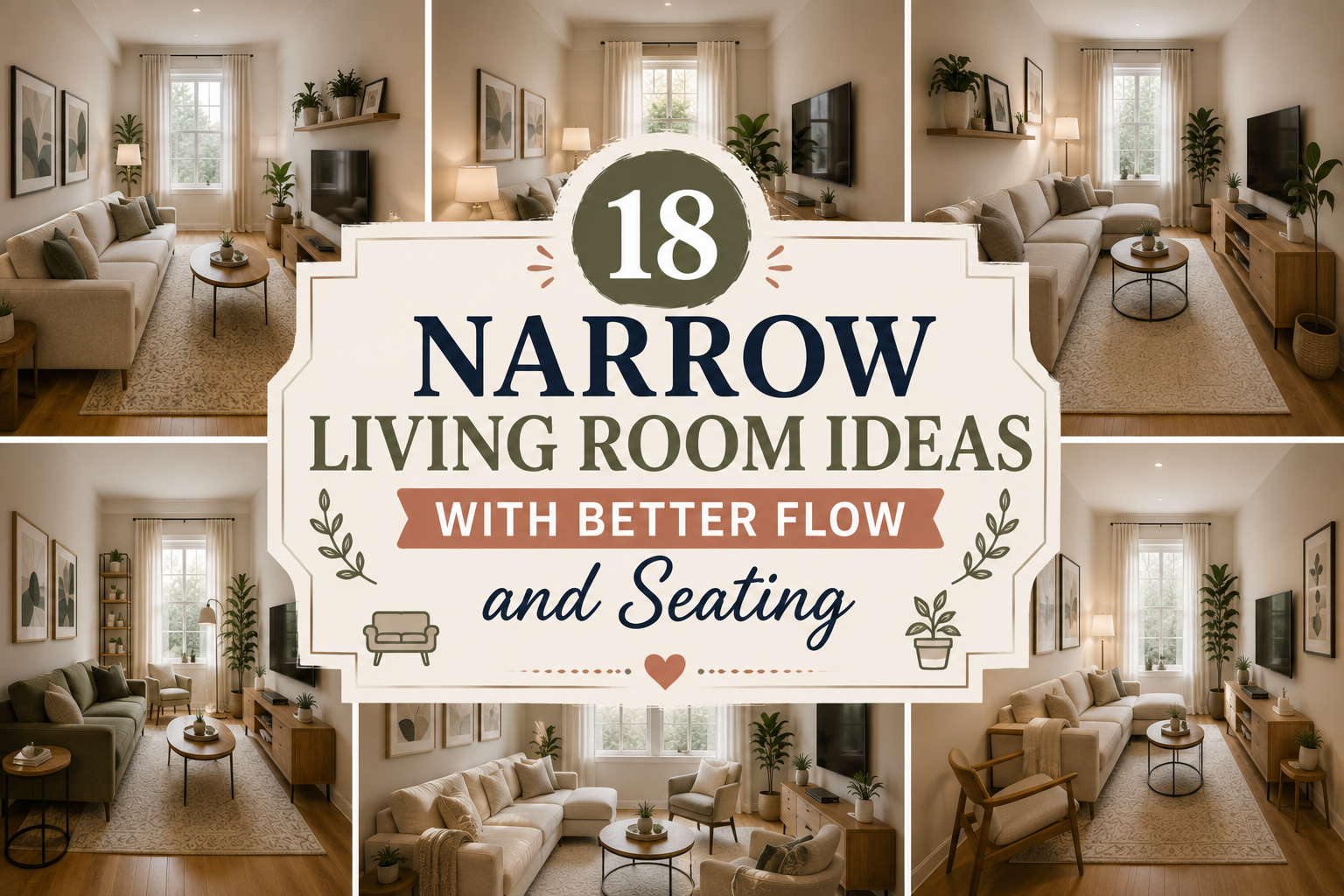
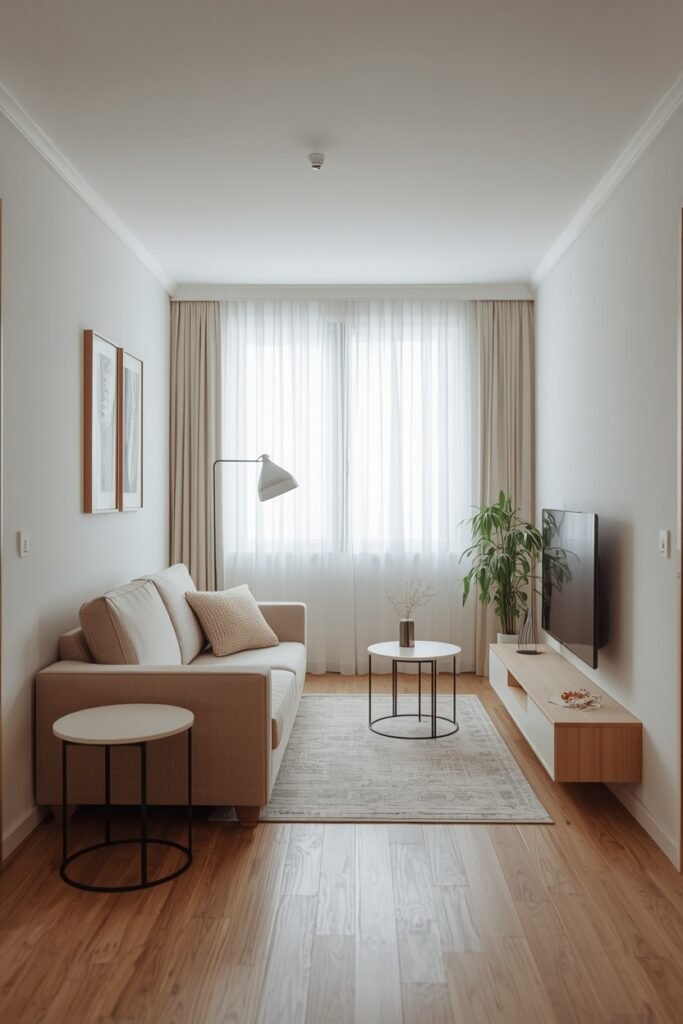
A narrow room works better when one side does the heavy lifting and the other side stays visually light. In your reference images, the sofa hugs one wall while the media unit stays slim across from it. That keeps the centre path clear.
Use this idea with:
- a full sofa or compact sectional on one side
- a low media console opposite
- one rug that stops short of the walkway
The result feels calmer because the room has a clear direction. You are not fighting the long shape. You are using it.
2. Tuck a Chaise at the Window End
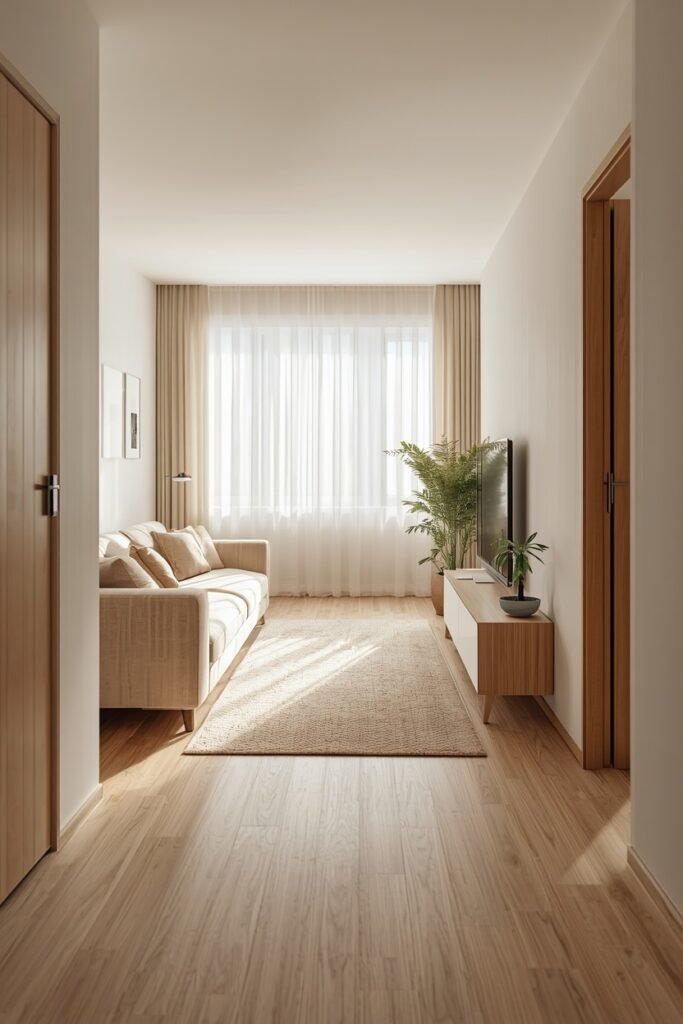
The brightest end of a narrow room is a smart place for extra seating. One of your references uses the window wall as the natural stop point, and that makes the room feel finished rather than cut off.
A chaise or daybed works well here because it adds seating without needing a second full chair. Keep it simple:
- place it near the window
- use one soft throw
- let the curtains stay full height
That back corner becomes the seat people drift toward. It also helps the long room feel more generous.
💡 Quick Tip
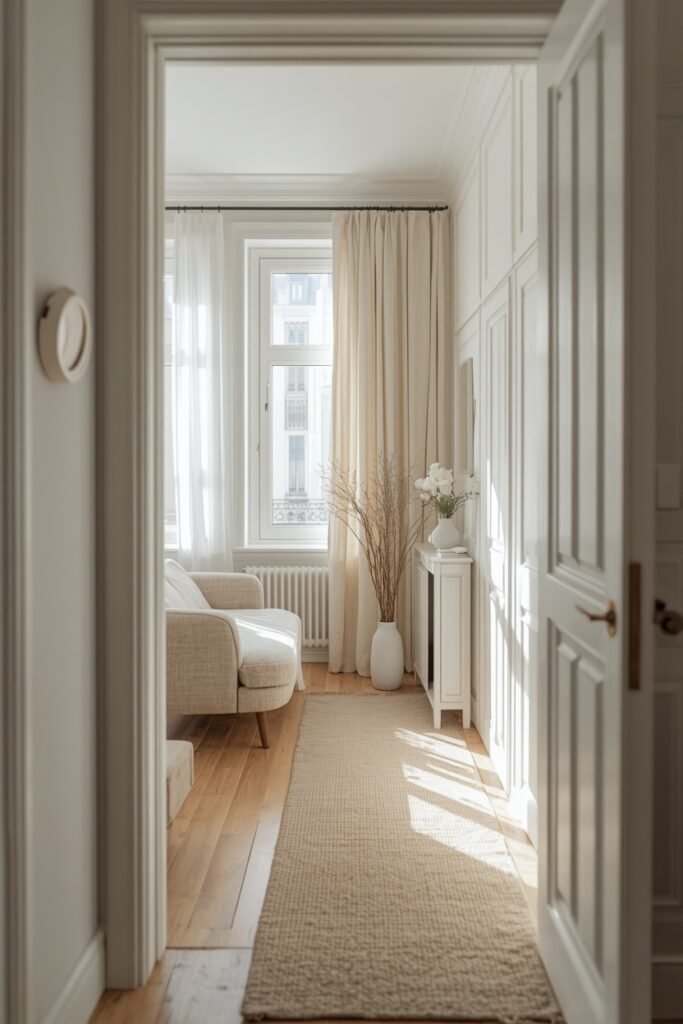
Choose a chaise with exposed legs or a slim base so the light can still move through the end of the room.
3. Build a Floating Media Wall with Hidden Storage
Floor space matters more in a narrow room, so anything that lifts storage off the ground helps. The second and third references both hint at this idea through clean, built-in-looking walls.
A floating media wall can hold the television while keeping the room tidy.
It works best when:
- the unit stays shallow
- lower storage hides clutter
- the finish matches the wall or nearby wood tones
The big win is visual quiet. Fewer bulky pieces on the floor means the room feels longer and more open, even when storage is doing a lot of work.
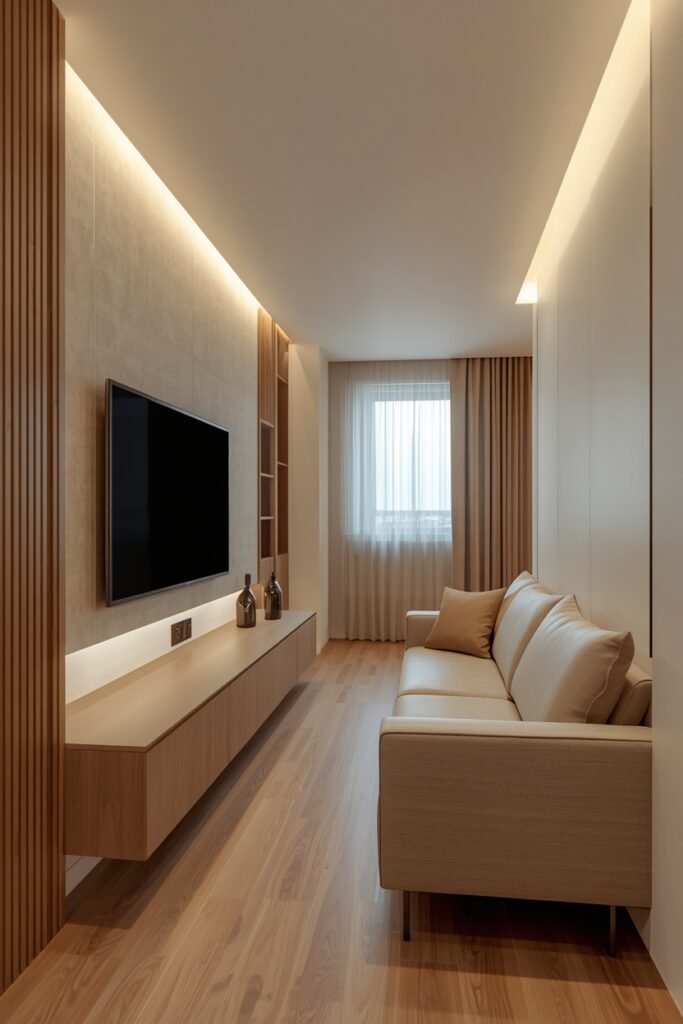
A chunky TV stand, visible cables, and extra baskets make the narrow wall feel crowded.
A floating media wall keeps storage useful while leaving more of the floor visible and clear.
4. Use a Round Coffee Table to Soften a Tight Layout
A long room already has plenty of straight lines. A round coffee table breaks that up and is easier to move around when space is tight. The second reference shows how well a small round table can sit in a narrow seating zone.
Try this sequence:
- choose a table with a narrow base
- keep it centred on the rug
- leave enough room to pass on one side
It is a small change, but it makes the seating area feel less boxed in. Corners stop catching knees too, which matters in a room where every inch is working hard.
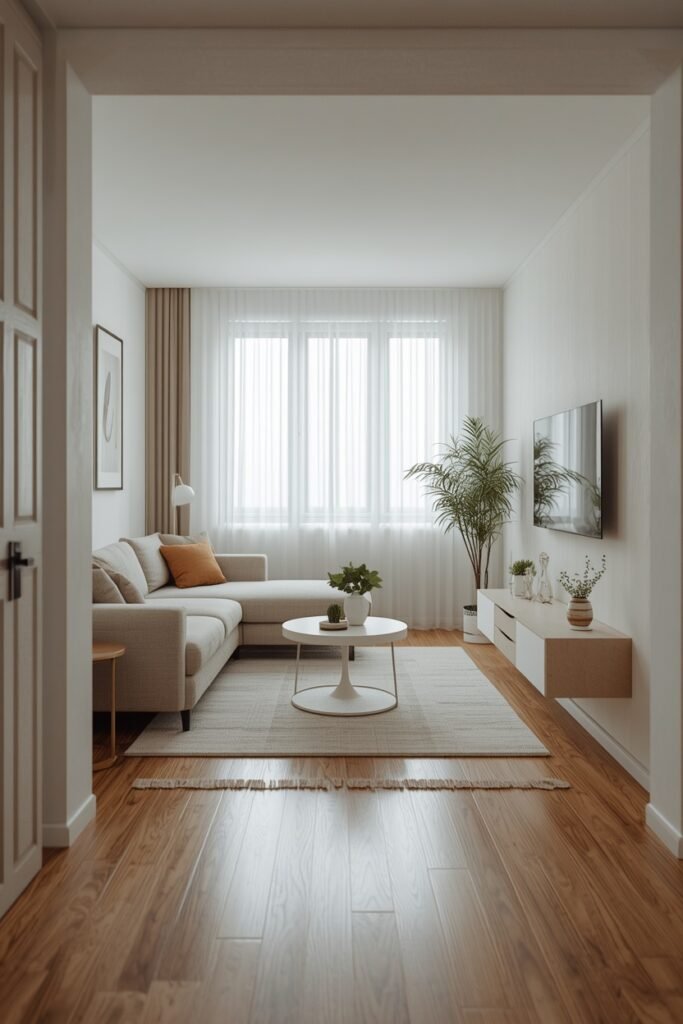
Pick a round or oval table to soften the room’s long shape.
Choose a slim pedestal or light leg base.
Keep one clear route around it for easier flow.
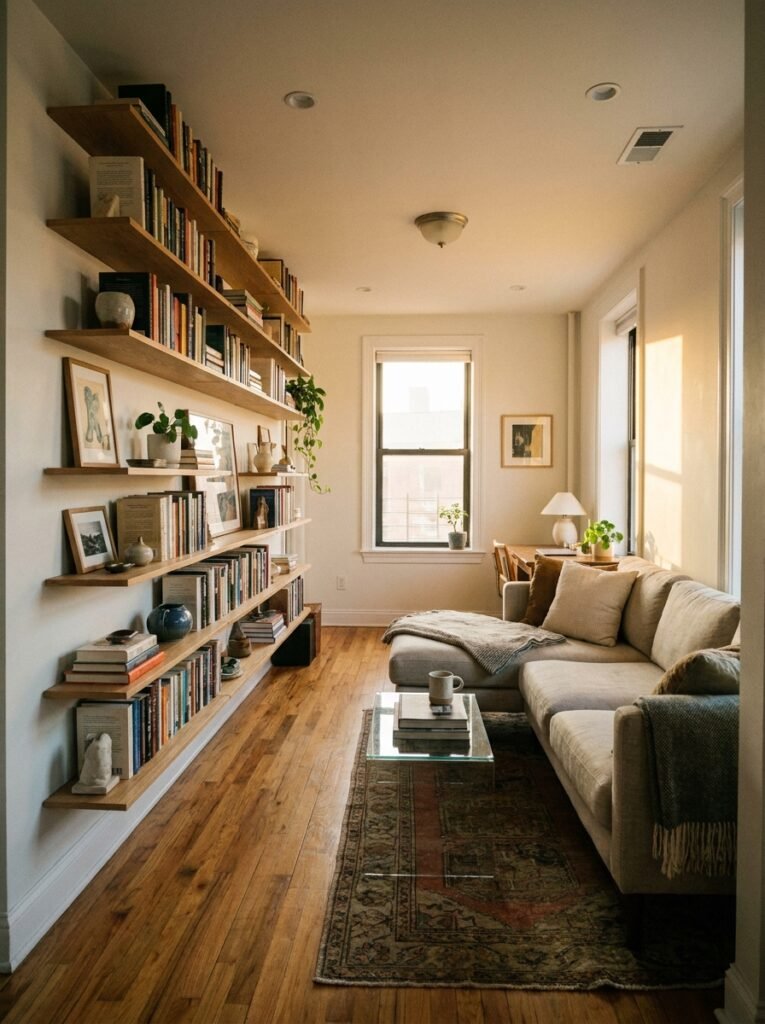
5. Line One Wall with Slim Open Shelves
The third image shows how shelving can turn a narrow room into something more layered and useful. Open shelves work best when they stay shallow and run along one side rather than jutting into the room.
This idea suits:
- book lovers
- renters with limited storage
- people who want the room to feel more personal
Keep the display edited. A few books, frames, and small objects go further than a shelf packed edge to edge. Slim shelves make the room feel taller and more finished without stealing precious seating width.
6. Layer Wall Sconces Instead of Floor Lamps
Floor lamps can eat up the exact corners a narrow room needs for walking or side tables. The second image solves this beautifully with wall lighting that adds mood without taking floor space.
Recreate this look:
- use two or more sconces
- keep them at seating height
- add one overhead source for general light
- let the lamp glow warm, not harsh
Wall lighting helps the room feel deeper at night. It also keeps the edges clear, which is useful when a sofa already takes up most of one side.
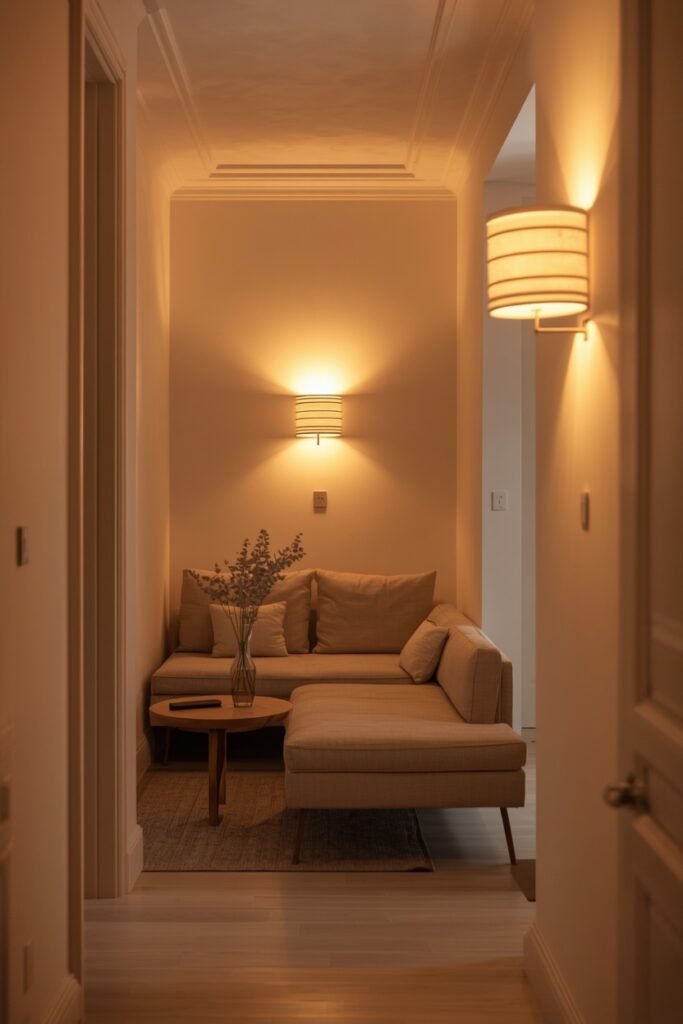
Recreate this look
7. Add Warm Wood Paneling on One Side
The third reference uses warm wood to give the narrow room identity. A single paneled wall can make the space feel richer without closing it in. It also helps define the media side or shelving side clearly.
Two things keep this from feeling heavy:
- balance the wood with lighter upholstery
- keep the opposite wall pale and simple
The contrast gives the eye something to rest on. In a long room, that matters. One strong wall treatment can stop the space from feeling like a blank hallway with a sofa in it.
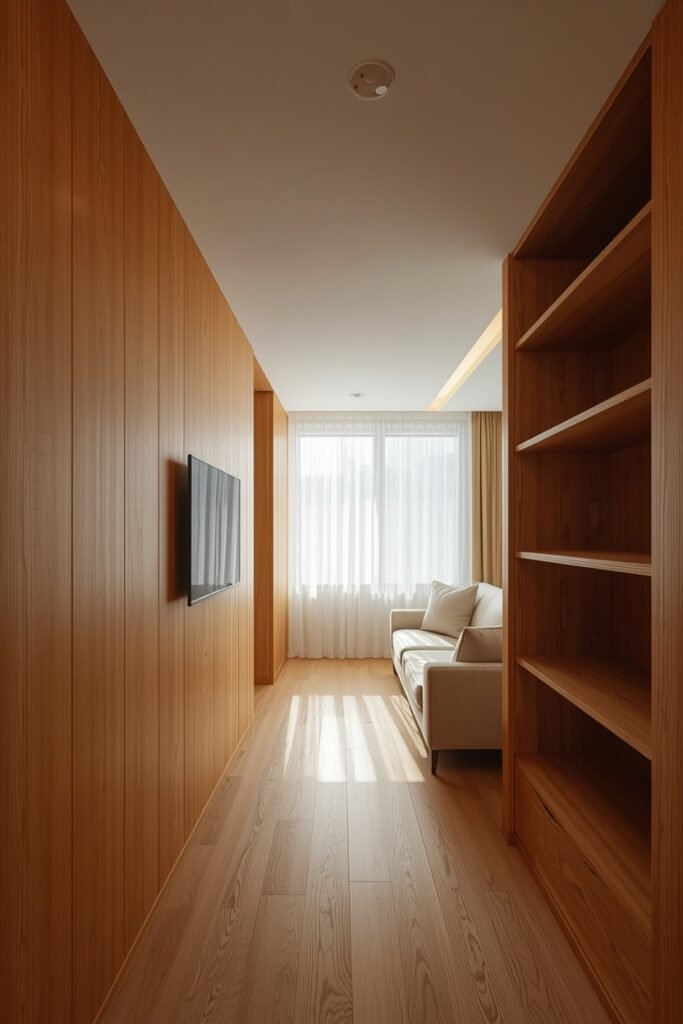
Use wood paneling on one side only to create focus.
Pair it with pale fabrics and light curtains.
Do not wrap every wall in dark wood in a tight room.
Avoid bulky matching furniture that adds even more weight.
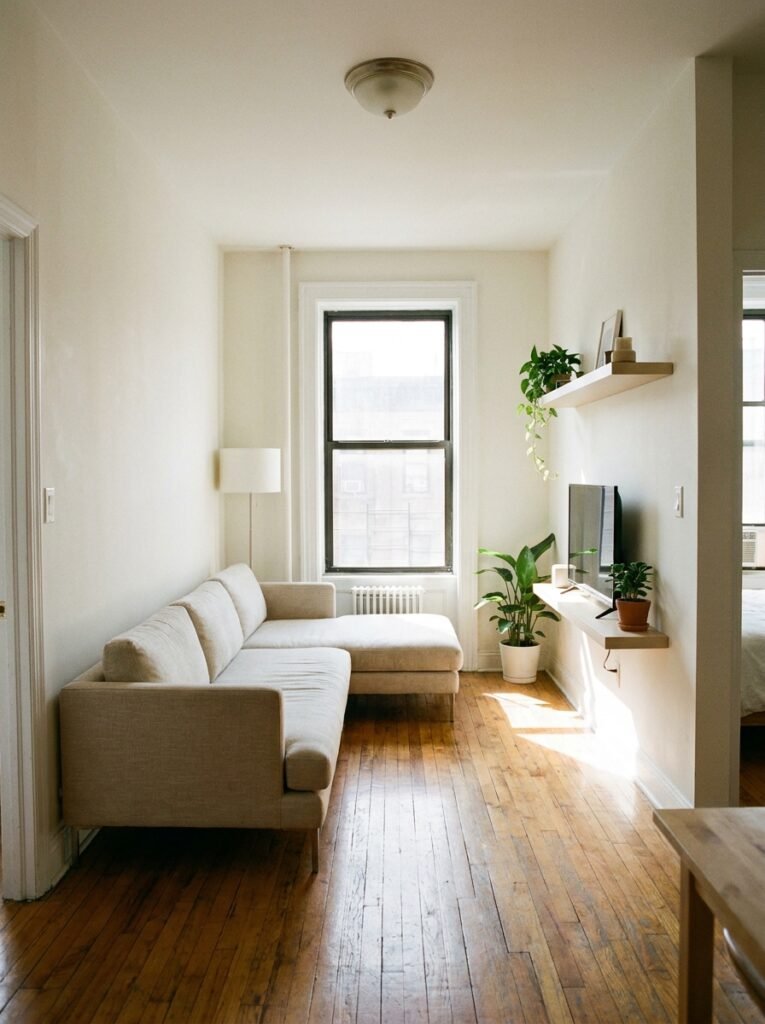
8. Choose a Low Sofa to Keep the Room Airy
Tall, bulky seating can make a narrow room feel crowded fast. A low-profile sofa keeps sightlines open, especially when the room is already long and compact.
Compare the effect:
- a bulky backrest makes the window feel smaller
- a lower sofa lets more light and wall show through
That difference is enough to make the room breathe better. Pair the sofa with slim arms and raised legs if possible. This is one of those quiet moves that does a lot of work. The room will not scream “small” the moment you walk in.
| Low Sofa | Bulky Sofa |
|---|---|
| keeps sightlines lighter | can block light and view |
| works well in narrow plans | feels heavy in tight rooms |
| looks calmer with slim arms | needs more space around it |
9. Repeat Soft Neutrals from Floor to Curtains
All three references use soft neutrals to keep the room from feeling broken into too many pieces. That is smart in a narrow living room because fewer strong contrasts make the space feel smoother and longer.
A tonal palette works well when you repeat:
- similar beige and cream shades
- pale wood
- warm white walls
- one or two darker accents only
The room still needs texture, otherwise it can go flat. Add that through throws, rugs, woven stools, or matte ceramics. The colour stays calm, but the room does not feel dull.
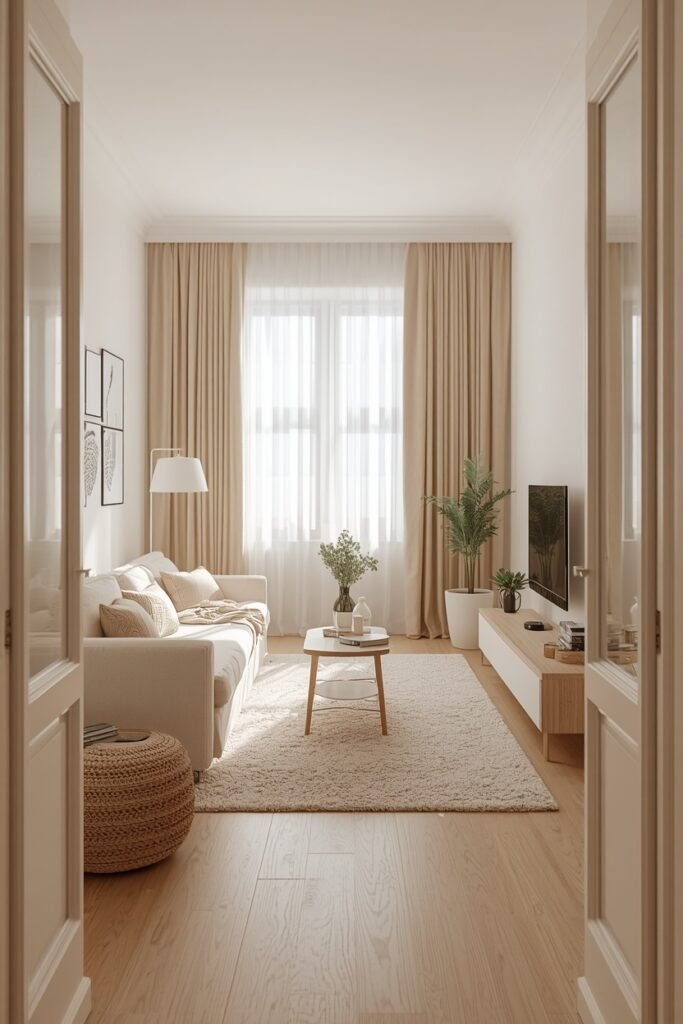
Repeating soft tones helps the eye move through the room without stopping at lots of hard colour breaks, which makes a narrow layout feel calmer and longer.
10. Place Tall Plants at the Bright End of the Room
Plants can help a narrow room feel alive, but their placement matters. The first image uses greenery near the window, and that is the best place for taller plants because they frame the light instead of blocking the walkway.
Use them to:
- soften corners
- make the end wall feel fuller
- add height without more furniture
Keep the pots simple and avoid a cluster of tiny planters all over the floor. One or two taller plants do more for the room’s shape. They give the end of the room a natural focal point.
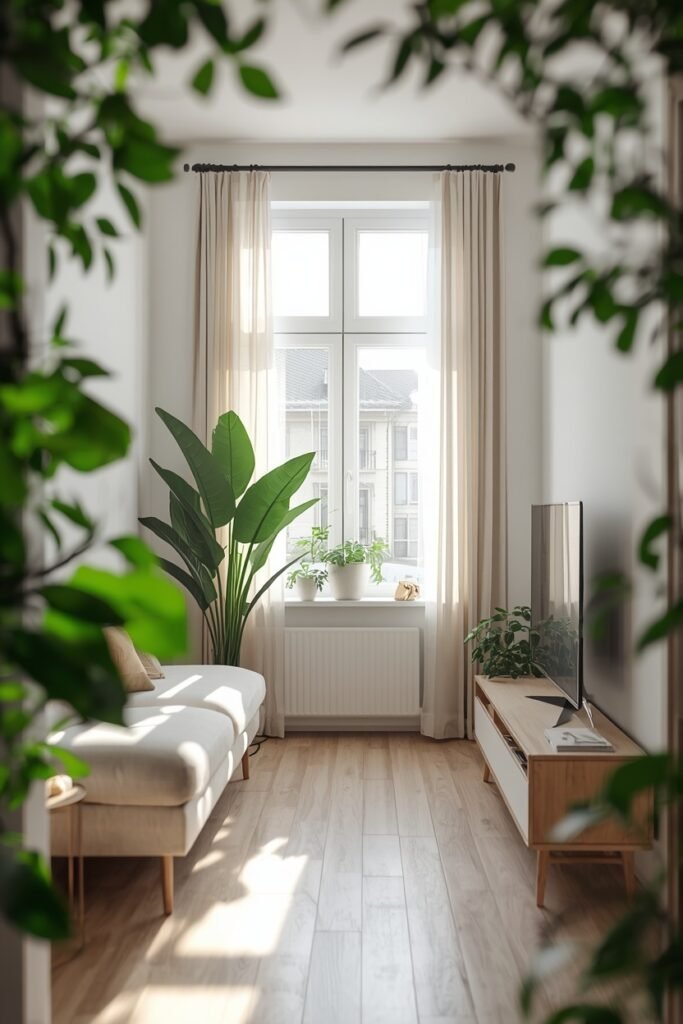
- ▸Place the tallest plant near the brightest end of the room
- ▸Use simple pots that match the room’s calm palette
- ▸Skip too many small floor plants along the walkway
11. Swap Bulky Side Tables for Nesting or C-Shaped Tables
In a tight room, the table beside the sofa needs to earn its place. Nesting tables or a slim C-shaped table do that better than a chunky square table that blocks the path.
The benefit is practical:
- they tuck closer to the sofa
- they move easily when guests come over
- they keep more floor visible
This idea is especially useful if the seating runs along one long wall. A compact table can still hold a drink or book without making the space feel clogged. It is one of the easiest fixes in the whole room.
12. Stretch One Large Rug Through the Seating Zone
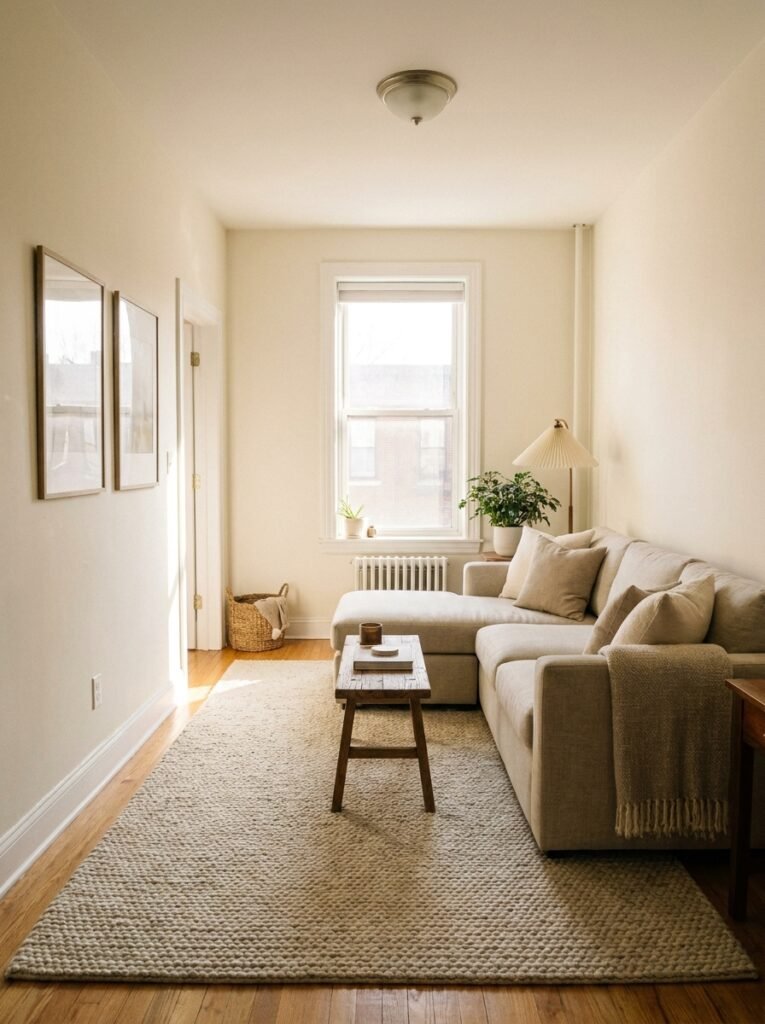
A tiny rug can make a narrow room feel even more chopped up. A larger rug helps the seating read as one complete zone, which improves both flow and comfort.
Good to know:
- the rug should sit under at least the front legs of the sofa
- the coffee table should fully sit on it
- it should stop before the main walkway gets cramped
This makes the room feel intentional. In long rooms, a rug acts almost like a map. It tells you where the seating area begins and ends, while the walkway stays visually separate.
📌 Good To Know
If the rug is too small, every piece looks like it is floating on its own. A bigger rug makes the long room feel more settled.
13. Create a Window-End Lounge Nook
A narrow room does not need to use every inch for the main sofa setup. The end near the window can become a second small zone, especially in a room that feels too linear.
That nook can include:
- one lounge chair or chaise
- a slim side table
- a reading lamp or nearby sconce
- one throw or cushion
Breaking the room into two useful spots keeps it from feeling like one long strip. It also makes the seating feel more generous, even if the square footage has not changed.
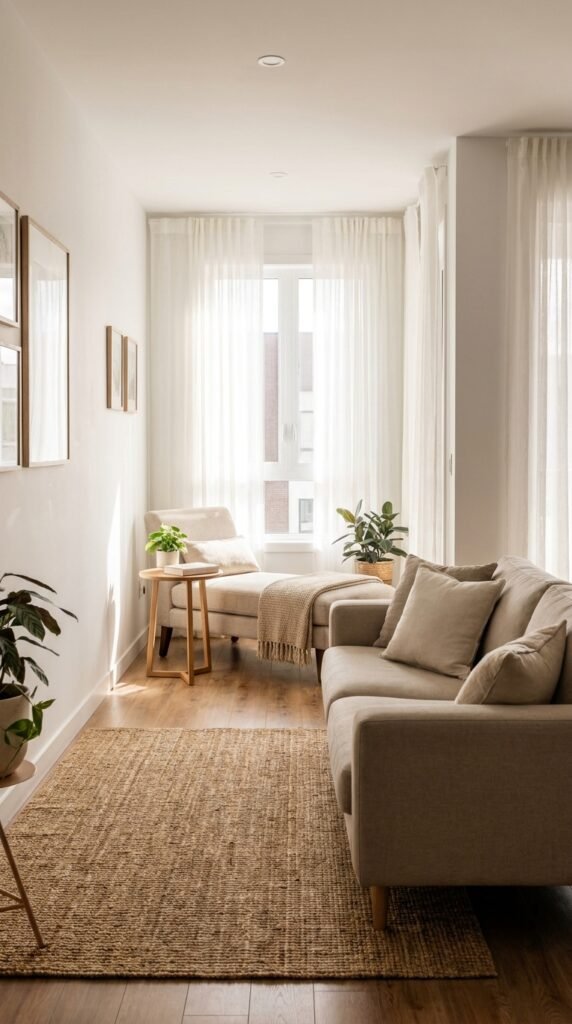
The far end of the room is empty, so the whole space reads like one long tunnel.
A small lounge nook at the window gives the room a softer ending and extra seating.
14. Use a Glass or Acrylic Coffee Table
Some furniture works in a room simply because it does not visually interrupt it. A glass or acrylic coffee table is good for that. It still functions, but it lets more of the rug and floor show through.
This is worth trying if:
- the room already feels visually full
- the sofa is bulky
- you want the centre of the room to feel lighter
It is not the warmest look on its own, so pair it with soft fabrics and wood nearby. The contrast keeps the space from feeling cold while still easing the visual weight.
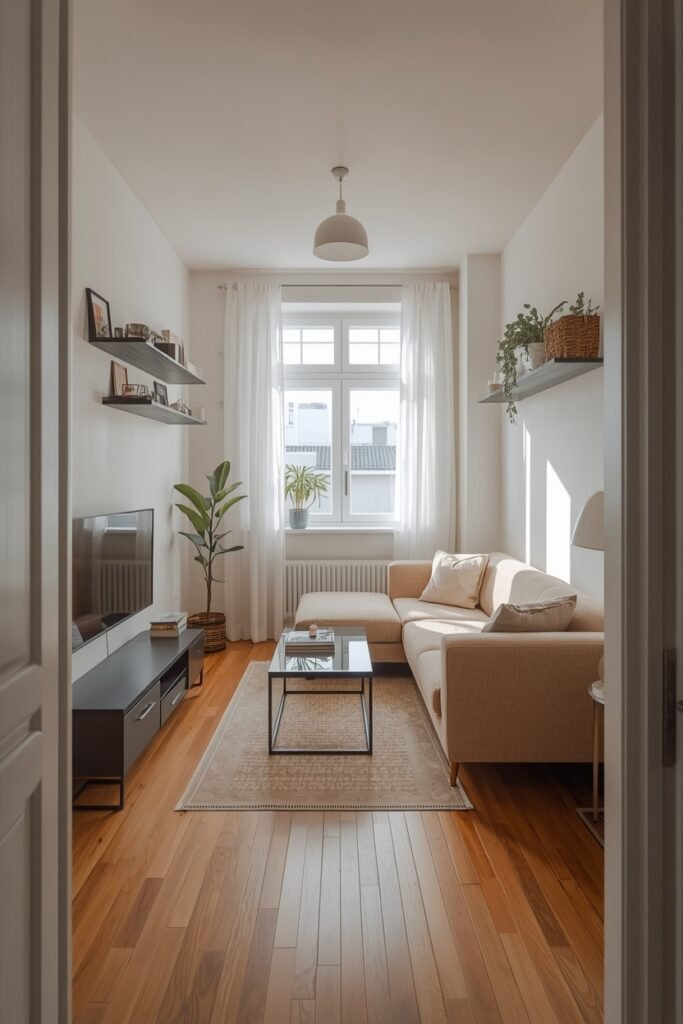
Use a glass or acrylic table to keep the centre visually open.
Pair it with a textured rug so the room still feels warm.
Keep nearby decor simple so the table stays subtle.
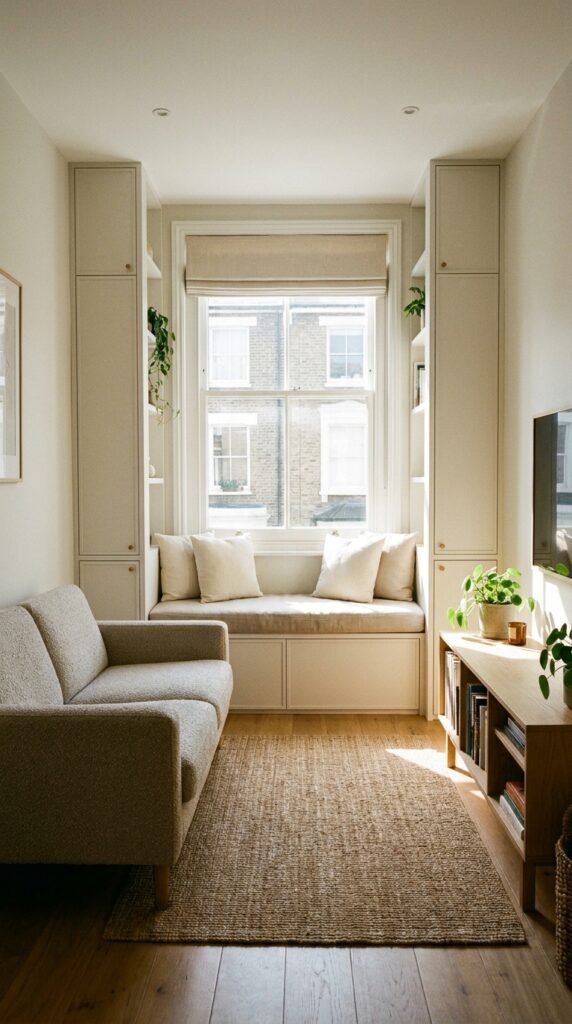
15. Add a Built-In Bench Under the Window
A built-in bench can turn the end wall into useful seating without needing a bulky armchair. In a narrow room, that matters because it gives you extra function without widening the furniture footprint.
The bench can offer:
- a perch for guests
- a reading spot
- hidden storage below
- a softer finish to the end of the room
Keep the cushion simple and use two or three loose pillows at most. Too many layers can make it look overworked. A clean bench looks more built-in and helps the room feel thoughtfully planned.
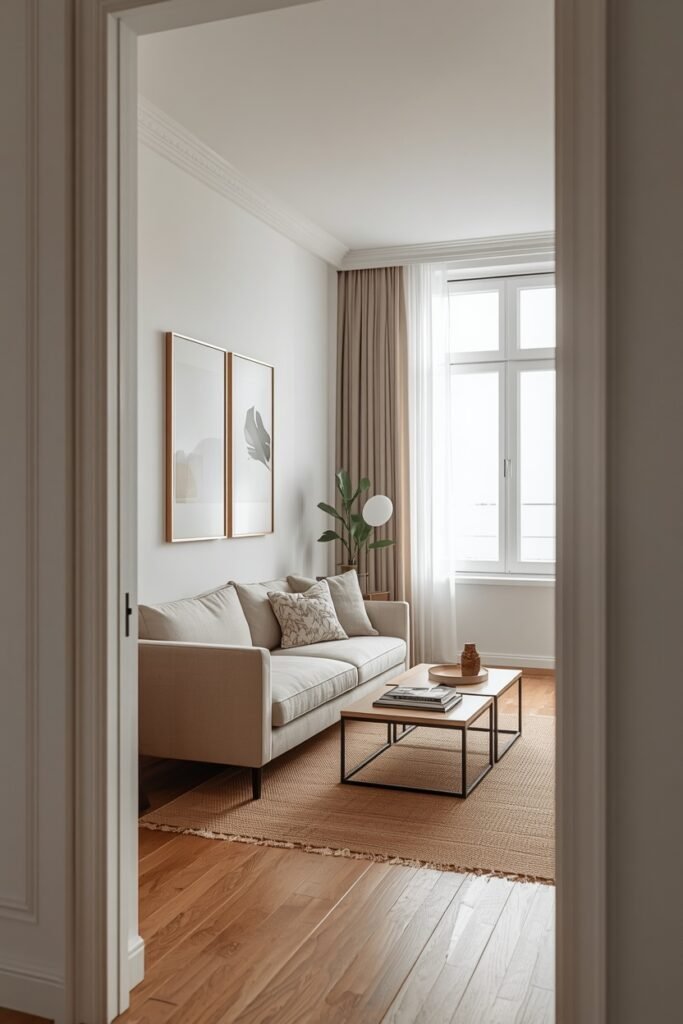
16. Balance the Room with Art in a Vertical Pair
Long narrow walls can easily look bare, but one oversized horizontal piece is not always the answer. A vertical pair of framed artworks can help lift the eye while keeping the wall from feeling too spread out.
This works well on the sofa wall or near the brighter end of the room. The main idea is balance:
- keep the frames similar
- leave space between them
- choose calm art that supports the room’s palette
The vertical arrangement adds height, which helps counter the room’s tunnel feel. It is a quiet trick, but it changes the proportions in a useful way.
| Vertical Pair | One Wide Piece |
|---|---|
| helps add height visually | emphasises width more than height |
| works well on slim wall sections | needs more horizontal wall space |
| keeps the look lighter and calmer | can feel heavy in a tight room |
17. Mix Closed Storage Below and Open Display Above
A room this size needs storage, but too much visible storage can feel busy fast. A better mix is closed units below with lighter open display above. The second and third references both lean this way.
Do this:
- keep lower cabinets plain
- use open shelves for only a few items
- repeat similar tones across both
That combination grounds the room while stopping it from looking heavy. Closed storage hides the daily mess, and the shelves keep personality in the room. It is a good middle ground for spaces that need to work hard.
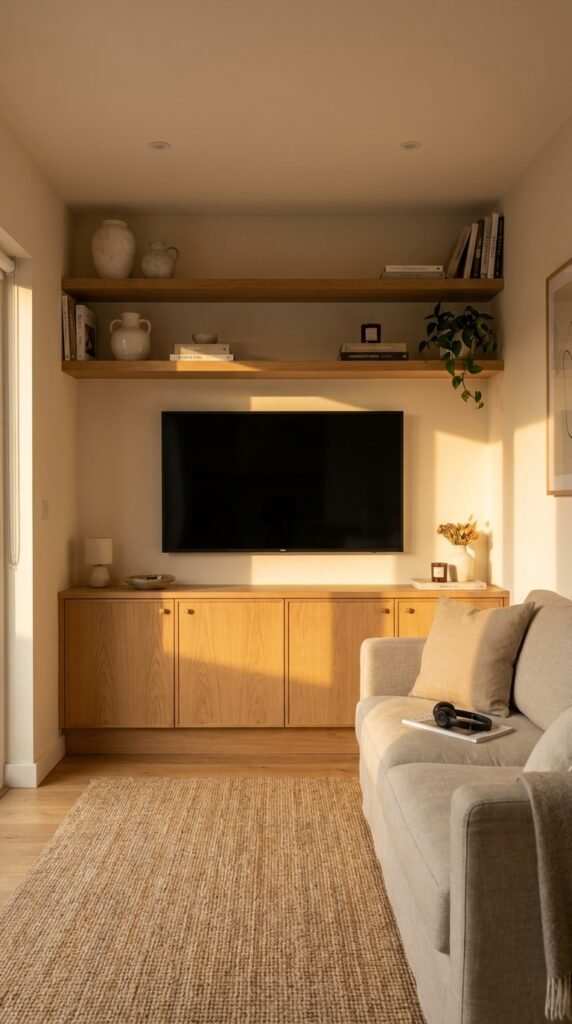
Use lower cabinets for practical storage and visual calm.
Keep upper shelves light and edited.
Do not overfill every open shelf with books and decor.
Avoid mismatched storage that breaks the room up visually.
18. Use Layered Warm Lighting for Better Depth
A narrow room can feel flat at night if all the light comes from one ceiling fitting. The second reference shows why layered lighting matters. Warm pools of light make the room feel deeper and more comfortable.
Try a simple lighting mix:
- one overhead source
- two wall sconces or a lamp pair
- one small accent light near shelving or the media wall
The trick is not brightness. It is placement. Light at different heights helps the room feel more dimensional, which softens the long narrow shape. Evening is where a good layout really proves itself.
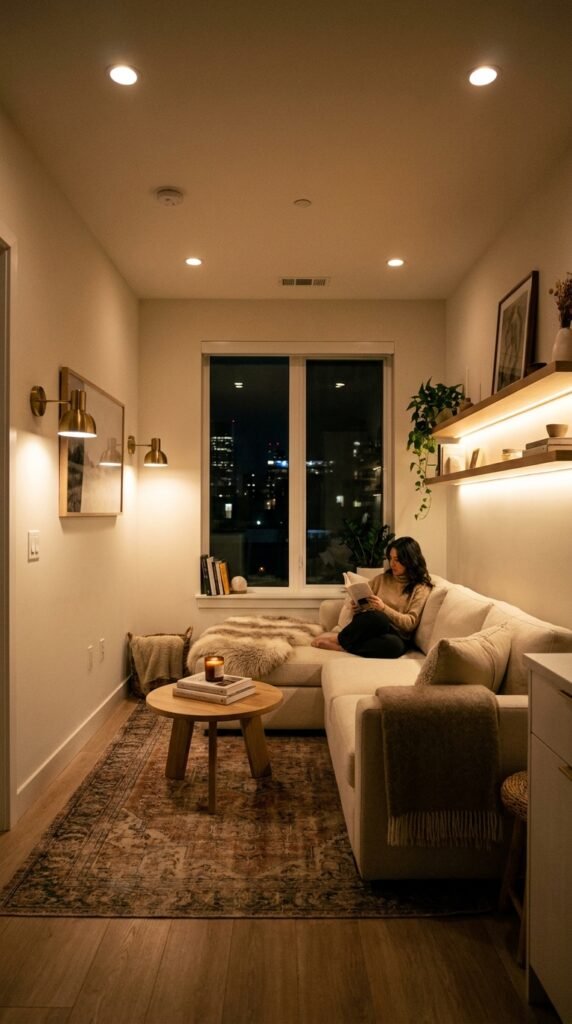
Lighting at more than one height gives a narrow room depth, helps define the seating zone, and makes the space feel warmer after dark.
Conclusion
A narrow living room feels more comfortable when every piece supports either seating, storage, or movement. Start by protecting one clear walkway, then build the furniture layout around it. Low sofas, slim tables, wall-mounted storage, large rugs, and layered lighting can make the room feel calmer without leaving it bare.
The best narrow living room ideas with better flow and seating often come down to scale and placement rather than adding more furniture. Choose the changes that solve your room’s biggest problem first, then layer in colour, texture, and lighting. Save your favourite ideas to Pinterest for your next living room refresh.