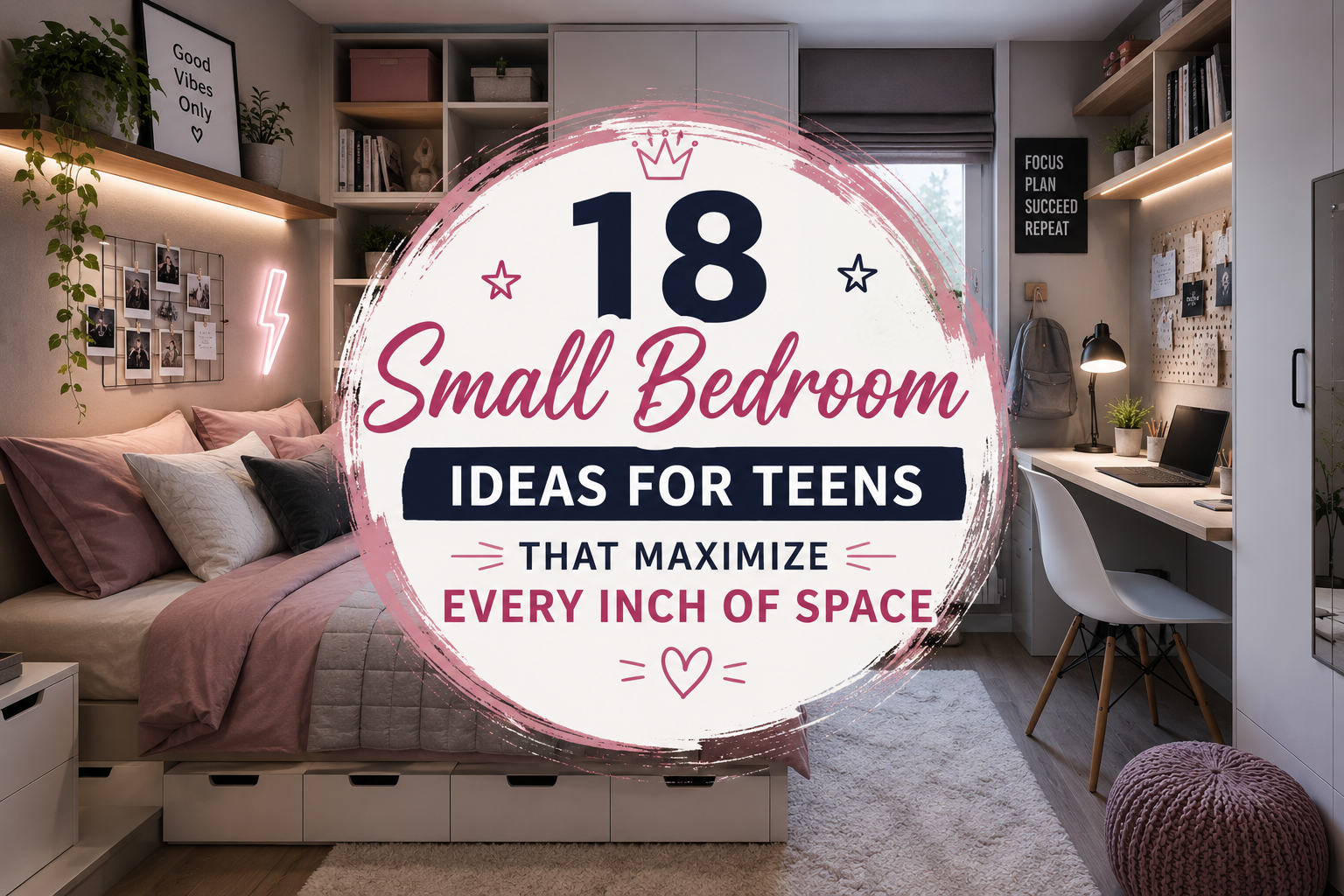
18 Small Bedroom Ideas for Teens That Maximize Every Inch of Space
A teen bedroom can get messy fast because it has to do too many jobs at once.
It is a sleep space, study corner, closet, makeup spot, hobby zone, hangout area, and sometimes the only private space in the house. The problem is that most small rooms are not built for all of that. One bulky bed, one dresser, a school bag on the floor, and suddenly the whole room feels packed.
That is why smart layout matters more than adding more decor. These 18 Small Bedroom Ideas for Teens That Maximize Every Inch of Space focus on storage that actually gets used, furniture that earns its spot, and simple styling choices that make the room feel calmer.
The goal is not to make the bedroom look staged or too grown up. It should still feel personal, fun, and easy to live in. Start with the idea that fixes the biggest daily problem, then add the details that make the space feel like theirs.
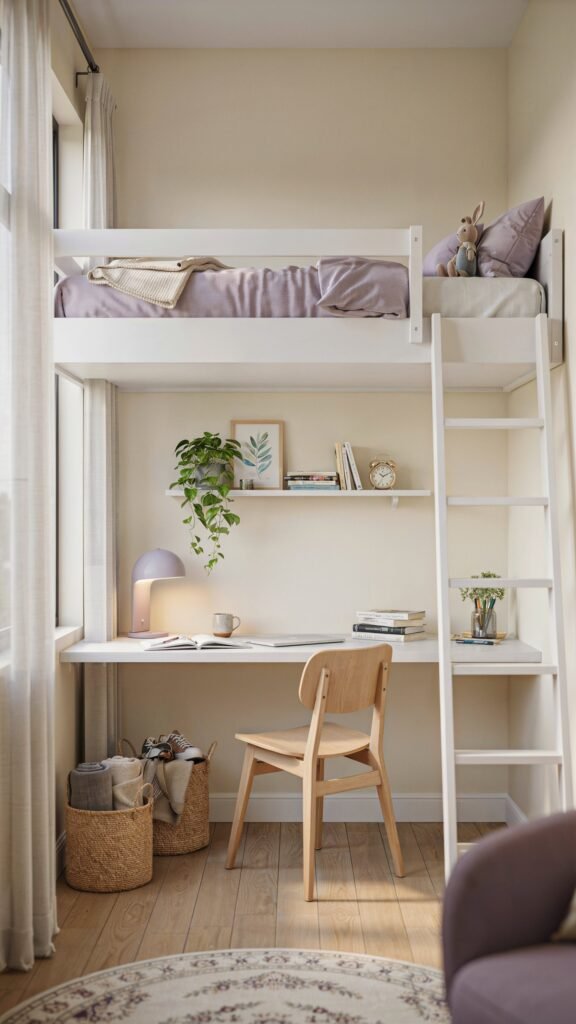
1. Choose a Loft Bed to Open Space Underneath
A loft bed can give a small teen bedroom a second zone.
The space under the bed can become a study nook, reading corner, clothing rail, or small lounge spot. This works best when the room has enough ceiling height and the teen does not mind climbing up each night.
Use the lower space with a clear purpose:
- Desk and chair for homework
- Bean bag and small shelf for reading
- Clothing rack for daily outfits
- Storage cubes for hobbies or school items
Keep the area under the loft light and tidy. If it gets packed with random boxes, the room starts feeling heavy again.
2. Add a Slim Desk That Fits Beside the Bed
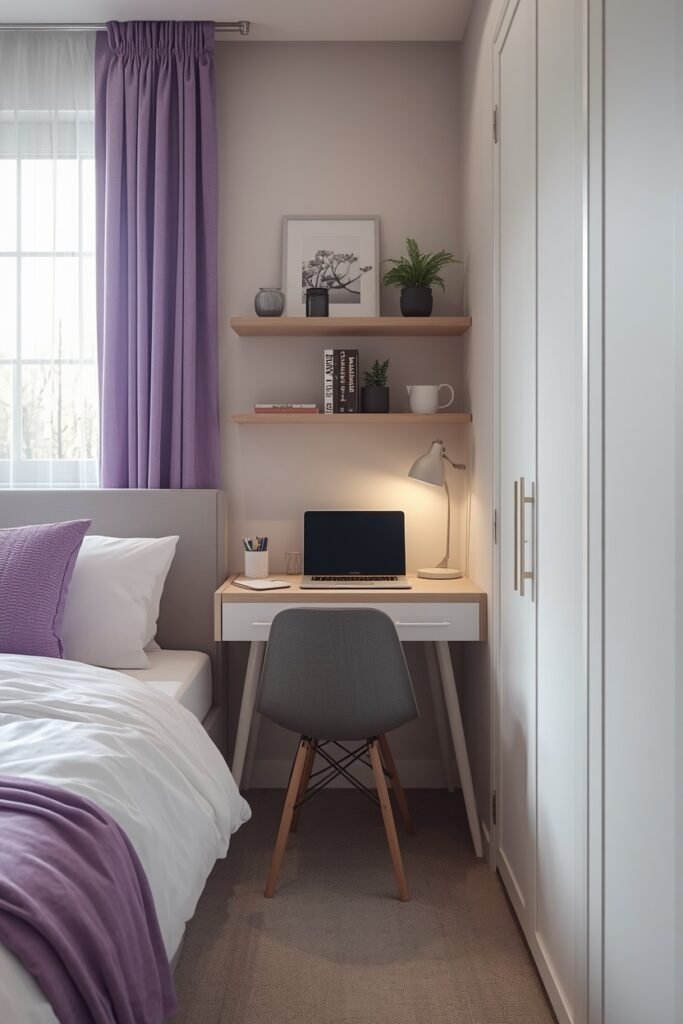
Homework needs a real spot, even in a tiny room.
A slim desk beside the bed can work better than a deep study table that blocks the walkway. Look for a narrow desk with one drawer or open shelf, then keep only daily study items on top. The rest can go in a wall shelf, basket, or rolling cart nearby.
A good teen desk setup needs:
- Enough room for a laptop or notebook
- A small lamp for evening study
- One cup or tray for pens
- Space under the desk for the chair to tuck in
The chair matters too. Pick one that slides in fully, so it does not sit in the middle of the room.
Small desk checklist
3. Use Wall Shelves Above the Desk for School Supplies
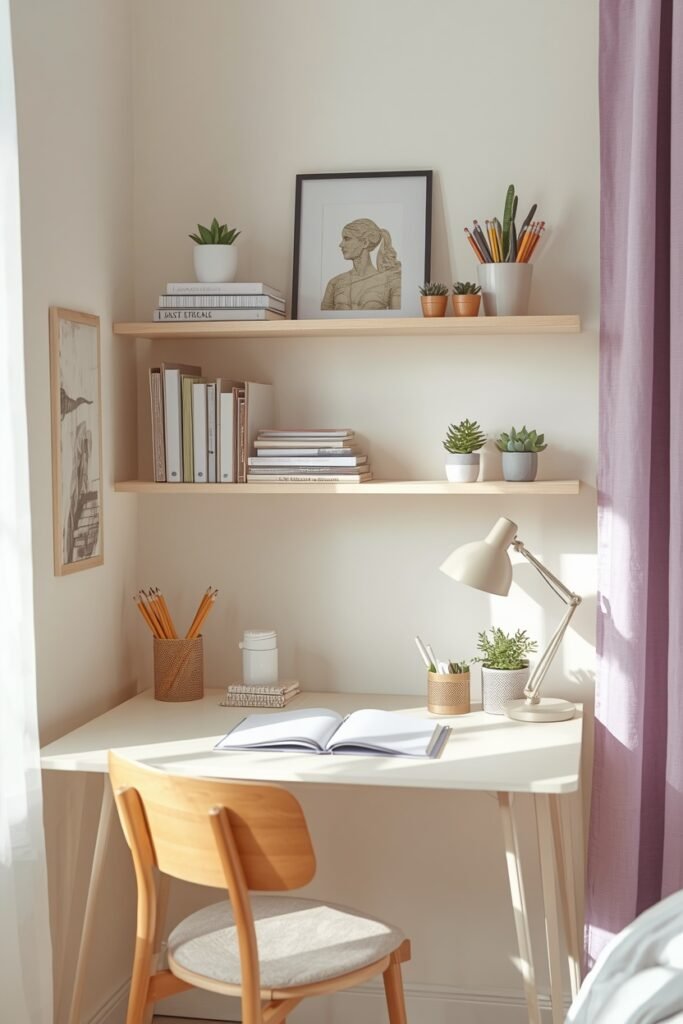
The wall above the desk is useful space.
Floating shelves can hold books, notebooks, pencil cups, small plants, and display pieces without taking over the desk surface. This keeps the study area open, which makes homework feel less annoying before it even starts.
Keep shelves simple and reachable:
- Lower shelf for daily school items
- Upper shelf for books or decor
- Small bins for flashcards, art tools, or tech cords
Leave some open space between items. A shelf packed edge to edge looks messy, even when everything is technically put away. One small gap can make the whole desk wall feel cleaner.
Books, notebooks, chargers, and pens cover the desk, leaving no clear space to work.
School supplies move up to the wall, and the desk stays open for homework, drawing, or a laptop.
4. Pick a Storage Headboard for Books, Chargers, and Night Items
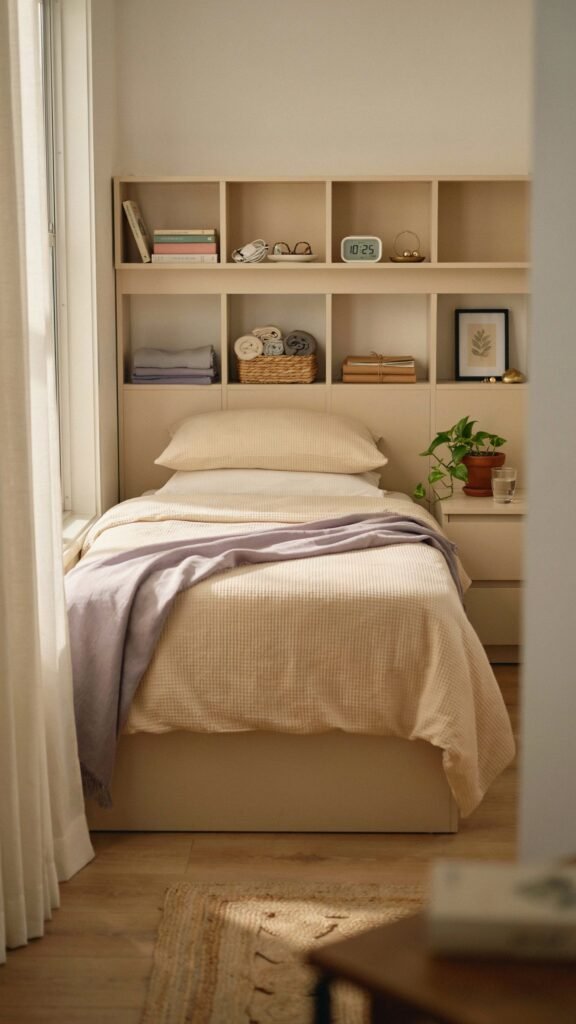
A storage headboard gives small items a home.
This is helpful when there is no room for a full nightstand, or when the bedside area always collects books, lip balm, glasses, and charging cables. A headboard with shelves or cubbies keeps those things close without crowding the floor.
Use it for light daily items only:
- Current book
- Phone charger
- Glasses case
- Small alarm clock
- A tiny dish for jewelry or hair ties
Avoid filling every shelf with decor. The headboard should make bedtime easier, not become another dusty display area.
💡 Quick Tip
Keep the top shelf for bedtime items and the lower shelf for books. Mixing everything together makes the headboard feel cluttered fast.
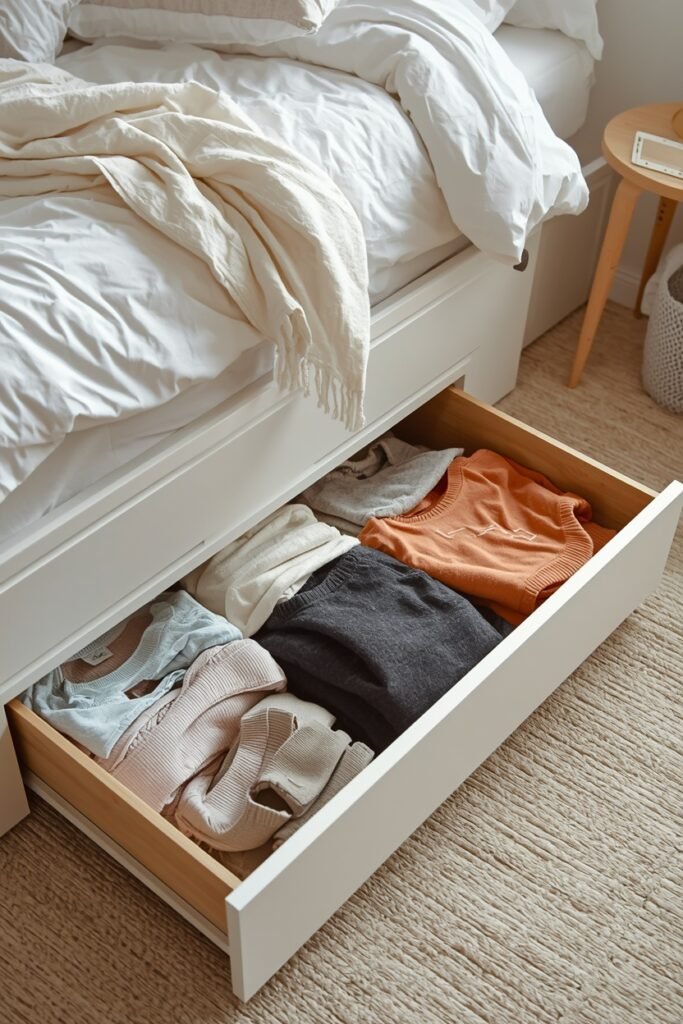
5. Use Under Bed Drawers for Clothes That Do Not Fit the Closet
Small closets fill up fast in teen rooms.
Under bed drawers are useful for clothes that are still needed, but not every single day. Think sportswear, extra jeans, seasonal sweaters, pajamas, or spare bedding. The key is to use drawers or flat bins that slide out easily. If the storage is hard to reach, it will not stay organised.
Sort the drawers by real habits:
- One drawer for school clothes
- One drawer for sports or hobby items
- One drawer for off season pieces
Add labels if the drawers are shared with random extras. A simple label saves the digging.
6. Create a Vertical Pegboard Wall for Bags, Headphones, and Notes
A pegboard can turn one blank wall into flexible storage.
This works well for teens because their stuff changes often. One month it may hold art tools and headphones, then later it can hold bags, jewelry, caps, or school notes. Place it near the desk, closet, or door so it supports the routine that already happens there.
Keep the setup useful:
- Hooks for bags and headphones
- Small cups for pens or brushes
- Clips for reminders or photos
- A tiny shelf for daily items
Do not overload it. A pegboard should look easy to use, not like the whole room moved onto the wall.
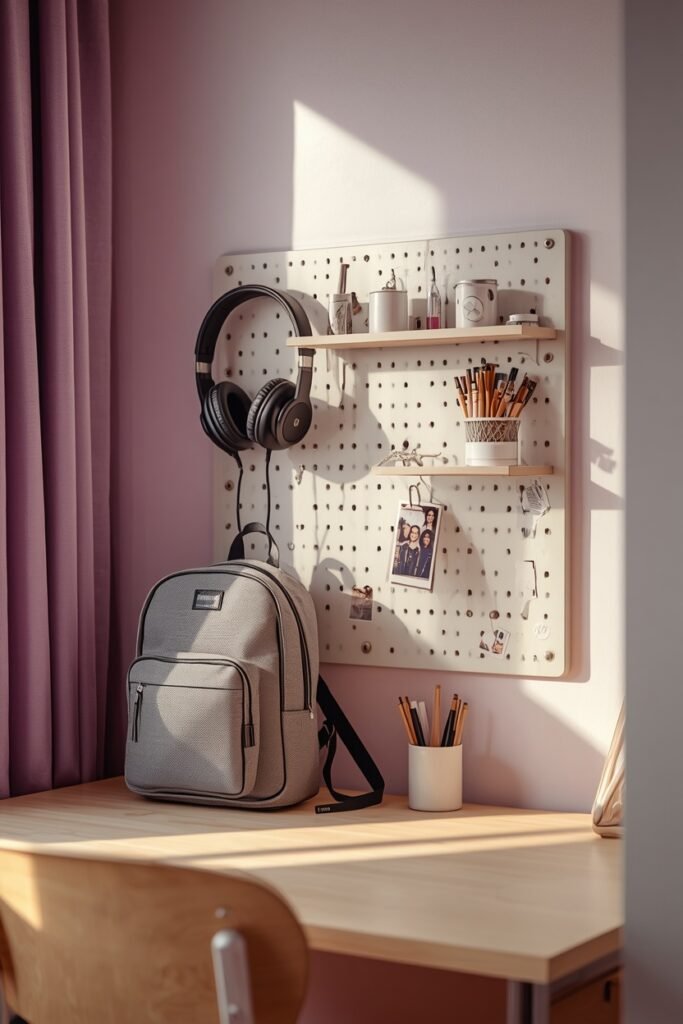
Choose the wall where small items already pile up.
Add hooks first, then add cups or small shelves only where needed.
Leave a few open spaces so the board can change with the room.
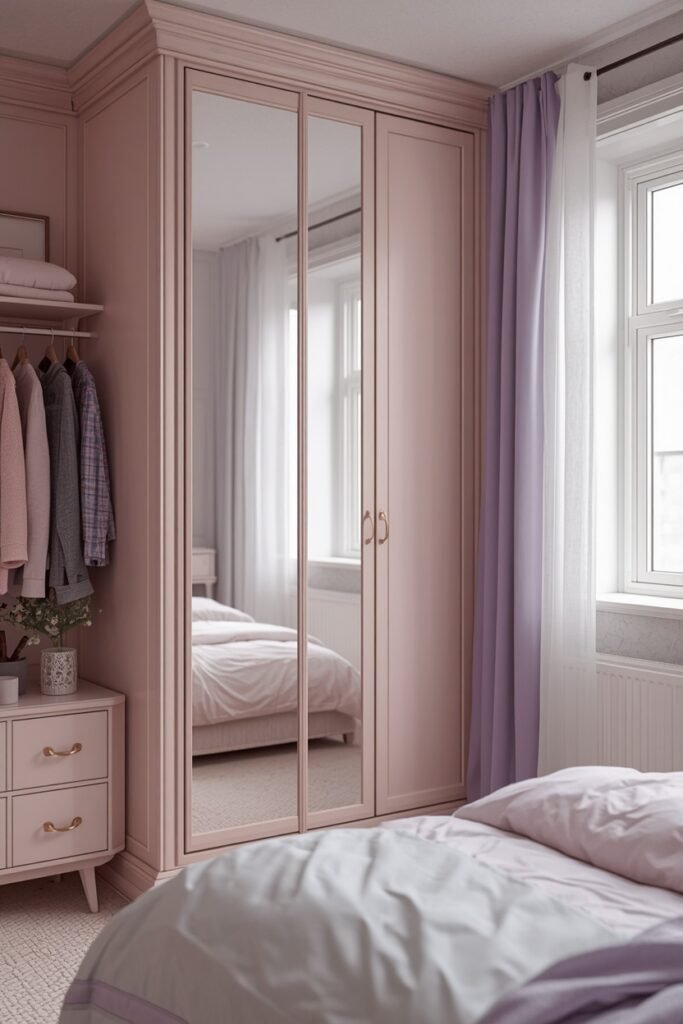
7. Choose a Narrow Wardrobe Instead of a Wide Dresser
A wide dresser can eat up the only clear wall.
A narrow wardrobe uses height instead, which is better when the room needs storage for clothes, shoes, school bags, and extra bedding. It can also hide more visual clutter than open shelves. The room feels calmer when hoodies and uniforms are behind doors, not stacked on a chair.
Look for a wardrobe with:
- A small hanging section
- A few shelves
- One or two lower drawers
- A door mirror if the room needs brightness
Measure the door swing before buying. In a tight room, a useful wardrobe still needs space to open.
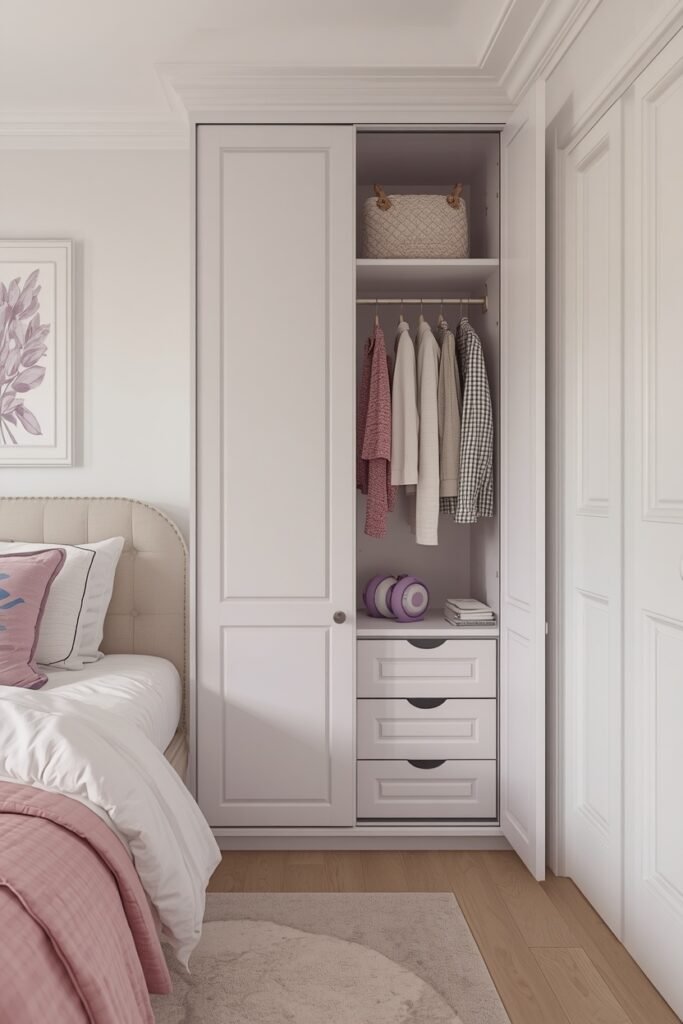
Choose tall storage with doors to hide busy clothing piles.
Use shelves and drawers together so every item has a clear zone.
A low dresser that takes up wall space but leaves piles on top.
Open racks that show every hoodie, bag, and hanger at once.
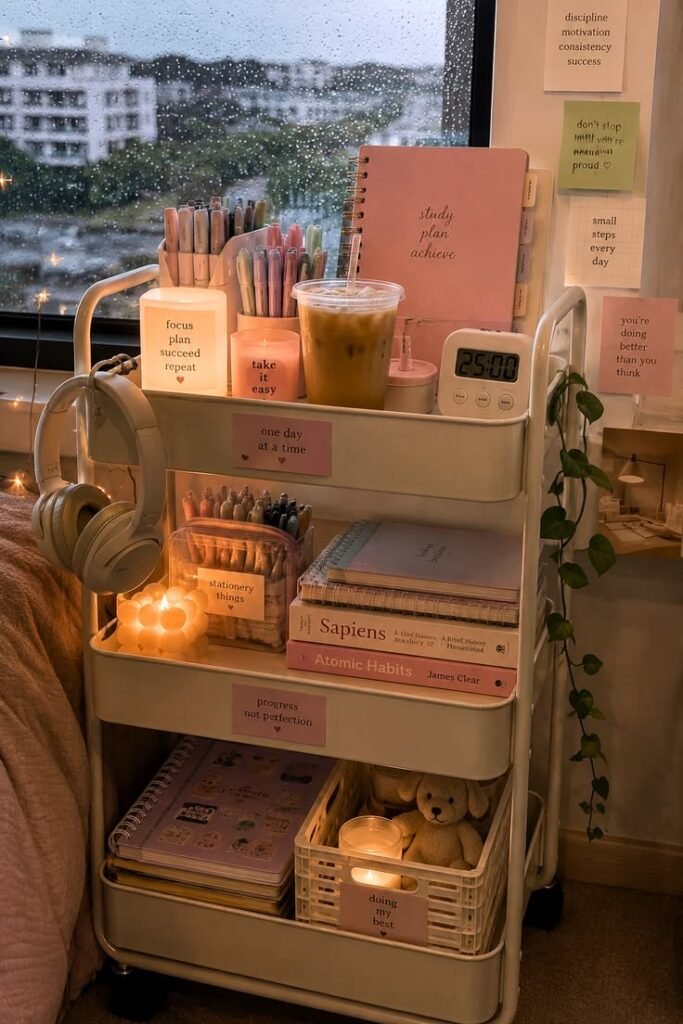
8. Add a Rolling Cart for Beauty, Art, or Study Supplies
A rolling cart is useful when one teen has several hobbies.
It can hold makeup, hair tools, sketchbooks, craft supplies, notebooks, or tech accessories without taking over the desk. The best part is that it can move where it is needed, then slide back into a corner.
Give each tier a job:
- Top tier for daily items
- Middle tier for supplies used weekly
- Bottom tier for extras or backups
Avoid mixing every category together. A cart works better when it acts like a small station, not a moving junk drawer.
| Use It For | Best Setup |
|---|---|
| Beauty items | Brush cup, small mirror, hair clips, daily products. |
| Art supplies | Sketchbooks, markers, tape, paper pads, paint tools. |
| Study supplies | Notebooks, flashcards, chargers, sticky notes, folders. |
9. Use One Wall Color Story to Make the Room Feel Less Busy
A small teen room can feel crowded even when it is clean.
That often happens when every wall, shelf, bed layer, and storage bin has a different color fighting for attention. A simple color story helps the room feel pulled together without removing personality.
Pick one main base and one accent:
- White, cream, or pale grey for the base
- Lavender, sage, blush, blue, or terracotta for the accent
- Black, wood, or brass for small details
Let posters, photos, and bedding sit inside that color family. The room can still feel fun, but the eye has somewhere to rest.
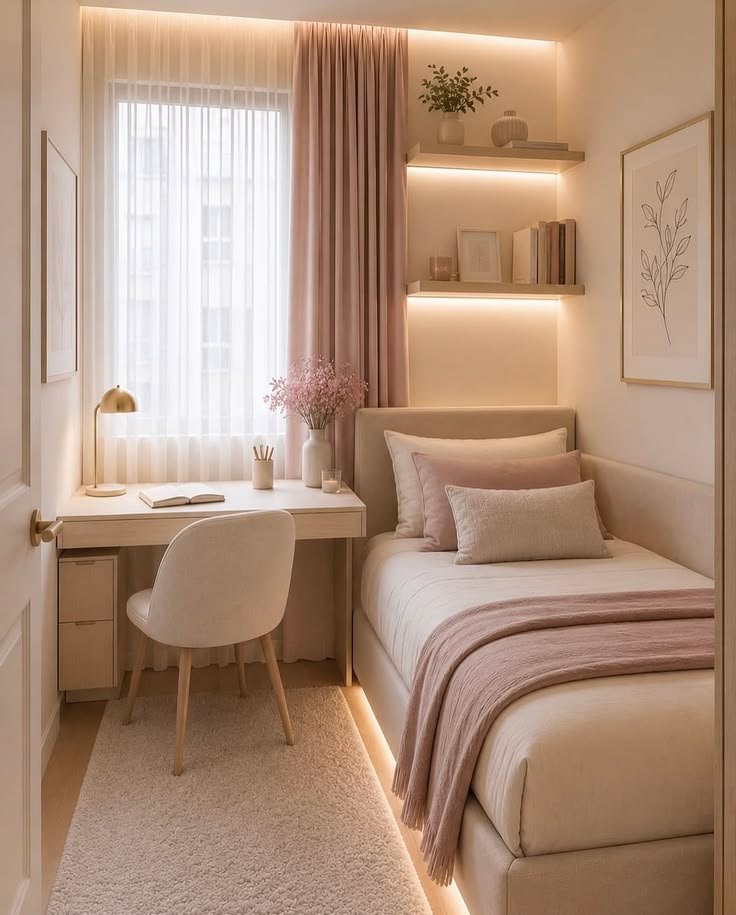
Choose one soft base color and one accent shade. A small room feels bigger when the colors work together.
10. Hang Hooks Behind the Door for Hoodies and Daily Bags
The back of the door can handle daily clutter quietly.
This is a smart spot for hoodies, school bags, caps, scarves, or the outfit planned for the next morning. It keeps the floor clear and gives items a place to land that is not the bed or desk chair.
Use hooks for things that move often:
- School bag
- Everyday hoodie
- Sports cap
- Light jacket
- Tomorrow’s outfit
Skip heavy piles. Too many clothes behind the door can stop it from opening properly and make the room feel messy again.
📌 Good To Know
Give each hook a clear job. Once hooks become random storage, the door starts looking as cluttered as the floor did.
11. Make a Window Seat With Hidden Storage Below
A window area can do more than hold curtains.
If the room has a low window wall, a small bench with hidden storage can become a reading spot, shoe zone, or place to sit while getting ready. It also gives the room a cozy corner without adding a bulky chair.
Use the storage below for items that do not need daily access:
- Extra blankets
- Off season clothes
- Books
- Board games
- School projects
Keep the top soft but simple. One cushion and one pillow are enough. Too many layers will turn the bench into another place where clothes land.
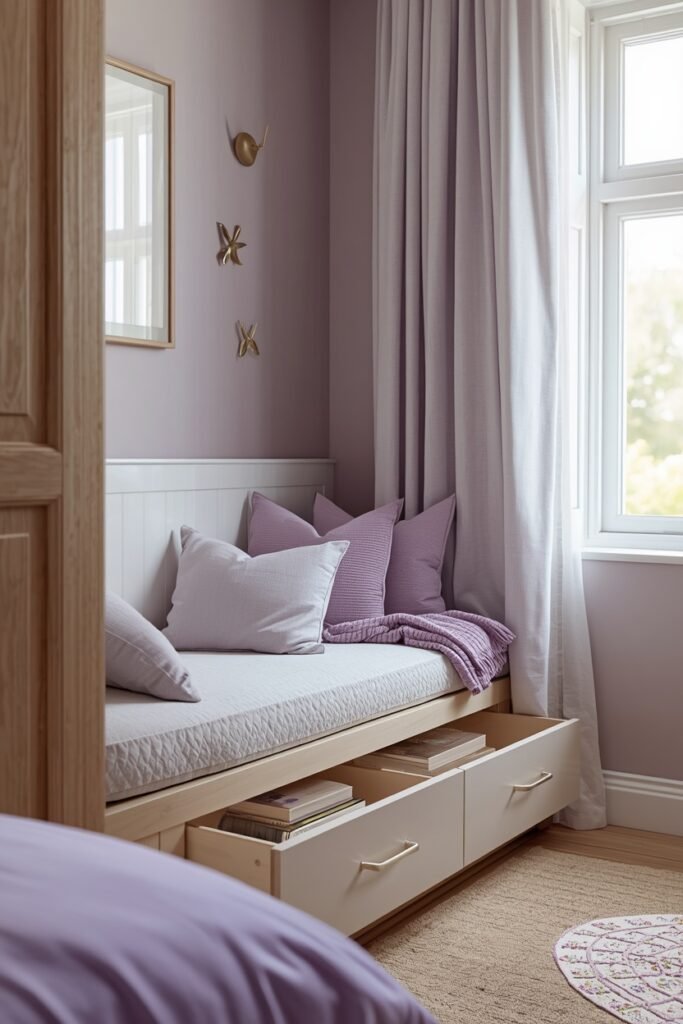
The window wall sits empty, while books, blankets, and bags still need somewhere to go.
The window becomes a useful seat with hidden storage below and a calm place to read or get ready.
12. Use Stackable Bins Inside the Closet for Better Zones
Closets get messy when everything sits on one shelf.
Stackable bins help split a small teen closet into simple zones. They work well for folded tops, sports gear, scarves, school extras, hair tools, or seasonal pieces. Clear bins are good when the teen forgets what is inside. Fabric bins look softer if the closet has open shelving.
Set up the closet by category, not by random space.
Good closet bin zones:
- Daily basics
- Sports or dance gear
- Accessories
- Off season items
Label the front of each bin. Even a plain paper label helps the system last longer than one weekend.
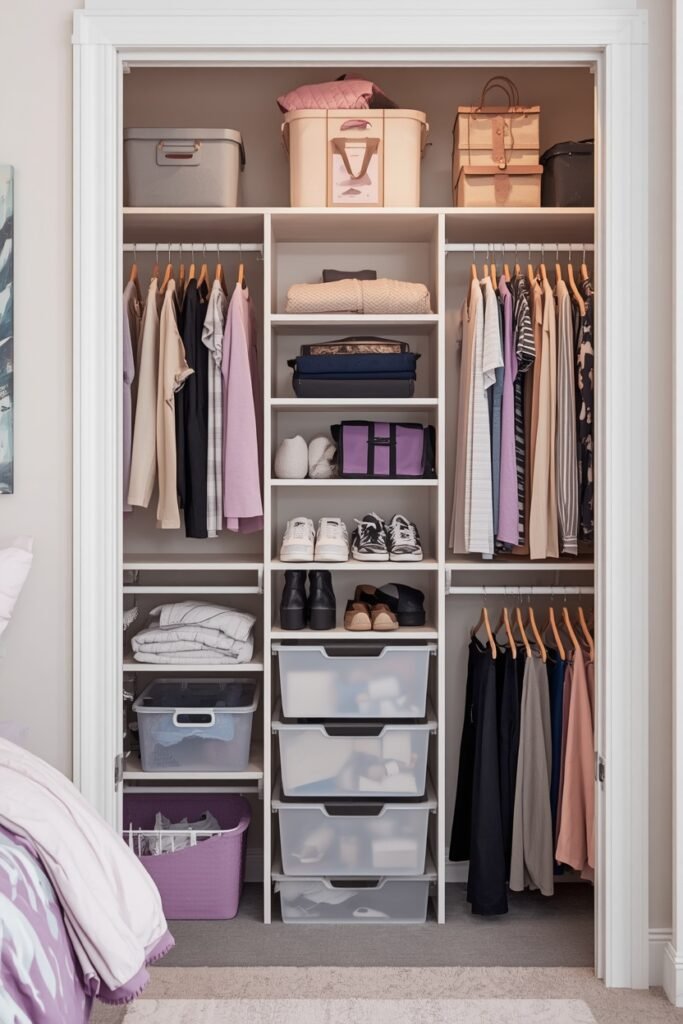
Closet bin checklist
13. Add a Fold Down Desk for Very Tight Rooms
Some bedrooms do not have space for a normal desk.
A fold down desk can give a teen a study surface without keeping the floor blocked all day. It works best for laptop work, journaling, drawing, or quick homework sessions. Mount it where there is enough wall space and a chair can slide in without blocking the door.
Keep the setup light:
- One small wall light above
- A narrow shelf for books
- A pencil cup nearby
- A chair that can tuck away
Do not use it as a storage shelf when it is folded. That habit makes it harder to use when study time starts.
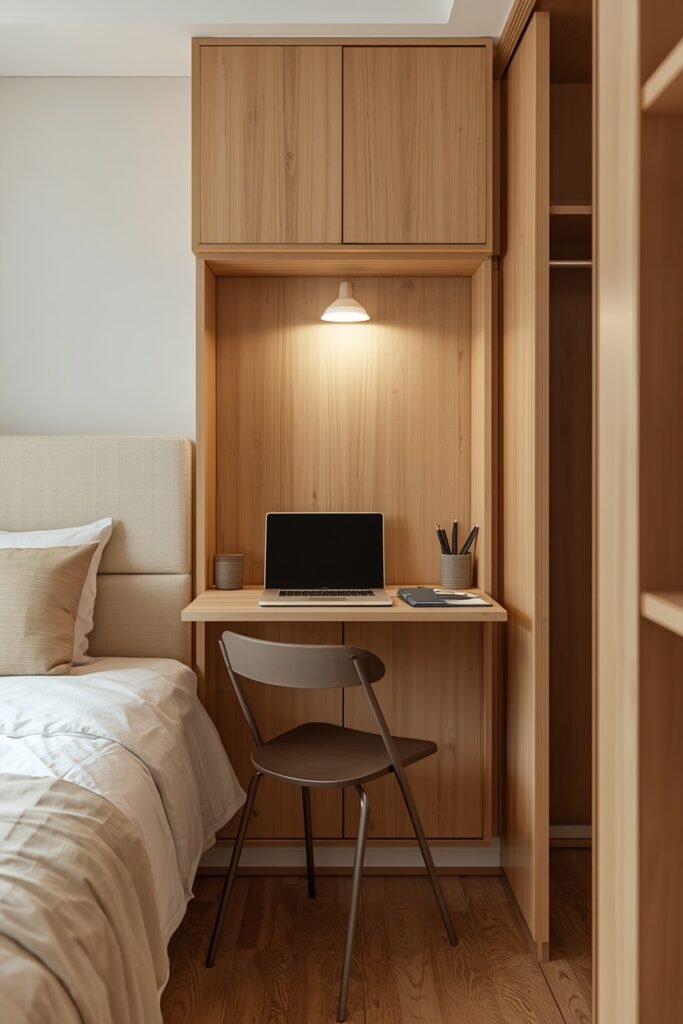
14. Keep a Small Laundry System That Does Not Take Over the Floor
Laundry can make a small room feel messy faster than anything else.
A slim hamper, divided bag, or hanging laundry sorter keeps clothes from spreading across the bed, chair, and floor. Place it where clothes already land, not where it looks nicest. If the hamper is too far from the daily routine, it will not get used.
Build the system like this:
- Pick one laundry spot near the closet or door.
- Use a slim hamper that fits the wall or corner.
- Empty it before it overflows into the room.
A small laundry system is less about looks and more about stopping the daily pile.
Place the hamper where clothes already get dropped.
Choose a tall slim shape instead of a wide basket.
Reset it often so the floor does not become backup storage.
15. Use Mirrors to Brighten the Room and Help With Getting Ready
A mirror can make a small teen bedroom feel lighter.
It is also practical for getting ready, checking outfits, and making the room feel more open. The best spot is usually near the wardrobe, beside the desk, or across from a window. Avoid placing it where it reflects a messy shelf or laundry corner.
A slim full length mirror works well because it uses wall height instead of floor width.
Good mirror choices include:
- Over the door mirror for tight rooms
- Narrow standing mirror beside a closet
- Dresser mirror for makeup or hair
- Mirrored wardrobe door for double use
Keep the frame simple if the room already has bold bedding or posters.
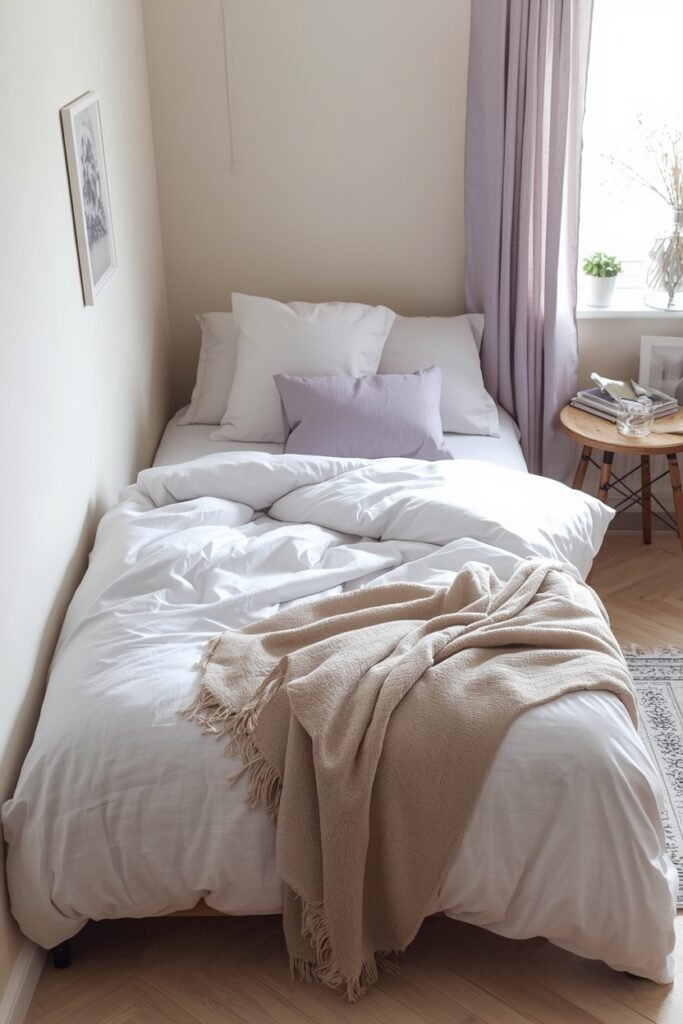
16. Choose Bedding With Storage Friendly Layers, Not Too Many Pillows
Too many pillows can make a small teen bed harder to use.
The bed should be easy to make, easy to sit on, and easy to reset before sleep. A simple bedding setup works better than a pile of cushions that ends up on the floor every night.
Keep the bed layered but practical:
- One soft duvet or comforter
- Two sleeping pillows
- One extra cushion for sitting up
- One throw at the foot of the bed
Choose bedding that fits the room’s color story. A busy bed can make the whole room feel full, even when the floor is clean.
- ▸Keep daily bedding simple enough to reset in a few minutes.
- ▸Use one throw for texture instead of several heavy layers.
- ▸Store extra pillows in a bin, not on the floor at bedtime.
17. Create a Small Display Shelf for Personal Style Without Clutter
Teen bedrooms need space for personality.
The trick is giving favorite things one clear display spot instead of letting them spread across every surface. A small shelf can hold a few photos, trophies, mini plants, candles without flames, collectibles, or framed art. It keeps the room personal without making the desk and dresser harder to use.
Use a simple rule:
- Keep the shelf shallow
- Group items in small clusters
- Leave empty space between pieces
- Swap items out instead of adding more
A display shelf should feel edited, not packed. That little bit of breathing room makes the whole wall look cleaner.
Choose a few favorite pieces and leave space around them.
Use the shelf for personality, not daily clutter.
Filling the shelf edge to edge with random items.
Letting old receipts, school papers, and empty packaging stay there.
18. Use a Corner Shelf to Turn an Empty Corner Into Storage
Corners often sit empty because they feel awkward.
A corner shelf can hold books, skincare, small decor, folded hoodies, or hobby supplies without stealing the main wall. This works well beside a desk, near the bed, or close to the closet. The key is choosing a shelf that fits the corner tightly, so it looks planned instead of squeezed in.
Use the shelves by height:
- Daily items at hand level
- Decor or books in the middle
- Rarely used extras higher up
Keep heavier items low. A corner shelf should make the room easier to use, not feel risky or crowded.
💡 Quick Tip
Use corner shelves for light items and keep the bottom shelf the most practical. That is the shelf teens will reach for first.
Final Thoughts
A small teen bedroom feels easier to live in when every inch has a simple job. The bed can create storage, the walls can hold school supplies, the closet can work in zones, and even the back of the door can help with daily clutter. Small changes like a slim desk, a pegboard, or under bed drawers can make the room feel calmer without taking away personality.
These 18 Small Bedroom Ideas for Teens That Maximize Every Inch of Space are best used one step at a time. Fix the messiest spot first, then build around it.
Save this list for the next time a small bedroom needs a smarter, cleaner refresh.